KEY INSIGHTS
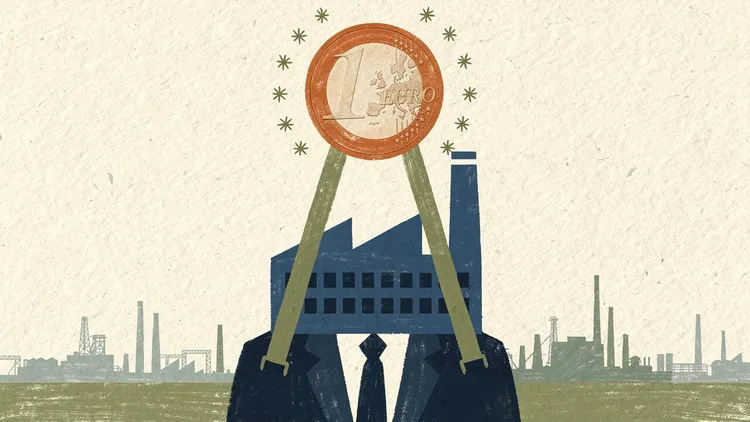
- A regulatory mirror image: Europe enforces gender balance on listed companies but exempts the ministerial appointments that direct public power.
- The portfolio gap: Women hold 32.8 per cent of senior ministerial roles across the EU-27, and disproportionately in lower-weight portfolios such as culture, education, and tourism.
- Outliers persist: Hungary has had an all-male cabinet for over a year; the Czech Republic has one woman among 17 ministers; Greece’s three top portfolios — Defence, Finance, and Foreign Affairs — remain entirely male-led.
- The architecture already exists: CEDAW, Council of Europe Recommendation Rec(2003)3, and the 2022 Women on Boards Directive set the standard. Political will to apply it to governments themselves does not.
- A test without a quota: Mandatory disclosure, a standardised EIGE-administered portfolio audit, and a CEDAW-linked duty to explain single-gender clusters of senior portfolios would close the gap.
When Marie-Louise Eta was appointed interim head coach of Union Berlin on 11 April 2026 — the first woman to lead a men’s team in any of Europe’s top five leagues — the reaction told us more than the appointment itself. Alongside the celebratory “historic first” coverage came a wave of online sexism so pronounced that the club was forced to respond publicly, calling out misogynistic comments under its own announcements.
Recent “historic firsts” in European leadership roles keep surfacing as news. They are better read as symptoms — of the gap between the legal commitments European governments have signed and the institutional practices they continue to tolerate. As the EU approaches the 30 June 2026 compliance deadline of its Women on Boards Directive, that gap is no longer abstract.
The data Europe avoids
The European Institute for Gender Equality’s 2025 Gender Equality Index records its lowest score in the power domain: 40.5 out of 100. EIGE’s most recent Gender Balance in Politics brief (November 2024 data) shows that women hold 32.8 per cent of senior ministerial positions across the EU-27 — an aggregate figure that hides two harder facts.
First, the outliers persist. Hungary has had an all-male cabinet for over a year, since the resignation of its only woman minister in August 2023. The Czech Republic has one woman among 17 cabinet members (5.9 per cent). Croatia, Malta, and Slovakia sit between 10 and 12 per cent. Second, ministerial counts conceal the “portfolio gap”: women are admitted to government, but disproportionately to ministries that carry less institutional weight.
Greece illustrates the pattern with unusual clarity. The second Mitsotakis cabinet, sworn in on 27 June 2023, comprises 61 members, of whom 12 are women — below 20 per cent, and below the EU average. Among the 22 full ministers, four are women: Niki Kerameus (Interior, since moved to Labour), Sofia Zacharaki (Social Cohesion, since Education), Lina Mendoni (Culture), and Olga Kefalogianni (Tourism). Defence, Finance, and Foreign Affairs — the core of executive power — were assigned to men, and remain held by men. Three of the four ministries given to women are what the comparative literature classifies as “feminine-coded” portfolios.
This is not a Greek anomaly. It is a European pattern: women are welcomed into cabinets, but less consistently into the ministries that direct national security, public finances, and foreign policy.
European states have spent four decades signing instruments designed to address precisely this. Under Article 7 of the UN Convention on the Elimination of All Forms of Discrimination Against Women (CEDAW), every EU member state is required to ensure women’s participation “in the formulation of government policy and the implementation thereof”. Article 8 extends the obligation to international representation. The CEDAW Committee’s General Recommendation 25 authorises temporary special measures, including quotas, as a non-discriminatory tool to accelerate substantive equality.
The Council of Europe’s Recommendation Rec(2003)3 sets a clear benchmark: a minimum of 40 per cent of either sex in any decision-making body in political or public life. Member states agreed to report regularly. Most have not met the target. Few face consequences.
The EU’s most ambitious gender-balance instrument — Directive (EU) 2022/2381, the Women on Boards Directive — requires that by 30 June 2026 at least 40 per cent of non-executive director posts in large listed companies be held by the under-represented sex, with “effective, proportionate and dissuasive” penalties. A decade in the making, blocked in the Council until 2022, it represents the limit of what European political will has so far produced.
It also reveals that limit. The Directive applies only to listed companies. Not to small and medium-sized enterprises. Not to the public sector, civil service leadership, or ministerial appointments. The most consequential decisions about who exercises public authority are precisely those European law has chosen not to touch.
Closing the gap
The argument is not that cabinet composition should be regulated by quota. Ministerial appointments are the prerogative of elected leaders. The argument is narrower and harder to dismiss: if the EU has accepted that gender balance in corporate governance requires transparent procedures, public reporting, and dissuasive penalties, the same logic applies — a fortiori — to the exercise of public power.
A workable framework would require three things, drawing on the Women on Boards model and existing CEDAW reporting obligations.
The first is mandatory disclosure. Each member state should publish annually the gender distribution of cabinet portfolios, disaggregated by ministry and seniority. The information already exists in every national gazette; it is simply not aggregated or monitored at European level.
The second is a portfolio audit. A standardised European methodology — administered by EIGE, building on the Rec(2003)3 monitoring framework — would track not only the proportion of women in cabinets but their distribution across portfolio categories. Aggregate figures mean little without knowing where women are placed.
The third is a duty to explain. Where a member state assigns Defence, Finance, and Foreign Affairs exclusively to one gender — as Greece, and others, currently do — the government should be required, as part of its periodic CEDAW reporting, to set out the reasoning.
None of this is a quota. All of it already exists, in principle, in instruments European governments have ratified.
European governments have proven willing to legislate gender balance for boardrooms they do not sit in. They have proven unwilling to apply the same standard to the cabinets they themselves form. That is not a technical oversight. It is a political choice — one that exposes the difference between gender equality as a regulatory project for others and gender equality as a discipline accepted at home.
Marie-Louise Eta’s appointment will continue to be described as historic. So will the next one. The framing is not neutral: every “first” reaffirms that the role had a default occupant, and that her presence requires a special category. Until European governments are prepared to subject themselves to the transparency they impose on listed companies, the rule will continue to reproduce itself — celebrated exceptions and all.
The legal instruments to change this have been on the table for forty years. What is missing is not law. It is political nerve.

Help Keep Social Europe Free for Everyone
We believe quality ideas should be accessible to all — no paywalls, no barriers. Your support keeps Social Europe free and independent, funding the thought leadership, opinion, and analysis that sparks real change.
— €4.75/month
Help sustain free, independent publishing for our global community.
Become a supporter— €9.50/month
Go further: fuel more ideas and more reach.
Become an advocate— €19/month
Make the biggest impact — help us grow, innovate, and amplify change.
Become a champion— €142.50/month
For organisations and professionals who rely on Social Europe in their daily work.
Become a member