There is a ghost among us. From the Iron Lady of the East being appointed Japanese prime minister to the Iron Lady of Venezuela receiving the Nobel Peace Prize, from the Belgian prime minister tweeting a picture of Margaret Thatcher as his sole response to massive anti-austerity protests, politicians worldwide are once again possessed by TINA—There Is No Alternative. After all, ideology doesn’t put food on the table, according to Bolivia’s president-elect.
Yet without a stated ideology, the set of principles underpinning our political and economic system becomes deliberately obscured. The supposed absence of alternatives defeats the very purpose of political participation. How can we reimagine political futures when we’re told none exist?
“So we beat on, boats against the current, borne back ceaselessly into the past.” It has been one century since F. Scott Fitzgerald brought us the story of social and moral decay beneath the empty pursuit of wealth and pleasure in “The Great Gatsby”. At the time, a system pandering to the wealthy elite was heavily contested. In subsequent years, alternative political narratives brought genuine social progress—from redistributive tax policies to workers’ rights. Over the past decades, however, the current appears to have brought us back to Fitzgerald’s New York. Only now, it is no longer contested. The Valley of Ashes, that desolate wasteland of industrial extraction, has been internalised as the natural order of things.
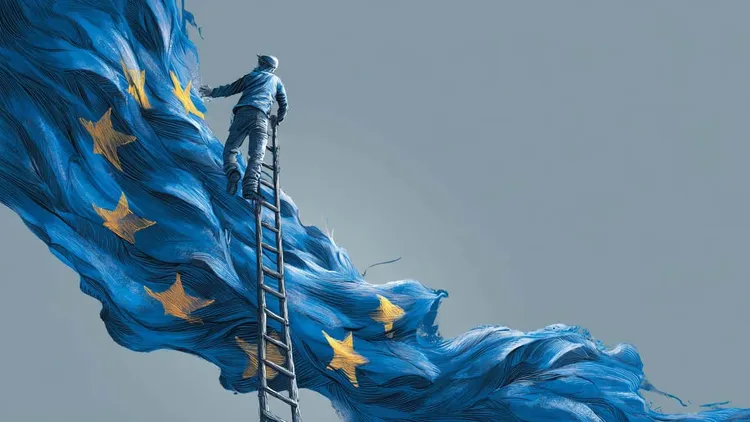
According to Mark Fisher, the British philosopher and author of Capitalist Realism: Is There No Alternative?, “it is easier to imagine the end of the world than the end of capitalism.” Or, in a more pointed statement of his: “It is easier to imagine the end of capitalism than a left-wing Labour party.” In such a state of capitalist realism—this inability to conceive credible alternative political narratives—how can we make the future believable again and restore faith in social progress?
The ideology that denies it exists
The current dominant mainstream political dogma sells itself as “non-ideological”. A more accurate description would be that we face a non-self-acknowledging ideology. Its central principle—to increase wealth above all else—is so simplistic that it would be difficult to sell on its own merits. The conservation goals of contemporary conservatives appear limited to capital accumulation at the expense of everything actually worth preserving.
Therefore, dominant pseudo-conservative, neoliberal political discourse (including its Third Way Labour flavour) dresses up this simplistic ideology with inflammatory takes on migration, idealisation of the past, and stigmatisation of the vulnerable. Meanwhile, it sells out our historical town centres to McDonald’s, our independent businesses to Amazon, and local ecosystems to DuPont Chemical.
The ideology has not always been this simplistic. In the age of political contestation, when the Soviet Union still posed a systemic alternative to raw capitalism, governments tempered capitalist ideology with multi-vectoral economic policies. Capital gains were not produced merely for their own sake but were meant to guarantee social peace by funding societal needs. In the 1970s, under neoliberalism, we transitioned to a pure wealth-maximising economy that shed these multi-vectoral elements.
In this process, international institutions such as the World Trade Organization (WTO) and the International Monetary Fund (IMF) were established, anchoring the new ideology in laws far beyond democratic control—a process of over-constitutionalisation. Company stakes became traded far beyond company premises, with governance lying in the hands of a hedge fund managed by a financial holding that is publicly traded and majority-owned by an index fund on the other side of the planet—a process of over-financialisation.
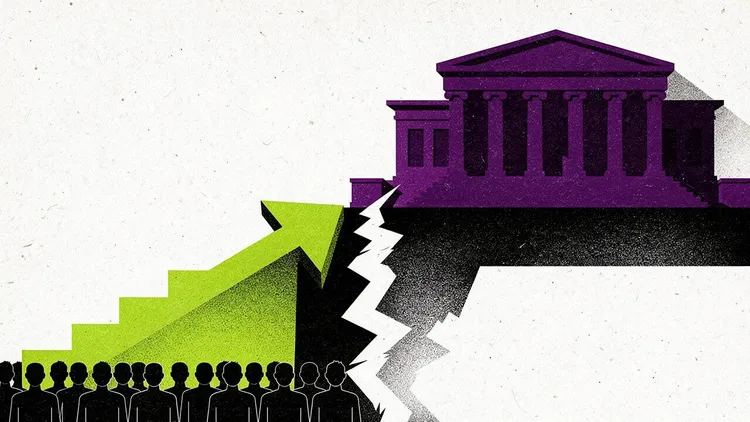
Mainstream political parties threaded along nicely. When the socialists were co-opted by the neoliberals shortly after the Soviet Union’s disintegration, we lost systemic contestation entirely. What is the point, anyway, for a national politician to raise systemic issues when there is no way for their level of government to have even the remotest impact on this over-constitutionalised and over-financialised structure? Better to focus on incremental debates about the level or length of unemployment benefits. There really is no alternative for the non-ambitious politician.
The war on boredom as political control
The shift took place as the public was flooded with distraction, from colour television then to Artificial Intelligence (AI) slop today. In their supposedly boring lives under Fordist economic policies, workers with stable, high-paying jobs had too much time on their hands to be caught off guard when corporate capture was committed. Once we became sufficiently distracted, the road lay wide open for systemic transformation without resistance.
It is remarkable how boredom and laziness are treated as cardinal sins in contemporary society. How dare one propose the four-day work week? Lying around with one’s head in the clouds represents an absolute threat to vested interests, as one might begin to imagine alternative political futures. Hell, one might even raise such ideas in a bar, or worse: get organised. The current societal arrangement thrives precisely as long as the populace remains perpetually distracted.
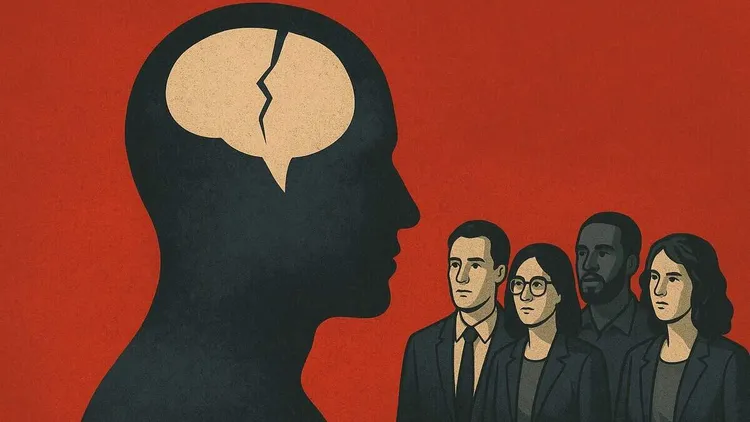
We moved away from stable, boredom-inducing, multi-vectoral economic policies into the neoliberal dreamworld of inequality-inducing growth-for-growth objectives, staunchly anchored in institutions beyond popular control. Boredom made way for anxiety due to ever-increasing uncertainty as every aspect of our lives becomes marketised. Killing boredom—the ultimate consolidating act of corporate capture at the level of the individual mind—has tranquillised political inspiration.
“The time is out of joint: O cursed spite, that ever I was born to set it right!” Hamlet exclaimed as he realised the ghost of his father had burdened him with the tremendous responsibility to set things right. How do we confront this curse and reimagine an alternative political future?
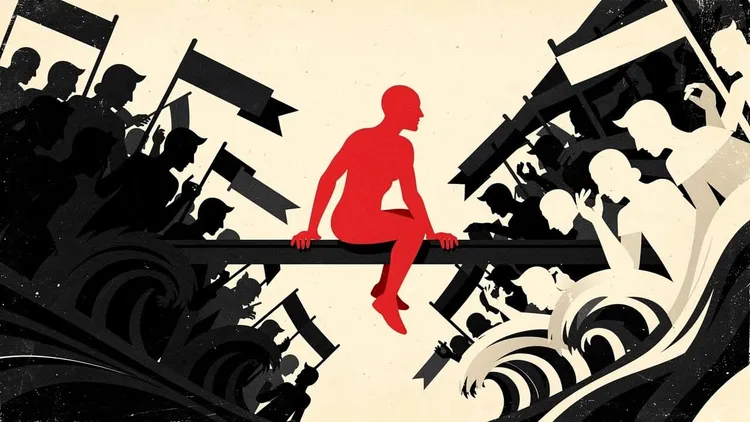
For one, be mindful of anti-systemic fatalism. Do not sit around waiting for capitalism to implode, hoping to reconquer the political stage from the Valley of Ashes—there might be nothing left to salvage. Alternative political narratives cannot retreat from the mainstream political arena and hand it to the conservatives-in-disguise.
When confronted with the ghost of Thatcher, cue the Scooby-Doo line turned internet meme: “Let’s see who you really are.” Unmask the TINAs by calling out the current destructive non-self-acknowledging ideology for what it is. Finally, always bear in mind the words of the late David Graeber: “The ultimate hidden truth of the world is that it is something that we make, and could just as easily make differently.”

Help Keep Social Europe Free for Everyone
We believe quality ideas should be accessible to all — no paywalls, no barriers. Your support keeps Social Europe free and independent, funding the thought leadership, opinion, and analysis that sparks real change.
— €4.75/month
Help sustain free, independent publishing for our global community.
Become a supporter— €9.50/month
Go further: fuel more ideas and more reach.
Become an advocate— €19/month
Make the biggest impact — help us grow, innovate, and amplify change.
Become a champion— €142.50/month
For organisations and professionals who rely on Social Europe in their daily work.
Become a member