KEY INSIGHTS
- A fading order: The institutions of the postwar world still stand, but no longer organise power with the authority they once commanded.
- Geopolitical weaponisation: Russia, China, and the United States now use trade, energy, supply chains, sanctions, and technology as tools of coercion.
- Strategic autonomy required: Europe needs an integrated defence industrial base, deeper capital markets and sovereign capability in artificial intelligence, semiconductors and energy.
- Beyond bloc alignment: Deeper partnerships with India, Brazil, Mexico and South Africa can prevent the world from hardening into rival camps.
- No nostalgic restoration: The liberal international order cannot be revived through wistful appeals — Europe must help shape the next one.
Europe is entering a post-American world without having prepared for it.
For decades, Europeans lived inside a strategic environment so favourable it came to feel permanent. The United States guaranteed security. Globalisation widened markets and lowered costs. Economic interdependence was meant to dull the incentives for conflict. Liberal democracy appeared to carry historical momentum. Trade, technology and finance were treated chiefly as instruments of integration rather than coercion.
That world has not vanished in a single rupture, but it is plainly fading. The institutions of the postwar order still stand, yet they no longer organise power with the authority they once commanded. Alliances persist, but no longer guarantee certainty. Rules survive, but are increasingly contested by states that did not help write them, no longer feel bound by them, or believe they no longer reflect the real balance of power.
Europe’s problem is not that the world has changed. It is that Europe has been slow to absorb the consequences.
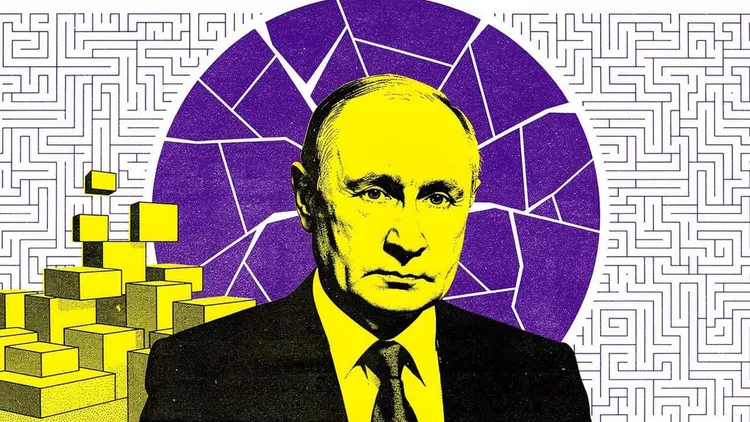
Russia weaponised energy before invading Ukraine, and now poses an explicit threat to European security and territorial integrity. China has shown how supply chains, critical minerals and market access can be turned into instruments of coercion. The United States increasingly uses tariffs, sanctions, export controls, industrial subsidies, and dollar dominance as instruments of strategic power. Even technologies once considered neutral have become geopolitical assets. Semiconductors, cloud infrastructure, payment systems, satellites and artificial intelligence are now instruments of power.
Europe grasps this intellectually, yet still lacks the political urgency the moment demands. Part of the difficulty is psychological. Many Europeans remain attached to the assumption that the transatlantic relationship ultimately guarantees strategic convergence. Yet the United States is changing in ways European leaders still hesitate to describe openly.
Washington’s priorities are increasingly shaped by confrontation with China, industrial nationalism and domestic political volatility. Even administrations committed to the Atlantic alliance now approach international politics through a harder conception of national interest. Under more nationalist leadership, the message turns cruder still: buy American, align with American technology restrictions, absorb the costs of American strategic choices.
Parts of the American political and economic establishment no longer see Europe primarily as a partner to be strengthened, but as a competitor expected to align with US priorities. Europeans should not underestimate how normalised the language of pressure and interference has become in Washington.
None of this means the transatlantic alliance is finished. Europe still needs NATO, and cooperation with the United States remains indispensable. But dependence cannot substitute for strategy in a more transactional international environment.
The deeper problem is that the international system is drifting towards a harsher and more transactional form of multipolarity, one in which middle powers are increasingly forced to navigate between competing spheres of influence.
Donald Trump’s visit to China captures that anxiety with unusual clarity. The images from Beijing matter less than the logic behind them: the leaders of the world’s two largest powers speaking as if the central question of international politics is how the rivalry between them will be managed.
Europeans should be especially sensitive to that danger. The risk is not a literal return to Yalta, but a gradual fragmentation of the world into technological, financial and security blocs dominated by major powers. A new G-2: a US-centred technological sphere here, a China-centred industrial ecosystem there, and everyone else navigating between pressure and exclusion. In such a world, the most important decisions would increasingly be taken elsewhere.
The European project was built against precisely that logic. It emerged from the conviction that the future of nations could not remain subject to arrangements imposed by stronger powers over the heads of others. Yet Europe now risks drifting back towards a world shaped by hierarchy and dependency — not because it lacks economic weight, but because it has failed to convert that weight into political power.
This is why strategic autonomy matters. Values without power rarely shape outcomes. Europe needs a defence industrial base capable of sustaining deterrence over the long term. It must take full and independent responsibility for its own security in the face of the grave Russian threat.
It needs integrated capital markets able to finance investment at continental scale. It needs technological capacity in artificial intelligence, semiconductors and digital infrastructure. It needs secure access to energy and critical raw materials. And it needs political mechanisms capable of acting faster than unanimity often allows.
The European Union remains one of the most successful political projects in modern history. But the single market was largely built for an era in which efficiency was treated as the overriding objective. The world now rewards resilience, industrial scale and strategic coordination. Fragmented defence procurement, energy systems and digital infrastructure are no longer merely economic inefficiencies. They are geopolitical vulnerabilities.
Europe also needs a more mature relationship with the wider world. Countries across Asia, Latin America, Africa and the Gulf increasingly reject binary alignment. They cooperate with the United States on security, China on infrastructure, Europe on climate and regulation, and regional powers on trade and technology. Europe should understand that instinctively, because it increasingly needs the same room for manoeuvre itself.
That means building deeper partnerships with countries such as India, Brazil, Mexico and South Africa — not as instruments of bloc confrontation, but as part of a broader effort to prevent the international system from hardening into rival camps dominated by great powers.
China remains the most complex case. Europe must reduce vulnerabilities, strengthen reciprocity, and protect sensitive technologies. But Europe should not subordinate its China policy to alignment with Washington. Its approach to China should be shaped in Europe, grounded in its own interests and strategic realities. Europe should seek a demanding and pragmatic partnership with China, based on reciprocity, cooperation, and a defence of its strategic interests.
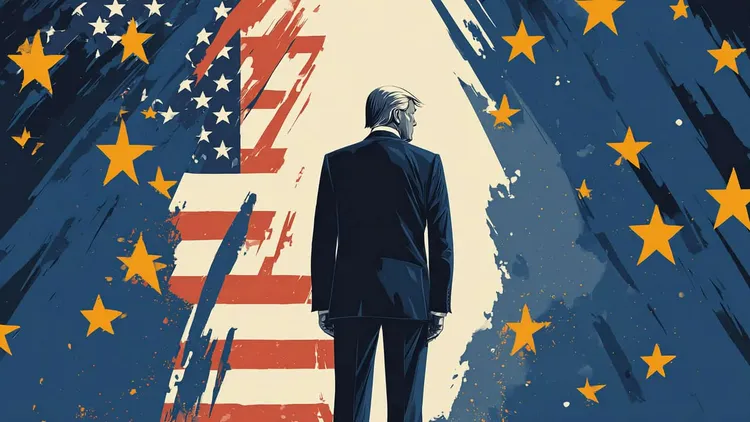
European strategic interests must also be defended within the transatlantic relationship. The United States should remain Europe’s ally, and NATO remains indispensable. But alliance does not eliminate divergences of interest. Washington will increasingly prioritise competition with China, defend its industrial base, and expect Europeans to assume greater responsibility for their own neighbourhood. Europe therefore needs a more balanced transatlantic relationship based on capability rather than dependency.
The liberal international order cannot simply be restored through nostalgia. Power is more diffuse than it was in the immediate post-cold war era. Legitimacy is more contested. Non-western powers demand a greater role in shaping global rules and institutions. Europe should help shape the next international order, not merely lament the erosion of the previous one.
The postwar order emerged from catastrophe. The European project itself was built from the memory of a continent destroyed by nationalism, imperial rivalry and spheres of influence. Great powers usually recognise that history has changed only after a major conflict confirms it. Europe cannot afford to wait for another catastrophe before acknowledging the world it is entering.

Help Keep Social Europe Free for Everyone
We believe quality ideas should be accessible to all — no paywalls, no barriers. Your support keeps Social Europe free and independent, funding the thought leadership, opinion, and analysis that sparks real change.
— €4.75/month
Help sustain free, independent publishing for our global community.
Become a supporter— €9.50/month
Go further: fuel more ideas and more reach.
Become an advocate— €19/month
Make the biggest impact — help us grow, innovate, and amplify change.
Become a champion— €142.50/month
For organisations and professionals who rely on Social Europe in their daily work.
Become a member