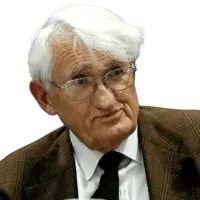
This text is a translated transcript of a lecture delivered at the Siemens Foundation on 19 November 2025.
The Russian invasion of Ukraine triggered, among other things, a belated recognition among European populations of a profoundly altered world situation. This transformation had, however, already been developing for some time with the decline of the superpower of the twentieth century. An early warning signal was the frantic shift in mood within American civil society after September 11, 2001. This change in the mentality of a frightened population was further inflamed by the rhetoric of the government under President George W. Bush and his recklessly militant Vice President. Everyone seemed to feel the dangers of international terrorism up close. In the course of the propaganda for the war against Saddam Hussein and Iraq—a war that violated international law—this shift in mentality radicalized and became entrenched. From an institutional perspective, this change primarily affected the party system. Already during the 1990s, under the leadership of Newt Gingrich, not only had the practices of the Republican Party fundamentally changed, but so too had the social composition of its base. The tendencies toward a more profound and now, it seems, barely reversible transformation of the political system as a whole only prevailed, however, after President Obama had disappointed hopes for a thoroughly changed US foreign policy.
By now, the weakening of the international standing of the former superpower is unmistakable. This was signaled once again at the most recent APEC summit in South Korea at the end of October: the unsettled alliance partners of the USA are now also seeking agreements with other neighbours who are either more neutral or more dependent on China. And after the early departure of the American President—who is more interested in quick deals than in the far-sighted stability of American influence—China’s President Xi is said to have then set the tone with his promotion of the conception of a multicultural world society under Chinese leadership. Ever since the People’s Republic was admitted to the World Trade Organization, prudent governments had pursued the goal of making their country an economically leading great power. But only since Xi Jinping assumed office in 2012 has the declared aim—advanced with a certain “defensive aggressiveness”—been to replace the liberal world trade regime with a Sinocentric world-political order. With the Silk Road project, China had already been pursuing more far-reaching strategic and security-policy objectives for some time. The greatest beneficiaries were Russia, Pakistan, Malaysia, and Indonesia. But for developing and emerging countries too, China is likely now the largest creditor. The international shift in power is generally revealed by the fact that, from a geopolitical perspective, the decisive conflicts will in future concentrate in Southeast Asia.
It will be interesting to observe how Trump’s seizure of power will affect Taiwan’s domestic politics. But quite apart from this flashpoint, it is not only China and its regional allies on one side, and the USA and the westward-leaning states of the region—above all Japan, South Korea, and Australia—that face one another. In close proximity, India too is now pursuing its own aspirations to world power. The shift in geopolitical power relations is moreover reflected not only in the Pacific region but also in the rise of middle powers such as Brazil, South Africa, or Saudi Arabia, which are self-confidently striving for greater independence. Many such rising states are now seeking admission to the loose, now expanded association of the BRICS states. An end to Western hegemony is also indicated by the profound geo-economic transformations of the liberal world economic order that the USA had created since the end of the Second World War. Not that this rules-based world trade order—now being strained by Trump himself as well—could simply be liquidated, as one can see today in the interesting dispute over the supply of “rare earths”; but hardly anything could better illustrate the now routine security-policy restrictions on world trade than the recent decision by the government of Germany—which prides itself as the world export champion—to prop up with state funds the internationally no longer competitive German steel industry.
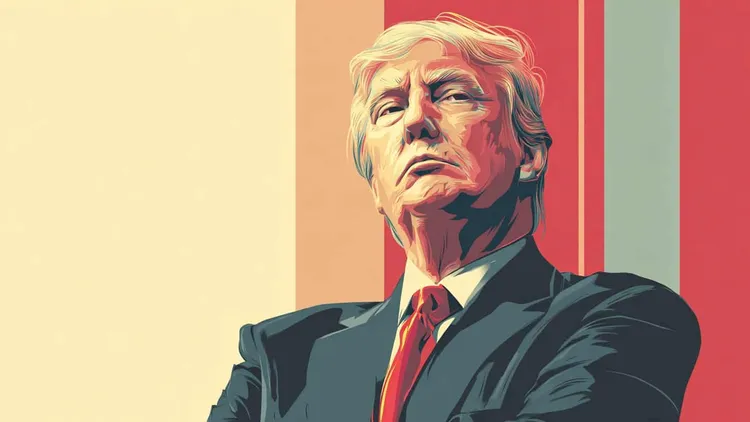
Although these changes in geopolitical power relations had been evident for some time, and although Trump’s re-election could by no means be ruled out when the Ukraine war began, the Western governments failed to grasp after Russia’s invasion that this conflict—once its outbreak had not been prevented—absolutely had to be concluded within Joe Biden’s term in office. In the meantime, Trump’s second term has brought about what had long been announced in the Heritage Foundation’s programmatic document: the now barely reversible dismantling of the oldest liberal-democratic regime, following a pattern we in Europe had already come to know from the example of Hungary and other states.
These new types of authoritarian regimes apparently cannot be attributed to the particular circumstances of a failed transition from post-Soviet forms of rule. They are probably more like precursors for the democratically legitimated dismantling of the oldest democracy on earth and for the rapid construction and expansion of a technocratically administered libertarian-capitalist form of rule. What we are observing in the USA is the same transition from one “system” to another—not even particularly creeping, but rather inconspicuous in the face of a more or less paralyzed opposition: the last or second-to-last democratic election was the long-announced start of a rapid, arbitrary-autocratic expansion of an executive power that has been simultaneously trimmed and purged. Trump is abusing this power without regard for objections from a legal system that now runs into the void and is gradually being hollowed out from above.
The President first seized legislative powers from Congress with his rigorous tariff policy and is attempting to gradually restrict the independence of the press and the university system. He has then intimidated the opposition through the unprompted deployment of the National Guard in major cities such as Los Angeles, Washington, and Chicago. Their mere presence signals the government’s willingness to deploy the army—already rendered compliant in its higher ranks—against its own citizens if necessary.
While within the framework of the EU the party system and democratic elections are still protected even in authoritarian states like Hungary (or previously in Poland), their fate in the USA remains for now uncertain. Following selective electoral successes by the Democrats, Trump’s aim is to marginalize and discredit the political opposition through denunciatory means. In foreign policy, as his arbitrary military actions against smugglers off the coast of Venezuela show, he also disregards international law. The most astonishing and still not plausibly explained phenomenon of this creeping yet purposefully pursued seizure of power is above all the pusillanimity of a largely unresisting civil society—not to mention the readiness to adapt on the part of students and professors who, just recently, had pushed their cost-free resistance against the supposed colonial power of Israel to extremes on their campuses.
Not that I would assume we would behave any differently. Only, I see to this day no convincing signs of a reversal on the path now taken toward a politically authoritarian-controlled, technocratically administered, yet economically libertarian social system. For Trump’s potential successors hold an even more tightly closed “worldview” than the pathologically narcissistic president, who is oriented toward short-term personal “gains” and affirmations and who would rather be a tycoon and Nobel Peace Prize laureate than a politician with vision.
For the foregoing reflections, I cannot claim any competence beyond that of an ordinary newspaper reader. They interest me above all with regard to the question of what the geopolitical shift in weight and the political division of the West—long in the making—means for Europe in the present situation. In what follows, I proceed from the assumption that, with isolated exceptions, the governments of the EU and its member states still have the firm intention for the time being of adhering to the normative foundations and the corresponding established practices of their constitutions. From this follows the political goal of strengthening their weight to the extent that the EU can assert itself in world politics and world society independently of the USA and independently of system-incompatible compromises with the USA or other authoritarian states as an autonomous player.
With regard to the continuation of the Ukraine war, “we”—if I may henceforth speak from this European perspective—remain dependent on American support, not least because we do not possess their technologies for the necessary aerial reconnaissance. Without American support, the Ukrainian front could not be held. But these United States, which no longer normatively maintain their role declared under Biden as the internationally lawful supporter of Ukraine at war, and which at best supply weapons that Europe—and that de facto means the Federal Republic of Germany—pays for, have become an unpredictable partner for their allies. For this reason alone, there is also an interest on our side in the rapid ceasefire sought by the Ukrainian leadership.
For Europe, this has a vexing consequence that has not been addressed to this day. The EU cannot politically distance itself from the passive NATO member USA—which has, so to speak, stepped back into the ranks—even though this has the consequence that “the West” still acts in concert but no longer speaks normatively with one voice. The Ukraine war compels the EU to maintain an alliance with the USA within a NATO framework in which the impending regime change of its most important and hitherto leading member means it can no longer credibly invoke human rights to justify its military support for Ukraine. Anyone who heard Trump’s last speech before the UN General Assembly must admit that the rhetoric of justification under international law that the then-united West had invoked since the first day of the conflict for its partisanship with invaded Ukraine has been devalued.
Unaffected by this embarrassment is only that group of originally 30 states that extends beyond the EU but has, independently of the USA and under the leadership of France and Great Britain, joined forces to support Ukraine. It is therefore an irony—unintended, I hope—that precisely this group of states has thoughtlessly given itself the name “Coalition of the Willing”: the very same name under which George W. Bush, with the help of the British Prime Minister but against the resistance of France and Germany, once assembled a coalition to support his invasion of Iraq in violation of international law.
After this cursory sketch of the changed situation of the divided West, I come to my actual question: How realistic is it to pursue a further political unification of the EU with the aim of being recognized within world society not merely as one of the economically most significant trading partners, but as a distinct, politically self-asserting and capable subject? Although the newer member states in the east of the EU call loudest for rearmament, they would be least prepared to limit their own respective national-state powers of disposition for such a common strengthening. With respect to this consequence, the initiative would have to come from the western core countries of the Union—even though Meloni’s national government would also be unavailable in this regard—and today, given current French weakness, primarily from Germany. The construction of a common European defense now being undertaken could provide the impetus for this.
The Bundestag has in the meantime approved funds for a considerable expansion and buildup of the Bundeswehr, though I shall not concern myself here with the questionable justification based on the supposed current danger of a Russian attack against NATO. Yet the German government is pursuing the construction of “the strongest army in Europe” under the premises of existing treaties—that is, ultimately within the framework of its national powers of disposition. In so doing, the Gemran government is continuing the hypocritical European policy practiced under Chancellor Merkel: rhetorically always pro-European, it had in recent decades rejected various French initiatives for closer economic integration, most recently the urgent initiative of the freshly elected French President Macron. But Eurobonds are also of the devil for Chancellor Merz—in this respect entirely the heir of Wolfgang Schäuble and his doctrine.
There is no serious indication that the German government is effectively pursuing a Europe capable of acting in world politics. To be sure, under the banner of right-wing populism growing daily in all our countries, such a long overdue step toward further integration of the EU, and thus toward its global capacity for action, would find even less spontaneous support than before. In most western member states of the EU too, the domestic political forces for decentering or rolling back the EU—at least for weakening Brussels’s competences—are stronger than ever. For this reason, I consider it likely that Europe will be less able than ever to decouple itself from the USA’s leadership. Whether it can maintain its normative, and thus far still democratic and liberal, self-understanding in this undertow will then be the central challenge.
At the end of a politically rather favoured life, the nevertheless imploring conclusion does not come easily to me: the further political integration at least of the core of the European Union has never been as vital for our survival as it is today. And never so improbable.
Help Keep Social Europe Free for Everyone
We believe quality ideas should be accessible to all — no paywalls, no barriers. Your support keeps Social Europe free and independent, funding the thought leadership, opinion, and analysis that sparks real change.
— €4.75/month
Help sustain free, independent publishing for our global community.
Become a supporter— €9.50/month
Go further: fuel more ideas and more reach.
Become an advocate— €19/month
Make the biggest impact — help us grow, innovate, and amplify change.
Become a champion— €142.50/month
For organisations and professionals who rely on Social Europe in their daily work.
Become a member