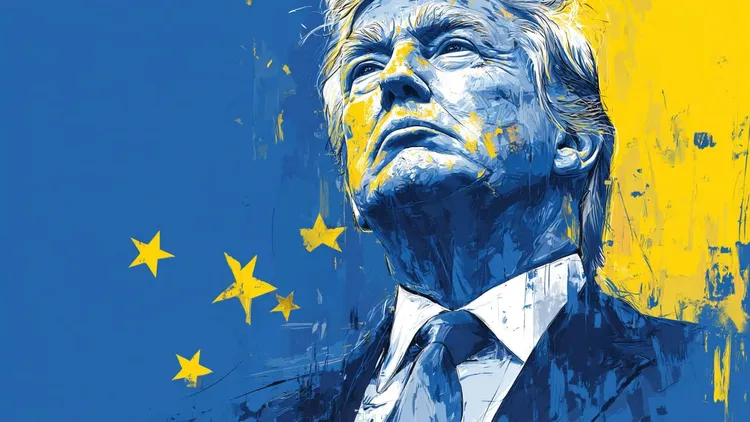
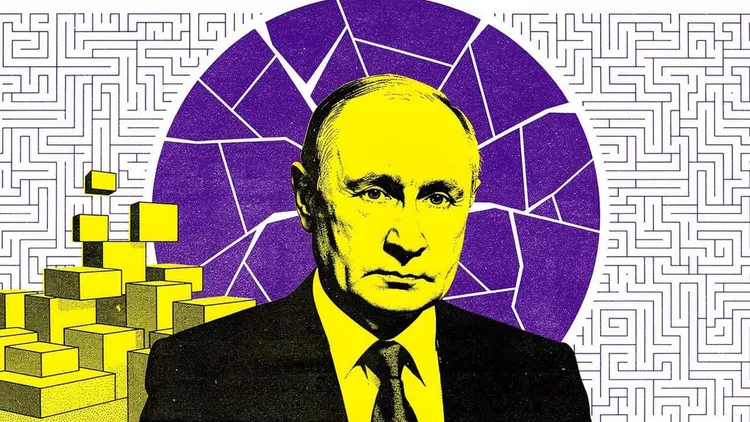
In an earlier column in June 2025, I wrote that Europe must prepare to conceptualise European security without the United States, arguing that the domestic political cost of dependency on US security guarantees—with an ongoing war in Europe—was bound to rise, given domestic developments in America.
The publication of the new US National Security Strategy (NSS) in December 2025 is a clear confirmation of this anticipation. So too is the spectacle of European leaders struggling to secure a seat at the table while the US and Russia negotiate over Ukraine’s future, even as Ukraine itself fights hard to shape the outcome. The NSS does not reveal much that Europe did not already know since President Trump’s return to the White House in early 2025. But the document has been received far more widely in European media and among the public than the speech by Vice President Vance at the Munich Security Conference in February 2025.
As a consequence, many citizens across Europe will increasingly ask their leaders why they continued to expose them to such a degree of dependence on the US. In Germany, a recent poll by Körber Stiftung found that only 27 per cent of Germans view relations with the US as good, with 65 per cent believing that President Trump was not committed to achieving lasting peace in Ukraine. The NSS will very likely amplify this scepticism.
This trend will make it difficult for European leaders to navigate public opinion while Europe remains so dependent on US security guarantees upholding NATO. The outcome of negotiations between the US and Russia on the future of Ukraine might well become yet another sobering moment for European interests. Europeans need to get ahead of the curve and prepare for such a scenario by sketching a landing pad for European emancipation.
Far greater than strengthening NATO’s European pillar
The architectural challenge ahead of Europe is far greater than strengthening the European pillar of NATO. It concerns the overall architecture that was shaped after the end of the Cold War. Since then, there has been a division of labour: the EU handles economic matters, and NATO handles security. With the tailwind of 1989 and the fall of the Iron Curtain, Europeans, supported by the US, transformed their economic community into a political union in the course of the 1990s and early 2000s.
Europeans embraced this historic moment by setting up a political umbrella for their continent, under which they began successively to reunite. The newly founded European Union grew from 12 to 28 members within little more than a decade. By 2007, the EU and its members had adopted a series of fundamental institutional and governance reforms to prepare their union to perform with more than twice the number of members—and on policies well beyond economic cooperation.
This division of labour is now no longer valid. So what is Europe’s political answer to 2025?
Europeans will need to re-engage boldly in shaping not only the security order but the broader political umbrella for the continent as an act of emancipation—not against NATO or the US, but as a clear choice for Europe.
The year 2025 of course feels very different from 1989, when brave citizens in Poland and elsewhere behind the Iron Curtain took the courage to change the system. Witnesses to those days will remember the positivity and pride of that time. It created an immensely powerful political dynamic and a positive vision of Europe’s collective future. Europeans suddenly felt their power and rallied behind freedom, dignity, and reunification.
The spirit and mindset of 2025 is very different. This in itself requires additional effort by European leaders to create momentum for a sense of collective action. Ironically, the President of the United States might well be helping in that regard.
There is a second element to the need to “think big” again in Europe: the European Union—that is, both the EU and member-state levels—has been underperforming for many years. Europeans have been in a state of “permacrisis,” yet have by and large failed to mobilise their union more efficiently and effectively to serve their citizens in a fast-paced and changing world less conducive to Europe’s interests.
Looking at the 2026 work programme of the Commission illustrates the point: the Commission gets a lot of things right that need to be done to make Europe’s economies competitive again and keep Europeans safe—but it risks falling politically hollow, given increasing political fragmentation between and within institutions and member states. Meanwhile, there is a risk of the EU hollowing out from within, with political forces that do not believe in the supranational elements of the union that have been key to its success.
Europe must mobilise again
As 2025 comes to a close, there is a tangible risk of the European Union itself coming under further attack—not least from the other side of the Atlantic, as the NSS makes very clear in its attitude towards supranationalism. Institutions—even those far less ambitious than the EU—are difficult to establish and set in motion, and they rarely implode outright. They tend instead to tick along despite acknowledged shortcomings, sometimes for extended periods.
Yet they can begin to lose relevance, slowly but surely, when they fail to deliver tangible results or when crucial decisions shift elsewhere. It would be foolish to believe that the EU is immune to such a scenario. This includes a scenario in which the EU and its members fail to give their union a place in the future of security on their continent.
Europeans should mobilise yet again their choice for Europe. This does not necessarily mean tearing down the institutions that have served European interests for many decades. But Europeans should not shy away from asking more fundamental questions about their architecture of collaboration. This will have to involve difficult questions regarding the future of NATO and the EU as we have known them for decades, none of which will be easy. But Europeans need to begin this process now.
As a starting point, this can be expressed in a political declaration by European leaders—EU and non-EU alike—based on their willingness to commit. Such a declaration could entail at least the following elements: a commitment to democracy, human rights, and multilateralism; a commitment to European collaboration, including via joint institutions, to serve Europe’s citizens; a path towards a European security and defence framework, including by integrating the elements of the EU that can help bring about a new security architecture in Europe in the medium to long term; a significant collective investment in technology; and an overall forward-looking attitude to embrace opportunity in a fast-changing world.

Help Keep Social Europe Free for Everyone
We believe quality ideas should be accessible to all — no paywalls, no barriers. Your support keeps Social Europe free and independent, funding the thought leadership, opinion, and analysis that sparks real change.
— €4.75/month
Help sustain free, independent publishing for our global community.
Become a supporter— €9.50/month
Go further: fuel more ideas and more reach.
Become an advocate— €19/month
Make the biggest impact — help us grow, innovate, and amplify change.
Become a champion— €142.50/month
For organisations and professionals who rely on Social Europe in their daily work.
Become a member