KEY INSIGHTS
- A rare constitutional opening: Tisza’s parliamentary supermajority — unlike anything available to Poland’s Donald Tusk — gives Magyar the power to rewrite the Fidesz-era constitution and cardinal laws that entrenched one-party control.
- Democracy without democrats: Hungary has had virtually no sustained experience of liberal democracy, a legacy that political analyst Zoltán Ranschberg crystallises with the observation that “people don’t understand what democracy is.”
- Poland as cautionary tale: The Tusk government’s inability to reverse democratic backsliding — blocked by a hostile president and no supermajority — shows what happens when institutional leverage is missing.
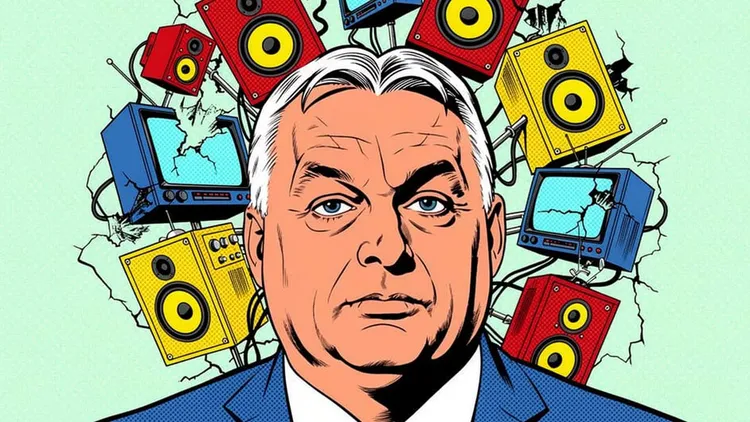
- Media as battleground: Magyar has proposed suspending state TV and radio news broadcasts until conditions for impartial reporting are met, recognising that Orbán’s propaganda apparatus is incompatible with democratic renewal.
- Culture must follow law: Institutional reform alone will not suffice; Hungarians, particularly older generations, must overcome a deeply ingrained tendency toward passivity in the face of authority.
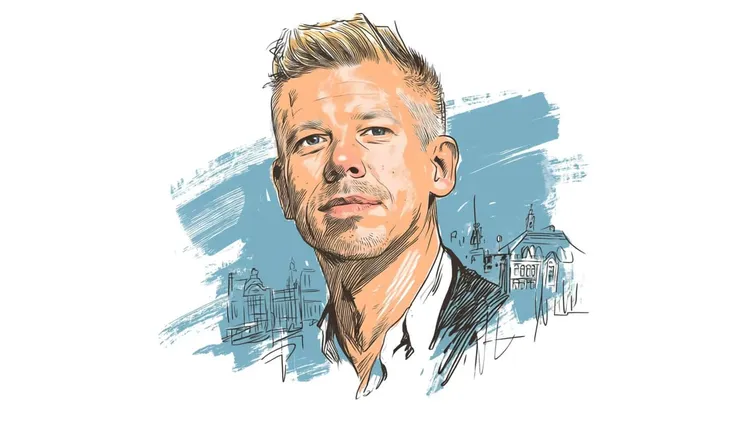
The challenges facing Péter Magyar and the Tisza Party, following their spectacular victory in parliamentary elections in Hungary on 12 April, are immense. Magyar and his party are committed to reviving the moribund Hungarian economy despite severe budgetary constraints, improving failing, underfunded public services, restoring the rule of law and an independent judiciary, depoliticising the prosecution service, halting the rampant corruption that has soared under Fidesz, investigating politicians and others suspected of misappropriating state funds, and overhauling public broadcasting. Under Orbán, state TV and radio have degenerated into a crudely partisan instrument serving the interests of the government. Magyar has also pledged to restore “plural democracy” after 16 years during which Orbán hollowed out the country’s democratic structures, creating a political system condemned by the European Parliament as “a hybrid regime of electoral autocracy”.
Magyar’s promise to establish “plural democracy” — a euphemism for liberal democracy — may not prove straightforward in view of Hungary’s turbulent history. Part of the Habsburg, and later Austro-Hungarian, Empire until its dissolution in 1918, Hungary was governed by a Soviet-style communist regime for part of 1919 before a reactionary clique, headed by Admiral Horthy, assumed power with the help of the Romanian army. Although a multi-party parliamentary system existed in the inter-war years, the political order was authoritarian, arch-conservative, and undemocratic. The Second World War, in which Hungary was an ally of Nazi Germany, was followed by almost half a century of communist rule that ended only when Mikhail Gorbachev decided that the countries of Central and Eastern Europe could choose their own political destiny, removing the threat of Soviet intervention.
Until 1990, when a genuinely democratic constitutional order was finally introduced in Hungary following free, multi-party elections, the country had had virtually no experience of “liberal” or “plural” democracy, which requires the separation of powers, an independent and diverse media, regular free and fair elections, and respect for human rights.
Thanks to Viktor Orbán and Fidesz, Hungary’s experiment with genuine democracy barely lasted 20 years. After Fidesz returned to power with a parliamentary supermajority in 2010, it proceeded to dismantle many of the pillars of Hungary’s democratic order. Power was increasingly concentrated in the hands of the prime minister, while the office of head of state became a sinecure for functionaries who could be relied upon not to challenge the premier’s authority. Electoral laws were revised to favour Fidesz, judges were appointed to the Constitutional Court and the Curia (Hungary’s Supreme Court) on the basis of their political reliability as much as their juridical competence, and Fidesz extended its control over 80 per cent of the country’s print and electronic media.
In summer 2014, at a gathering of admirers in Băile Tușnad, Romania, Orbán declared that he was building an “illiberal democracy” — a notion that Jan-Werner Müller has dismissed as incoherent and disingenuous. In reality, Orbán was constructing a “post-communist mafia state” modelled on Putin’s Russia. If Hungary is to transition to a plural democracy, as envisioned by Péter Magyar, it must overcome this mostly unpromising record of authoritarian, undemocratic rule and the damaging psychological legacy that this history has generated. “People don’t understand what democracy is,” Zoltán Ranschberg, a respected political analyst, told an audience in Budapest recently.
Restoring plural democracy in Hungary
Slawomir Sierakowski rightly argues that Péter Magyar and Tisza could learn a great deal from developments in Poland. A liberal-conservative government, headed by Donald Tusk, has been faced with the formidable task of restoring Polish democracy following the defeat of the Law and Justice Party (PiS) in elections in autumn 2023. During its eight years in power, PiS adopted a series of measures virtually identical to those in Fidesz’s much-thumbed de-democratisation playbook. The PiS government, like the Orbán regime, “captured … democratic institutions and installed loyal allies in key positions, including in the judiciary, the prosecution services and public media.” The PiS administration, like Fidesz, “undermined civil liberties…smearing civil society organisations and protesters”.
Sierakowski correctly maintains that in Hungary, as in Poland, “systemic change will require a parliamentary supermajority, a cooperative president, and an independent constitutional court”. None of these conditions has been met in Poland, rendering the task of the Tusk administration almost impossible. The challenge facing Tusk became more difficult still with the election of Karol Nawrocki as President of the Republic in 2025. Ideologically aligned with PiS, which supported his candidacy, Nawrocki has made promiscuous use of his veto powers to thwart the Tusk government in its efforts to restore democracy and to govern effectively.
By comparison, the situation in Hungary is much more favourable. Unlike Tusk, Magyar commands a supermajority in parliament and is not reliant on coalition partners to govern. At the time of writing, Tisza has secured 141 seats in Hungary’s unicameral legislature, as against just 52 for Fidesz and six for the far-right Mi Hazánk (Our Home) party. Tisza’s parliamentary supermajority means that it can amend or repeal the Fidesz-inspired constitution, or Fundamental Law, adopted in 2011, and change the “cardinal laws” that Fidesz has relied on to ensure a largely compliant judiciary and to impose its regressive social agenda on Hungary.
In carrying out this ambitious programme of democratic renewal, Magyar cannot rely on the cooperation of Hungary’s president, Tamás Sulyok, formerly president of the Constitutional Court. In both roles, Sulyok demonstrated unfailing loyalty to Fidesz. In his victory speech, Magyar called on Sulyok to invite him to form a government without delay and then to resign, along with “all the puppets the government has placed around our necks” — including the presidents of the Curia and the Constitutional Court, the chief prosecutor, and the head of the Media Council. It is highly unlikely that Sulyok possesses the necessary strength of character or popular support to defy Hungary’s incoming premier by remaining in office.
As regards the Constitutional Court, its competence was significantly reduced under Fidesz, while the appointment of justices disinclined to oppose the ruling party saw the court dwindle into little more than an adjunct of the executive. Tisza’s parliamentary supermajority means that the court’s independence and competence can be restored with relative ease. In 2022, the Hungarian Helsinki Committee adopted a set of recommendations as to how this should be accomplished.
As Sierakowski notes, “[a]nother sector in need of quick reform is public media”, which has played a hugely detrimental role under Orbán by relentlessly feeding disinformation to the electorate. Fully aware of the critical importance of a free and diverse media in sustaining democracy, prime-minister-elect Magyar has proposed that state TV and radio should cease broadcasting news until “conditions for objective, impartial reporting” are assured, denouncing M1, a public TV channel, as “a factory of lies”. Magyar envisages the formation of a committee, composed of “all parliamentary parties and other leaders”, to ensure that public media meets or improves on “BBC standards” in ensuring that opposition politicians are given adequate airtime.
In addition to institutional and other reforms, Hungary’s transition to a genuine plural democracy will depend on a change of mentality. Unlike Orbán and Fidesz, the incoming Magyar administration must be willing to accept that some of its policies may be declared unlawful by the courts or frustrated by parliament. The separation of powers, a robust and independent judiciary, a legislature not wholly subservient to the executive, and a free and diverse media are essential attributes of true democracy. Hungarian society, particularly older age groups, must also be willing to change, overcoming what Ranschberg identifies as a historic tendency to passivity in the face of authority. If Hungary is to transition to a plural democracy, its citizens must unite behind the principle that governments are accountable and that sovereignty resides not in a self-perpetuating ruling elite — whether of the left or right — but in the people. Ousting Orbán and Fidesz from power and equipping Tisza with an unprecedented parliamentary supermajority represents an excellent start.
Help Keep Social Europe Free for Everyone
We believe quality ideas should be accessible to all — no paywalls, no barriers. Your support keeps Social Europe free and independent, funding the thought leadership, opinion, and analysis that sparks real change.
— €4.75/month
Help sustain free, independent publishing for our global community.
Become a supporter— €9.50/month
Go further: fuel more ideas and more reach.
Become an advocate— €19/month
Make the biggest impact — help us grow, innovate, and amplify change.
Become a champion— €142.50/month
For organisations and professionals who rely on Social Europe in their daily work.
Become a member