KEY INSIGHTS
- Epistemic, not cyclical: This is not sociology’s familiar mid-life crisis but a deeper failure to interpret a society whose modern foundations are dissolving.
- Philosophy fills the void: Thinkers from Jürgen Habermas to Byung-Chul Han now produce the critical analysis once associated with sociology.
- A political backlash: Florida has stripped sociology from the compulsory subjects at state universities, echoing the 1980s, when the discipline was treated as ideologically suspect.
- A quantitative retreat: What remains of academic sociology has narrowed into statistical measurement, ceding the territory of interpretation.
- Bound to modernity’s fate: Sociology emerged with positivism and modern thought; if modernity ends, the discipline must transform into a meta-science or disappear.
No other discipline has weathered crises as profound as sociology, yet each time it has managed to re-emerge renewed and revitalised in new forms. This time, however, the challenge is of a different order. The current crisis in sociology is an epistemic crisis.
The 1950s brought a radical shift in the discipline, which moved from being a conservative science, concerned with maintaining social stability, to one that turned radically critical of the capitalist system and, more broadly, of the political establishment. Against the structural-functionalism of Talcott Parsons, who represented a sociology indifferent to social conflict, Charles Wright Mills revealed the visionary potential of an atypical science capable of imagining the future and foreshadowing it. Subsequent developments followed this trajectory, culminating in Alvin W. Gouldner’s denunciation of a new crisis in The Coming Crisis of Western Sociology (1970), which dispatched the Weberian myth of objectivity in favour of a more decisive subjectivisation of research. Gouldner marked sociology’s entry into the phase of individualism, soon affirmed by Jean-François Lyotard’s postmodern thought, and the urgent need to break an impasse that threatened to strip the discipline of its social function.
The 1980s, the “decade of the desert”, saw sociology decline and lose standing, reduced to an “ideological appendage” — opposed as a suspect practice aimed at subverting the established order or, worse, at justifying violence.
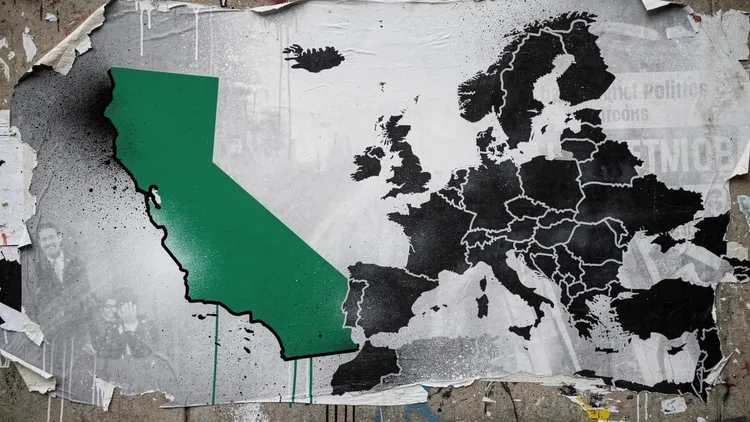
Something similar is happening now in the United States. In Florida, following a decision by the Republican governor Ron DeSantis and the head of the state university system, Raymond Rodrigues, sociology has been removed from the list of compulsory subjects at state universities.
Following Zygmunt Bauman, we have witnessed an increasingly clear separation between qualitative and quantitative sociology — a distinction that already existed and that shaped specific research methodologies, from Mark Granovetter to Robert D. Putnam and James Moody.
The difference is that what remains of sociological discourse is now more closely tied to the statistical measurement of social phenomena — Christopher Bail, Sandra González-Bailón, Duncan J. Watts — whilst philosophy has absorbed the development of critical thinking in that area which once belonged to sociology and made it its own. This revives what was originally Auguste Comte’s conception: sociology as a “practical” extension of philosophy.
Today, sociology and philosophy are increasingly indistinguishable: they use the same language, address the same themes, and arrive at the same critical diagnoses of society.
In this consensual assimilation, which heralds the erasure of differences, it is the philosophers who have taken the lead, seizing the opportunity to use sociological tools to formulate a critical thought no longer detached from reality — no longer merely theoretical, but firmly rooted in current affairs and in the real concerns of public opinion.
The Frankfurt School originally fostered this convergence, working systematically across philosophical, psychological and sociological fronts, even as thinkers such as Leo Löwenthal and Erich Fromm managed to keep the fields of research clearly separate. With the second generation, the picture changed sharply: Jürgen Habermas focused on communication and the public sphere, blurring the boundaries and establishing the primacy of philosophy over sociology.
The most recent works of Critical Theory, in the fourth generation of the Frankfurt School, confirm the trend. Hartmut Rosa has just achieved considerable public success with Situation und Konstellation. Vom Verschwinden des Spielraums (2026), a study of the freedom to act under the pressure to perform, drawing on the experience of the VAR in football matches. He had previously addressed acceleration, a theme with clear sociological connotations.
One need only think of Byung-Chul Han, the German philosopher of South Korean origin and author of extraordinary analyses of neoliberal, consumerist society, from The Burnout Society (2010) to Infocracy (2021); of Bernard Stiegler, the leading philosopher of technology, who died in 2020, in The Automatic Society (2015); or of the Italian Maurizio Ferraris, in The Skin: What Does It Mean to Think in the Age of Artificial Intelligence (2025).
The fact is that there are more philosopher-sociologists than sociologist-philosophers around. There is a striking lack of prominent figures who define themselves as “sociologists” and offer meaningful, critical analyses of our times capable of keeping pace with what philosophy produces. It is philosophy, quite clearly, that commands cultural standing today: from books to television appearances, from festivals to social media.
What are the causes? The answer lies in the roots of sociology itself, where the seeds of its recurring crises were planted. Begin with the notion of science. The claim that sociology is a science has been questioned from many quarters and, on several occasions, denied outright, even though the discipline emerged in the second half of the nineteenth century, at the height of positivism, as a response to the need to study human behaviour through a scientific method. It is worth remembering that everything in that period was viewed through a scientific lens, and positivist culture concerned itself with understanding the world through rigorous, measurable, objective study. This was something philosophy was unable to provide, whilst a new discipline was needed to satisfy the cultural need to “organise” society through field research and specific analysis.
It is no coincidence that Auguste Comte’s first lectures were entitled “positive philosophy” — an early attempt to move away from purely abstract discourse — and that it was only later that “sociology”, the new science that studies society, was explicitly named. But can we still speak of “science” two centuries after positivism?
The issue runs deeper still. If sociology’s birth is bound up with positivism, we must admit that it is bound up just as tightly with modernity.
Anthony Giddens, one of the most important and influential contemporary sociologists, acknowledges as much when he writes: “Modernity itself is deeply and intrinsically sociological” (The Consequences of Modernity, Polity 1996: 43). This is a fundamental point. The link between sociology and modernity, unlike that of philosophy, is inextricable, and this close dependence on modern thought — of which sociology expresses the propensity for order and social control, even in a positive sense — compels the discipline to share modernity’s fate.
In times of crisis for modernity, it is understandable that a crisis in sociology should arise alongside it. This modern science, caught inside the profound crisis of modernity itself, is no longer able to comprehend its object, nor does it retain the strength to critique it. That task is therefore returned to philosophy.
The end of modernity will coincide with the end of sociology — or with its radical transformation into a meta-science.
Help Keep Social Europe Free for Everyone
We believe quality ideas should be accessible to all — no paywalls, no barriers. Your support keeps Social Europe free and independent, funding the thought leadership, opinion, and analysis that sparks real change.
— €4.75/month
Help sustain free, independent publishing for our global community.
Become a supporter— €9.50/month
Go further: fuel more ideas and more reach.
Become an advocate— €19/month
Make the biggest impact — help us grow, innovate, and amplify change.
Become a champion— €142.50/month
For organisations and professionals who rely on Social Europe in their daily work.
Become a member