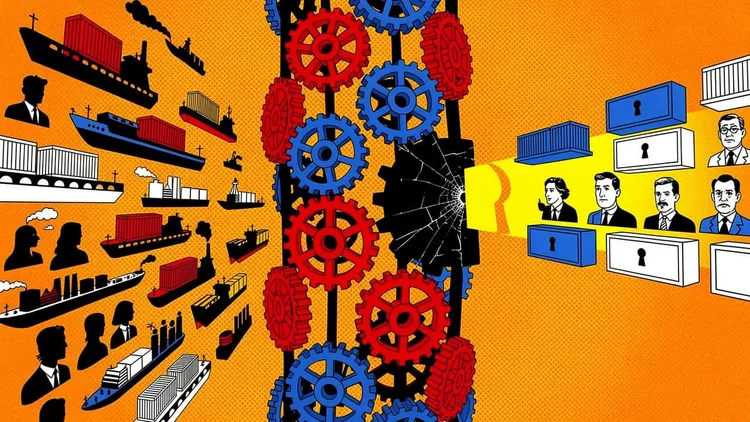
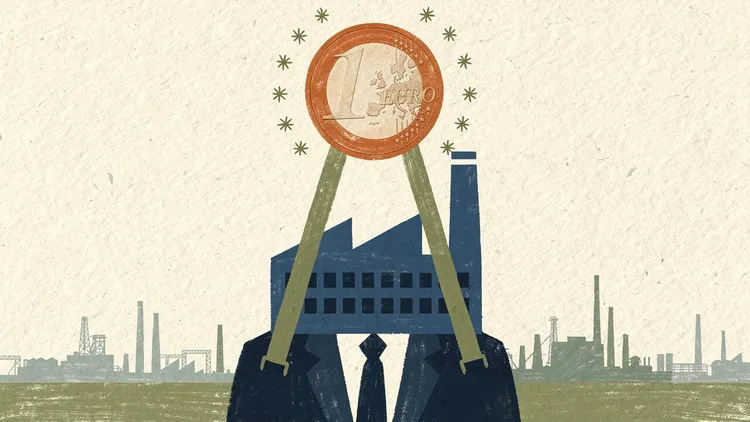
The periodic shift from regulation to deregulation and back again is often described as the “regulatory swinging pendulum.” Since the European elections of May 2024, that pendulum has swung decisively toward deregulation. As I analyse in my book Regulating Capitalism: The Politics of Market and Financial Regulation, such shifts are powered by different forces. Regulation may become obsolescent due to innovation; deregulation may result from growing pressure by regulated industries; or it may be initiated by a new political power dedicated to free-market ideology. The 2024 elections saw the right and far right growth in the European Parliament, both promoting a “free market” approach—and the consequences followed swiftly.
After May 2024, excessive administrative burden and bureaucracy were officially identified as major obstacles to EU competitiveness. The Commission prepared Political Guidelines for 2024–2029, intended to give new impetus to the “simplification” of legislation.
Beyond this domestic agenda, pressure from the Trump administration’s tariff policy has pushed the EU to sacrifice its regulatory sovereignty. The United States has strongly opposed not only the European Corporate Sustainability Reporting Directive (CSRD) and the Corporate Sustainability Due Diligence Directive (CSDDD)—which it considers hostile to American business—but also the EU’s digital legislation: the Digital Services Act (DSA), the Digital Markets Act (DMA), and the European AI Act.
Not everyone in Brussels has accepted this pressure willingly. Valérie Hayer, the Renew Europe Group chair in the European Parliament, declared: “We make law through our own European democratic process, not by foreign pressure.” Teresa Ribera, the European Commission’s executive vice-president, urged the EU to show courage against Washington’s pressure, cautioning against the “temptation of being subordinated to other’s interests.” In defence of European regulatory sovereignty, Ribera even warned that the EU should be prepared to abandon its newly struck trade deal with the United States if President Trump follows through on threats to punish the bloc over its digital legislation.
A return to risk-taking
This drive toward deregulation represents a return to risk-taking that may threaten financial stability, as Europe experienced during the 2007–08 financial crisis. This is particularly true of the initiative known as Omnibus I, II, and so on—packages of legislative acts, the eighth of which was launched recently. The first Omnibus, dated 26 February 2025, deals with ESG reporting and includes changes to the CSRD, CSDDD, and the EU Taxonomy Regulation—the central pillars of the Green Deal. The aim is to cut “red tape” to improve the business environment, make the EU more attractive to investors, and “boost competitiveness vis-à-vis the USA and China.” Under the new rules, only large companies with more than 1,000 employees will be required to prepare ESG reports, and this obligation is postponed to 2028—two years later than originally planned. This means that most companies originally covered by the ESG rules will be exempted.
The Commission argues that Omnibus I reduces reporting requirements by 25 per cent, and by at least 35 per cent for small and medium-sized enterprises, while maintaining the essential elements of the original legislation. According to the Commission, the package has reduced the administrative burden of European companies for 80 per cent and is expected to save €6.3 billion.
The “simplification agenda” has provoked strong opposition from the non-governmental sector. Faustine Bas-Defossez, director for nature, health, and environment at the European Environmental Bureau, said: “It is now clear that ‘simplification’ is just a Trojan horse for aggressive deregulation. The Omnibus Simplification Package isn’t just an attack on corporate environmental accountability; it’s a blow to democracy. In just four months, the Commission has rewritten agreed EU rules without any democratic process, impact assessment, or consultation.”
After civil society organisations raised concerns about malpractice in proposing the simplification laws, the EU Ombudswoman Teresa Anjinho began investigating the case. She raised serious objections to a number of procedural shortcomings in an attempt to simplify the rules for business as quickly as possible, and accused the Commission of maladministration. But as the European Ombudswoman lacks any mechanism for enforcing her decisions apart from “naming and shaming,” her criticism has had no practical effect.
BusinessEurope, the largest lobbyist in the EU, and the German Chamber of Industry and Commerce (DIHK), by contrast, described the changes as essential “to balance the sustainability and competitiveness of the EU.” Business organisations have most recently launched campaigns for a Labour Market Omnibus or a “Social Omnibus,” calling for simplification of social and employment law.
However, parts of the business community that trusted in the EU’s political commitment to the Green Deal a few years ago do not agree with the weakening of ESG requirements. Among other reasons, they have already invested significant resources in compliance. And that is not all: demand for quality ESG reporting is growing. A declaration by Eurosif, IIGCC, PRI, E3G, and GRI dated 21 August 2025, on behalf of 402 signatories, calls for preserving the core of the EU Framework for Sustainable Financing, claiming – in contrast to Busines Europe, that “sustainability rules are essential for European competitiveness.” Among the signatories are major investors such as Allianz SE, Nordea AM, IKEA, Nokia, Nestlé, EDF, and Vattenfall.
Ignoring the ECB’s warnings
The weakening of ESG reporting will have serious consequences for financial stability. It will make it impossible for the financial sector to make informed decisions—for example, in the provision of credit and insurance products—and thus expose it to risks including the growing climate risk, which is now considered systemic. The increasing requirements for the banking sector to include climate risks in risk management, capital adequacy, stress testing, and reporting of fossil fuel exposures under the amended legislation (CRD VI/CRR3) of 2024–25 cannot be effective without reliable data.
The European Central Bank (ECB), in its opinion of 8 May 2025 on the forthcoming changes to the CSRD and the CSDDD, insisted that if too many firms were excluded from ESG reporting, a large part of information on the economy would disappear. Therefore, in addition to firms with 1,000 employees or more, the ECB proposed requiring reporting from firms with 500 to 1,000 employees: “Medium-large undertakings should report in accordance with simplified sustainability reporting standards, to be developed and adopted by the Commission.” The ECB, in the same spirit, proposed amendments to the Commission’s changes in due diligence requirements.
All these reservations and recommendations were ignored. After a prior agreement between the European Parliament and EU member states on 9 December, simplified corporate sustainability reporting and due diligence rules were approved in the European Parliament on 16 December, with the votes of the European People’s Party (EPP), European Conservatives and Reformists (ECR), the Patriots group, and the Sovereigntists.
The reporting obligation under the CSRD has been limited to companies with more than 1,000 employees and a net annual turnover of €450 million. The CSDDD will now apply only to the largest companies with more than 5,000 employees and an annual turnover of €1.5 billion, and its effectiveness has been postponed until mid-2029.

Help Keep Social Europe Free for Everyone
We believe quality ideas should be accessible to all — no paywalls, no barriers. Your support keeps Social Europe free and independent, funding the thought leadership, opinion, and analysis that sparks real change.
— €4.75/month
Help sustain free, independent publishing for our global community.
Become a supporter— €9.50/month
Go further: fuel more ideas and more reach.
Become an advocate— €19/month
Make the biggest impact — help us grow, innovate, and amplify change.
Become a champion— €142.50/month
For organisations and professionals who rely on Social Europe in their daily work.
Become a member