Skip to content

Social Europe

  • eBooks
  • Newsletter
  • Membership
  • Advertisements

AUTHOR PROFILE

Laura Nurski

Laura Nurski

Laura Nurski is Head of Programme on Future of Work at the Centre for European Policy Studies (CEPS), part-time assistant professor Acerta Chair AI at Work at KU Leuven, and an independent researcher. She holds a PhD in Economics, a M.Sc. in Business Engineering and is currently finishing a M.Sc. in Sociology, all from KU Leuven. Her research focuses on the design of jobs and organisations, occupational change in the labour market, and the role of AI and digital technologies. Laura has also worked as a machine learning data scientist in the private sector and as an organisation design researcher in a non-profit.

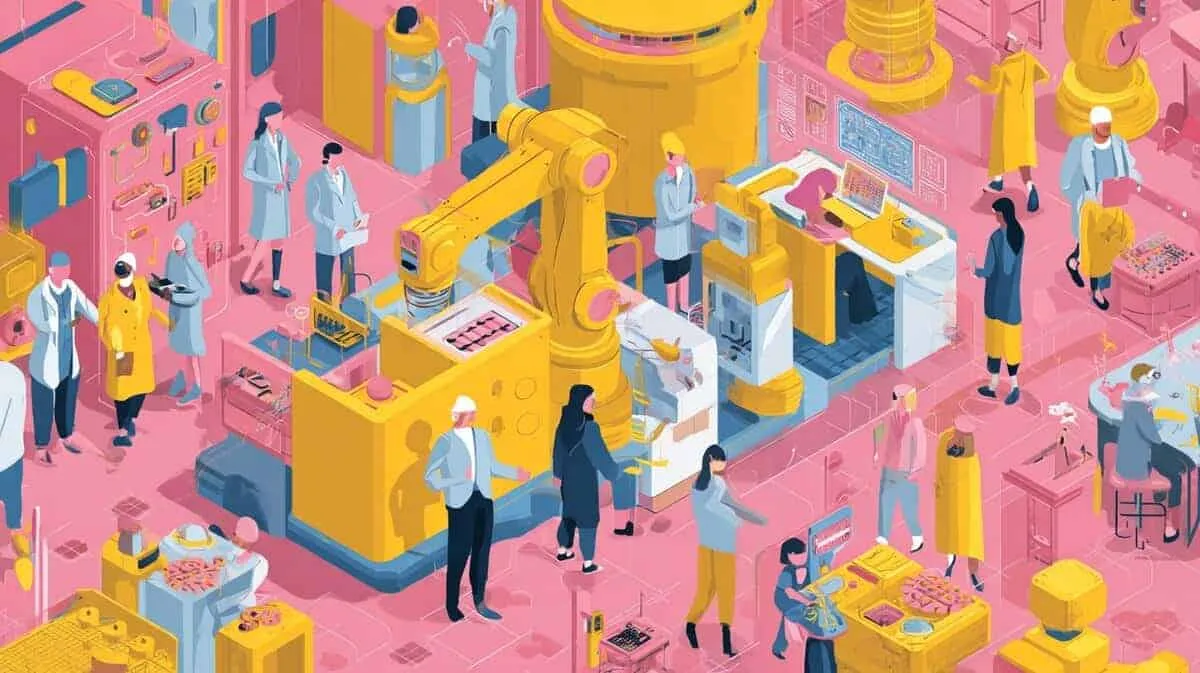
Workers and robots in a digital manufacturing factory, Social Europe.

The Real Digital Revolution At Work: Why Platformisation Matters More Than Robots

Enrique Fernández-Macías and Laura Nurski

The digital transformation of work isn't destroying jobs through automation—it's fundamentally reshaping how work is organised, managed and controlled.

S&D Group in the European Parliament Advertisement

S&D conference The Middle East at crossroads: A progressive vision, 9 September 2026, European Parliament, Brussels

S&D conference “The Middle East at crossroads: A progressive vision”

In case you missed it, you can watch the replay of the S&D Group’s conference “The Middle East at crossroads: A progressive vision” by clicking the button below, and read the press release and opinion piece.

MORE INFO

Political Advertisement

ETUI Advertisement

Cover of the ETUI report Climate change and workers’ health: protecting workers against heat and other climate-related hazards, by Marouane Laabbas-el-Guennouni and Andreas D. Flouris.

New Report - Climate change and workers’ health

After a summer marked by repeated heatwaves across Europe, this publication tackles an increasingly urgent issue: workplace heat exposure, now one of the leading climate-related threats to workers' health. The report identifies the sectors and workers most at risk, and calls for a dedicated EU directive to strengthen and harmonise their protection.

READ HERE

Eurofound Advertisement

EurofoundTalks podcast with Mary McCaughey and Eszter Sandor: Is financial resilience and trust in Europe faltering?

Is financial resilience and trust in Europe faltering?

In this episode of Eurofound Talks, host Mary McCaughey and senior researcher Eszter Sandor unpack the results of the 2025 Living and Working in the EU e-survey. While headline inflation has stabilised at 2.1%, the data reveals a continent gripped by chronic precariousness, with 57% of respondents now at risk of depression. Mary and Eszter explore how this economic insecurity is impacting institutional trust and democratic engagement.

LISTEN HERE

FEPS Advertisement

Cover of The Progressive Post issue 31, Summer 2026: The Mediterranean, a crowded sea.

The Summer issue of The Progressive Post is out! 

The EU is belatedly awakening to a changing Mediterranean sea, where more assertive regional powers are reclaiming a role.

The new issue of the magazine also reflects on how we struggle to keep pace with AI innovations, examines the uncertainties surrounding the execution of the Pact on Migration and Asylum and the risk to human rights posed by the Return Regulation, and focuses on the EU Commission's newly proposed Industrial Accelerator Act.

READ THE MAGAZINE

Hans Böckler Stiftung Advertisement

WSI blog series “Climate Transition: Socially Just and Fair”: How the climate crisis and global migration are linked, by Neva Löw and Maximilian Pichl

How the climate crisis and global migration are linked

The climate crisis and global migration are closely linked. Emancipatory forces must demand and defend the right to be able to leave, but not to have to leave. This means defending and expanding asylum rights.

READ HERE

FES Advertisement

Cover of the Friedrich-Ebert-Stiftung analysis The Capability State: A Progressive Vision for the 21st Century by Henning Meyer.

“What is the actual purpose of the state?” – this central question is the focus of the analysis. At a time when bureaucratic processes are making life difficult for citizens, the paper proposes a three-part model. It aims at a conception of the state as a platform that helps society build the capabilities it needs to address its problems effectively.

MORE INFO

Our Mission

People

Article Submission

Advertisements

Membership

Politics Archive

Economy Archive

Society Archive

Transparency Notice

Photo Credits

RSS Feed

Legal Disclosure

Privacy Policy

Copyright

Social Europe ISSN 2628-7641

Copyright Social Europe Publishing & Consulting GmbH 2026
  • eBooks
  • Newsletter
  • Membership
  • Advertisements