KEY INSIGHTS
- Power, not productivity: Pope Leo XIV’s Magnifica Humanitas reframes AI as a question of who controls foundational infrastructures, not who profits from them.
- Mutual capture: Washington’s AI strategy binds the state to a handful of private firms whose accountability runs to shareholders, not citizens.
- The Chinese mirror: Beijing resolves the public-private tension by abolishing it, exposing concentration as a political choice rather than a technological inevitability.
- Europe’s paradox: The bloc has set the world’s most ambitious AI rules yet depends on technologies it neither designs nor controls.
- The AI trilemma: No major power has reconciled democratic accountability, public control of strategic infrastructure, and technological competitiveness.
Pope Leo XIV’s encyclical Magnifica Humanitas, published in May 2026, is an unlikely document to set beside the CHIPS Act, the EU AI Act, or the most recent filings of frontier artificial intelligence companies. Yet anyone working on the political economy of technology should read it carefully. Not because it offers a regulatory blueprint — it does not — but because it poses, with unusual clarity, a question most policy debates still prefer to avoid: who holds power over the technological infrastructures that increasingly govern our collective life, and how is that power being exercised?
The encyclical does not answer in economic or political terms. But by framing the question so directly, and by situating it within a longer tradition of Catholic social thought on the relationship between capital, power, and democratic governance, it converges, from an unexpected direction, with some of the most important and underappreciated insights in contemporary political economy.
The architecture of control
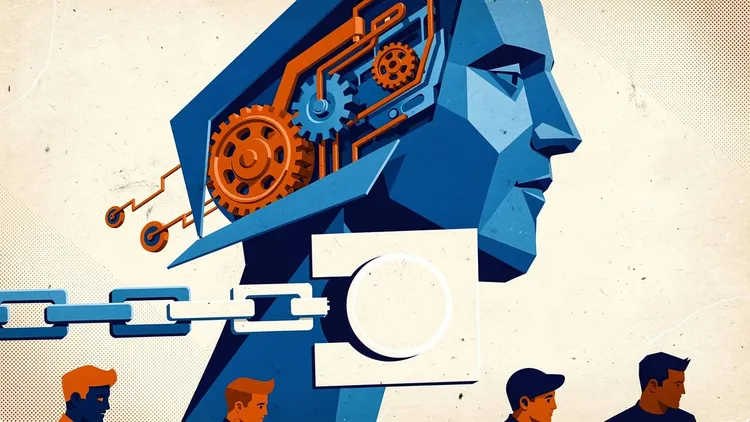
The dominant narrative about artificial intelligence concentrates on productivity, jobs, and competitiveness. These concerns are real. But they miss the deeper transformation underway. AI is not simply another productivity-enhancing technology. It is a foundational technology whose significance lies not only in what it produces, but in what it controls.
Advanced AI systems depend on extraordinarily concentrated inputs: hyperscale computing, vast proprietary datasets, specialised semiconductors, and frontier models. A small number of firms — overwhelmingly American, with a handful of Chinese counterparts — control all of these simultaneously. This concentration is not incidental. It reflects the steep barriers to entry and powerful network effects that characterise the digital economy: the more data and compute you possess, the better your models; the better your models, the more users; the more users, the more data. The result is a self-reinforcing logic of accumulation that makes competitive entry structurally improbable.
What distinguishes this moment from earlier waves of industrial concentration is not its scale but its nature. In previous eras, dominant firms wielded enormous economic power, but the authority to set the rules remained largely in public hands. Today that boundary is eroding. AI systems are being embedded across finance, healthcare, education, public administration, and communication. The firms controlling foundational models and computing infrastructure are acquiring something closer to governance capacity: their decisions about model design, access, pricing, and deployment carry broad social and political consequences that were previously the domain of democratic institutions. The encyclical, in asking who exercises “impressive dominance” over foundational technologies, is pointing precisely at this transition.
The United States has built the most ambitious state-backed technology strategy in its postwar history. The CHIPS Act, export controls on advanced semiconductors, and the broader mobilisation of federal resources around artificial intelligence reflect a clear strategic logic: national advantage in the AI era must be actively built and protected, not left to market forces alone.
Yet this strategy contains a structural contradiction it has not yet been forced to confront. A model that concentrates infrastructural power in a handful of private firms creates a dependence of the state on private capital that sits uneasily with the national-security rationale supposedly justifying it. The state needs these firms to maintain technological advantage; these firms need the state’s subsidies, protection, and geopolitical cover. The arrangement is presented as a partnership. It functions, in practice, as a condition of mutual capture — one in which the security interests of democratic societies are entrusted to corporate actors whose primary accountability runs to shareholders, not citizens.
When the firms controlling foundational AI infrastructures are simultaneously the most active shapers of the regulatory environment through which those same infrastructures are governed, the boundary between governed and governing becomes genuinely difficult to locate. The revolving door between government and frontier AI companies is not simply a conflict-of-interest problem. It is a symptom of a deeper condition: democratic states increasingly lack the internal expertise and capacity to govern technologies they do not themselves build or operate.
There is a further fragility worth naming. The entire model rests on an assumption that frontier AI will continue to generate increasing returns concentrated in a small number of firms. If that assumption weakens — if models become cheaper, more distributed, more commoditised — the arrangement unravels. The private partners on whom the state depends would lose the very capability that made the partnership seem strategically rational. The contradiction, currently obscured by the pace of technological change and by the massive investments accompanying it, would then become impossible to ignore.
An AI trilemma
It is worth pausing on what the Chinese model reveals about this contradiction — not as an alternative to emulate, but as a mirror that shows what the American model is actually choosing.
China has largely resolved the tension between state strategy and private technological power by eliminating the distinction that makes it a tension. In its strategic technology sector, there is no meaningful separation between state objectives and corporate behaviour. Infrastructure is treated as inherently public. The result is a model of techno-industrial governance that is internally coherent in ways the American model is not. The state does not become dependent on private firms because it does not recognise them as genuinely autonomous actors.
But this coherence comes at a price. The accountability deficit of the American model — where private firms exercise public power without public accountability — is not solved in China but relocated, from the market to the party-state. The Chinese model demonstrates that public control over strategic infrastructures is possible. It does not demonstrate that such control is compatible with democratic governance, because it was never intended to be. What it does show, however, is that the concentration of infrastructural power in unaccountable private hands is a political choice, not a technological inevitability. Other arrangements are possible. The question is whether democratic societies can find one that works on their own terms.
Europe’s position in this landscape is distinctive, and rather uncomfortable. The continent has gone further than any other major jurisdiction in asserting democratic authority over AI: the GDPR, the Digital Markets Act, and the AI Act represent genuine attempts to impose public standards on private technological power. If the question is who has tried hardest to govern AI democratically, the answer is Europe.
But regulation and governance are not the same thing. Europe remains structurally dependent on external providers for the core infrastructures of artificial intelligence. It regulates models it does not build, on computing infrastructure it does not control, with data flowing through ecosystems it did not create. European institutions are, in practice, setting the terms of access to a system whose architecture they cannot alter.
Two recent episodes illustrate this dependence with unusual sharpness. In June 2026, a US Commerce Department directive ordered Anthropic to suspend access to its most capable models globally — and European users lost access overnight, with no recourse and no warning. That same month, Apple announced it would not ship Siri AI to EU iPhone users, citing an impasse with regulators over the Digital Markets Act. The juxtaposition is telling: Europe could not prevent the first decision, and could not compel the second. It is not sovereignty.
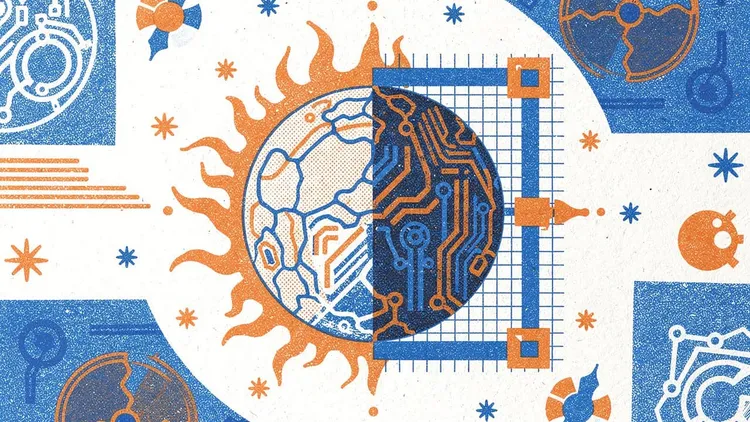
Taken together, the three cases suggest something close to a trilemma: no political system has yet found a way to simultaneously ensure public control over strategic AI infrastructures, maintain democratic accountability, and sustain the pace of technological development required to remain competitive. China sacrifices democratic accountability. The United States sacrifices genuine public control. Europe risks sacrificing technological relevance. Each model resolves the tension by conceding one of the three terms.
Whether that trade-off is inherent to the nature of foundational AI, or whether it reflects political choices that could be made differently, is precisely the question the encyclical forces us to ask — not as a matter of theology, but of political economy. Magnifica Humanitas does not name the trilemma. But in insisting that the concentration of power over foundational technologies is a moral and political problem, not merely a market outcome, it refuses the resignation that techno-determinism invites. The trade-offs are real. They are not, however, inevitable.
That distinction matters more than it might seem. If the trilemma is structural, the only honest response is to choose which value to sacrifice and to be transparent about it. If it reflects choices — about ownership, investment, and institutional design — then it remains open to democratic contestation. The encyclical, whatever one makes of its theology, insists on the second reading. So should we.
The views expressed are those of the author and do not necessarily reflect those the United Nations.

Help Keep Social Europe Free for Everyone
We believe quality ideas should be accessible to all — no paywalls, no barriers. Your support keeps Social Europe free and independent, funding the thought leadership, opinion, and analysis that sparks real change.
— €4.75/month
Help sustain free, independent publishing for our global community.
Become a supporter— €9.50/month
Go further: fuel more ideas and more reach.
Become an advocate— €19/month
Make the biggest impact — help us grow, innovate, and amplify change.
Become a champion— €142.50/month
For organisations and professionals who rely on Social Europe in their daily work.
Become a member