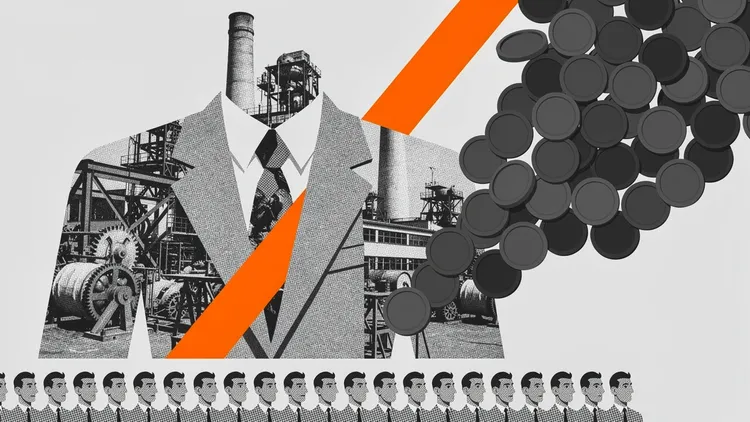
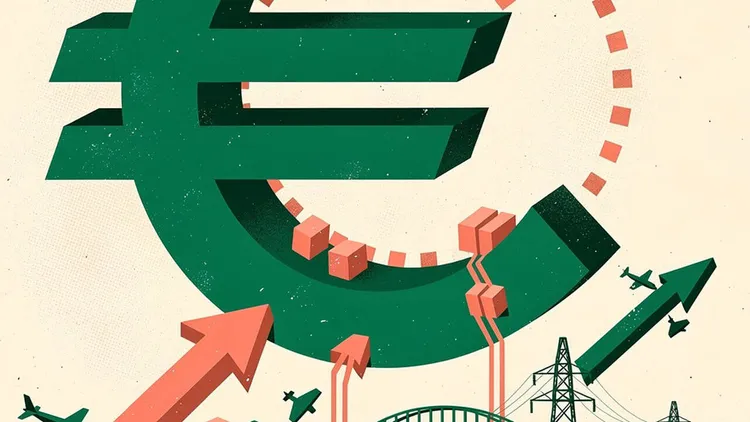
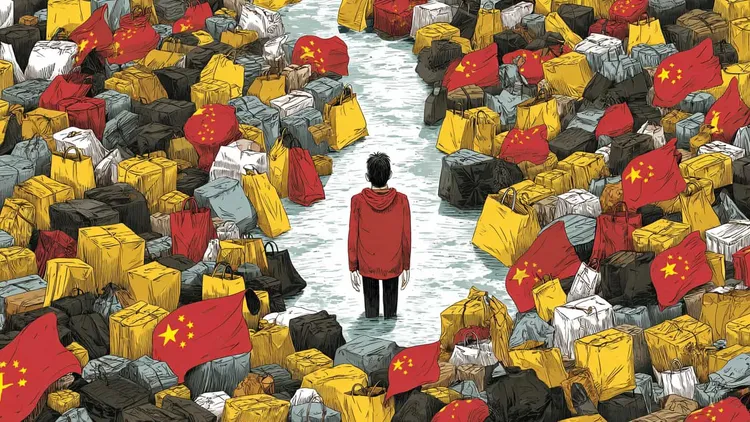
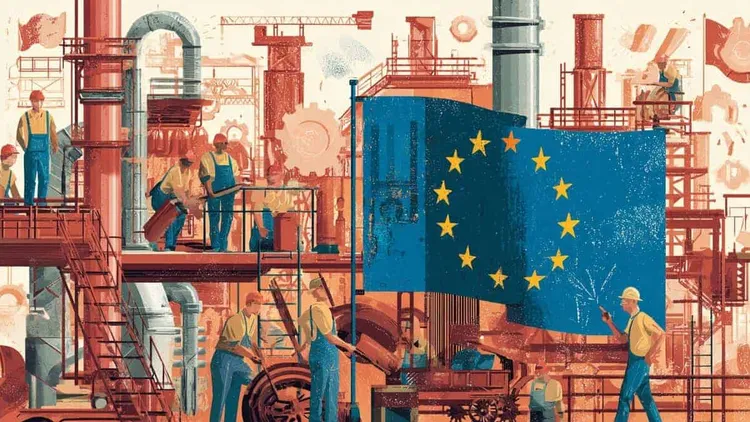
This is the stark message of a groundbreaking report by Syndex, commissioned by industriAll Europe. From automotive to steel, chemicals to solar, European industry is losing ground to global rivals. Millions of good jobs are at risk as the continent’s industrial base teeters on the brink.
IndustriAll Europe demands a change in narrative from European leaders and business executives too focused on regulatory “omnibuses” to save our actual bus industry. A singular focus on deregulation will only amplify this crisis of demand, not solve it.
Europe’s strength lies in its social model and skilled workforce. Good industrial jobs—stable, well-paid, unionised—are the backbone of social cohesion. They provide stability, dignity and prosperity. Worker participation, not exploitation. Rule of law rather than government by tweet provides political stability for investors.
Yet instead of leveraging this advantage, policymakers flirt with deregulation and austerity. Lowering social standards will not attract investment; it will erode Europe’s unique value proposition.
From industrial powerhouse to dependency? Not on Our Watch
The Syndex report is blunt: 2026 is the make-or-break year for investment decisions to renovate our energy-intensive industries. In downstream sectors, Europe is losing leadership in electric vehicles, semiconductors and clean technology. Investment is stagnant, research and development spending lags behind the United States and China, and our share in strategic technologies—artificial intelligence, quantum computing, advanced robotics—is shrinking.
The European Union’s R&D intensity remains below 2 per cent of GDP, compared with 3.45 per cent in the US and nearly 5 per cent in South Korea. Meanwhile, European firms lead the world in dividend payouts, even in sectors in crisis. Profits must be reinvested in R&D and production, not siphoned off to shareholders.
Sovereignty is at stake: rare earths, batteries and even basic pharmaceuticals are imported. China controls 85 per cent of rare earth refining; the US secures supply through intervention. Europe accounts for less than 10 per cent of global chip production today, compared with 24 per cent in 2000. Meanwhile, global overcapacity and dumping practices—especially in steel and solar—are crushing European producers.
Without decisive action, the green and digital transitions will be outsourced, and Europe will become a consumer market for technologies made elsewhere. The rules have changed: the US and China are playing hardball. Europe must do the same. While Washington and Beijing deploy aggressive industrial strategies, Europe clings to outdated dogmas of free trade and fiscal austerity.
Europe woke up to the need for industrial policy late in the day. Now we must catch up—moving far more quickly, with unity and ambition. If we do not act now, the promise of a fair green and digital transition will collapse into dependency and decline.
Good jobs, investment and ambition: Europe’s Last Chance to Lead
All is not lost. We have to play to our strengths.
Europe must abandon naivety and embrace a bold industrial strategy anchored in investment, fair trade and good jobs. Massive investment, conditional on job quality and local content, is the only way forward.
Energy policy is equally critical: without affordable, low-carbon electricity, decarbonisation projects will continue to stall. Europe must accelerate grid investment and reform pricing rules to shield industry from volatility.
Free trade must not be a suicide pact. Our “18 trillion euro” internal market must leverage domestic demand, quality jobs and investment through demand-stimulating measures. Access to the EU market—and the 450 million people living and working in the bloc—should not be cost-free for foreign investors and trading partners.
External trade policies must both build strong, reciprocal international partnerships and ensure a level playing field through a robust carbon border adjustment mechanism, anti-dumping measures and local content rules to protect Europe’s transforming industry.
Transformation will not happen without factories—and factories will not survive without good jobs. Europe’s strength lies in its skilled workforce, yet all the sectors analysed face labour or skills shortages, despite restructuring, and an ageing workforce. The new European Quality Jobs Act announced by the Commission president in her State of the Union speech in September must ensure that we anticipate change rather than permanently react to crises—through mandatory transition plans and recruitment drives.
Our industries need young blood. The lessons of the post-war GI Bill in the US should inspire an apprenticeship and graduate recruitment drive for young workers joining the labour market and women entering industry.
Europe is not condemned to decline. But naivety will mean dependency—and dependency will mean deindustrialisation. The choice is stark: invest in clean industrial value chains and quality employment now, or surrender to foreign dominance. Further delay means more plant closures, lost skills and shattered communities. Europe’s manufacturing, mining and energy workers are clear: now is the time to act.


Help Keep Social Europe Free for Everyone
We believe quality ideas should be accessible to all — no paywalls, no barriers. Your support keeps Social Europe free and independent, funding the thought leadership, opinion, and analysis that sparks real change.
— €4.75/month
Help sustain free, independent publishing for our global community.
Become a supporter— €9.50/month
Go further: fuel more ideas and more reach.
Become an advocate— €19/month
Make the biggest impact — help us grow, innovate, and amplify change.
Become a champion— €142.50/month
For organisations and professionals who rely on Social Europe in their daily work.
Become a member