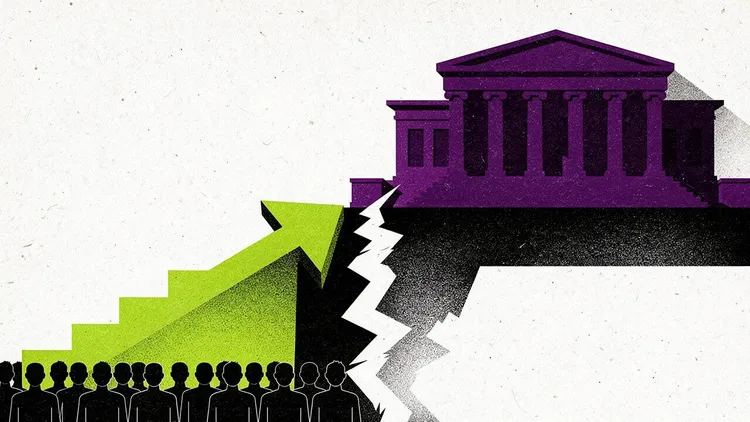
Across Europe, democracy is often diagnosed as “fatigued”, overwhelmed by disillusionment and distrust. Yet in France, this diagnosis fundamentally misreads the situation. The real fatigue, we argue, is not civic but institutional. The French still believe in democracy—nine in ten consider it the best system of government. Simultaneously, however, eight in ten feel poorly represented and two-thirds say the system no longer functions effectively. This is not apathy. Citizens want to participate, but the political system has forgotten how to include them.
France remains a procedural democracy where elections are free and institutions stable, yet its representational core has hollowed out. The Fifth Republic, designed for stability after the chaos of the Fourth, has evolved into a system marked by political hypertrophy and insulation. Decision-making has drifted upward, away from deliberation and into executive hands. The “hyper-presidential” logic that once promised coherence and efficiency now breeds disconnection and resentment.
When politics stops listening
The current crisis stems from a widening chasm between citizens’ expectations and how political power actually operates. Recent reforms on pensions, immigration, and climate policy have demonstrated how incumbents govern with minimal consultation, frequently deploying emergency procedures that curtail debate. Even widely praised democratic innovations such as the Citizens’ Climate Convention ultimately revealed the system’s limitations—participation was invited, proposals were developed through extensive deliberation, but recommendations were subsequently diluted or ignored by the executive.
This pattern resonates across Europe, but it takes a particularly acute form in France, where executive dominance over parliament, extreme centralisation, and a growing reliance on political communication strategies systematically undermine responsiveness. Decisions are increasingly packaged as matters of efficiency and performance, yet citizens experience them as exclusion from the democratic process.
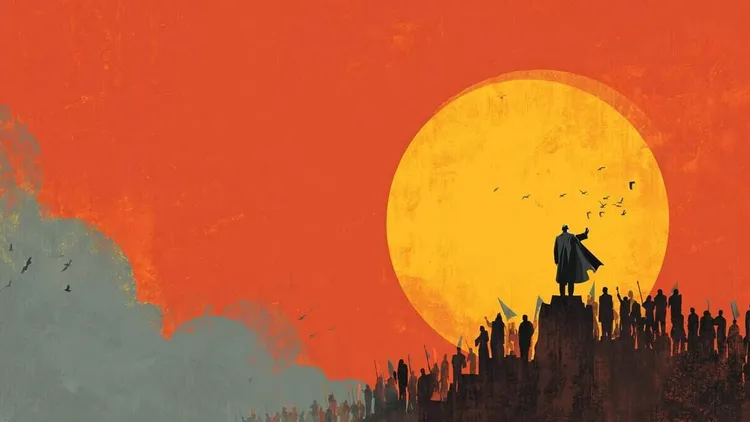
When people feel systematically unheard, radical-right populists fill the void. They claim to restore power to “the people”, even as they erode the checks and balances upon which liberal democracy depends. Populists thrive not because citizens reject democracy as an ideal, but because they reject how it is practised—as a closed arena reserved for those already wielding power.
The French case reveals a new fault line running through European democracy: the divide between insulated elites and increasingly empowered citizens. Political leaders continue to equate legitimacy with expertise and control, while citizens increasingly demand transparency, fairness, and genuine influence over decisions that affect their lives.
In a liberal, electoral democracy, trust rests on a delegation of power from citizens to representatives. Yet many citizens no longer accept being confined to the role of passive voters. They want to participate not only at election time but throughout the policy process. They support citizen-initiated referendums, deliberative assemblies, participatory budgeting, and stronger local democracy. This is not impulsive populism; it represents a considered demand for shared governance.
Elites often resist these innovations, fearing a loss of authority or symbolic status. Cognitive biases reinforce this resistance. Politicians frequently misread public opinion, assuming citizens are more conservative or less capable of deliberation than they actually are. Over time, such biases create an oligarchic drift—a narrow political universe increasingly detached from everyday concerns and lived experiences.
The missing social dimension
One blind spot in the French debate, and in wider European discussions, concerns the social foundations of democracy. Inequalities in income, education, and recognition mirror inequalities in political voice. Citizens who feel economically or culturally marginalised often feel politically invisible as well.
Social democracy once offered a powerful response to this challenge. By reducing insecurity, strengthening social rights, and investing in public goods, it broadened the conditions for democratic inclusion. Over recent decades, however, austerity measures, fragmented welfare reforms, and the erosion of the intermediary bodies that once structured social representation have weakened these protective buffers.
The consequences are stark and measurable. Citizens who feel socially or economically excluded tend to trust institutions less. They withdraw from conventional political participation and engage mainly through protest. Many also become more receptive to anti-establishment rhetoric. They are not rejecting democracy; they are reacting to a system in which they feel neither seen nor protected.
Rebuilding democratic resilience therefore demands a renewed commitment to social protection, equality, and inclusion that gives citizens a genuine stake in democratic life. Democratic innovations without social inclusion remain fragile experiments, while social democracy without opportunities for meaningful political participation remains incomplete. These two dimensions must be strengthened together if democracy is to regain its vitality.
Like many Europeans, the French do not speak with one democratic voice. They value liberal guarantees, social equality, representative stability, and direct participation simultaneously. This pluralism is not confusion but a defining feature of mature democracies navigating complex modern challenges.
The challenge is to build institutions capable of accommodating these multiple democratic grammars, rather than privileging one model at the expense of others. Elites who cling to a narrow, technocratic and implicitly aristocratic conception of representation overlook the evolution of democratic expectations, where shared decision-making and accountability are becoming essential to legitimacy.
Seen through this lens, France presents a paradox—fatigued yet vibrant. Beneath the frustration lies strong democratic energy. Unions, associations, NGOs and grassroots movements continue to reinvent participation. Civil society remains a laboratory of democratic renewal despite financial and political pressures. The surge in voter turnout during the 2024 snap parliamentary elections, driven largely by civic mobilisation against the far right, demonstrates that democratic commitment persists when people believe their engagement matters.
These developments suggest that democracy’s future lies neither in nostalgia for strong leaders nor in technocratic governance, but in recalibrating decision-making to make genuine space for citizens. Trust depends less on what leaders achieve than on whether they achieve it with and for the public.
France’s crisis is both a warning and an opportunity for Europe. When citizens are invited not only to speak but also to help shape decisions, democracy regains legitimacy and meaning. Across the continent, the same lesson applies. The task is not to save democracy from its citizens, but to reconnect institutions to the people they serve and to rebuild a political system in which power genuinely listens, includes, and responds.


Help Keep Social Europe Free for Everyone
We believe quality ideas should be accessible to all — no paywalls, no barriers. Your support keeps Social Europe free and independent, funding the thought leadership, opinion, and analysis that sparks real change.
— €4.75/month
Help sustain free, independent publishing for our global community.
Become a supporter— €9.50/month
Go further: fuel more ideas and more reach.
Become an advocate— €19/month
Make the biggest impact — help us grow, innovate, and amplify change.
Become a champion— €142.50/month
For organisations and professionals who rely on Social Europe in their daily work.
Become a member