KEY INSIGHTS
- A misread end: Headlines about deglobalisation mask the reality that the AI boom is intensifying cross-border flows of data, computation, energy, and minerals.
- Speed is the point: Drawing on Hartmut Rosa’s social acceleration, the defining feature of today’s globalisation is the velocity of exchange, not merely its volume.
- A hidden infrastructure: Algorithms rest on a vast material and legal infrastructure of cables, chips, grids, and standards — the spine of hyperglobalisation 2.0.
- An uneven pressure: Laws governing technology, logistics, and finance are pressed to move faster; environmental, labour, and Indigenous protections are treated as friction to be stripped away.
- A democratic choice: A just transition requires deciding which processes should accelerate, which should not, and who gets to make that decision.
We are often told that the age of hyperglobalisation is over. Trade wars, industrial policy, national-security restrictions, export controls, and geopolitical rivalry all seem to point towards a more fragmented global economy. Governments are no longer speaking only the language of openness and integration. They are speaking the language of resilience, security, strategic autonomy, and supply-chain control.
But the artificial-intelligence (AI) boom tells a different story. Globalisation may be changing shape, yet it is not necessarily slowing down. Data, computation, telecommunications, energy demand, infrastructure development, and mineral extraction are all being pushed to move faster than ever. The world economy may be fragmenting in some respects, but in others connectivity is accelerating.
Hartmut Rosa’s work on social acceleration helps explain why this matters. Rosa argues that the distinctive feature of present-day globalisation is not merely the cross-border exchange of goods, capital, or information. It is the speed at which these exchanges occur. What matters is not only that capital moves, goods circulate, and information travels. It is that they do so with ever-increasing velocity, reorganising institutions, expectations, and social life around the imperative of speed.
AI is the clearest contemporary example of this phenomenon. It is often described as a frictionless race for data, talent, and computing power. Firms compete to train models faster, deploy systems faster, scale infrastructure faster, and capture markets before their rivals do. Governments, in turn, are urged to regulate faster, permit faster, invest faster, and adapt faster. In one way or another, these changes all point towards deeper and faster global connectivity.
This should change how we think about claims of deglobalisation and reglobalisation. Dani Rodrik’s account of hyperglobalisation remains indispensable, especially his focus on the World Trade Organization (WTO), free-trade agreements, investment treaties, and the constraints they placed on domestic policy space. But the AI era reveals another side of the story. Hyperglobalisation was not only a project of freer trade. It was also a project of faster movement.
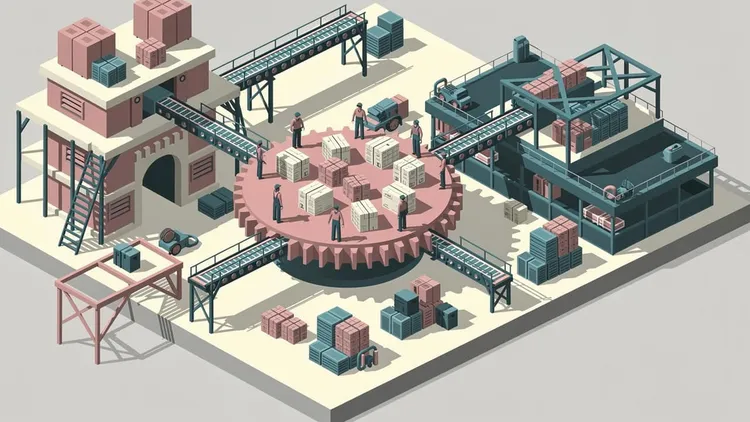
Richard Baldwin’s account of the first and second globalisations points in this direction. Steamships, railways, telegraphs, containers, information technologies, and global value chains did not merely expand markets; they accelerated them. The legal regimes that enabled these transformations were not confined to tariff rules or investment protections. They included the less visible laws of telecommunications, transport, technical standards, customs administration, logistics, infrastructure, and interoperability. Those rules and institutions made the movement of goods, services, capital, and information faster, cheaper, and more predictable.
AI follows the same pattern. Behind the apparent immateriality of algorithms lies a vast material and legal infrastructure: semiconductors, data centres, submarine cables, electricity grids, cooling systems, logistics networks, technical standards, and critical minerals. Together, these form the backbone of what might be called hyperglobalisation 2.0.
International law plays a fundamental role in this process. Globalisation has always depended on a hidden legal infrastructure of acceleration. International law did not simply open markets. It helped to build and govern the channels through which economic activity could move at speed. It standardised containers, protected communications infrastructure, facilitated cross-border transport, coordinated technical systems, and supported the constant adaptation of global networks. The law of globalisation was therefore never only about removing barriers. It was also about speeding things up.
The faster the digital economy seeks to move, the greater the pressure on the legal and material infrastructure that sustains it. That pressure has distributive consequences. Some legal regimes are being encouraged to become faster, more flexible, and more adaptive. The law of technology, logistics, finance, investment, and infrastructure is increasingly organised around speed. It is expected to reduce friction, facilitate deployment, and provide certainty for those able to operate at the tempo of global markets.
Other legal regimes are treated very differently. Environmental assessment, Indigenous consultation, labour protection, territorial planning, and democratic deliberation are often portrayed as sources of delay. The recent US-EU critical minerals initiative, for example, expects participants to accelerate, streamline, or reduce permitting timelines and processes.
For firms and governments at the technological frontier, speed can feel like stability. Fast standards, rapid permitting, flexible regulation, and predictable infrastructure allow them to plan, invest, and innovate. But for communities living near extraction zones, for workers adapting to volatile supply chains, and for ecosystems subjected to intensified pressure, the same acceleration can feel like a loss of control. Everything changes quickly, yet their position remains much the same. They live in what Rosa calls a frenetic standstill.
The present is a moment of opportunity, but also of concern. Coordinated action and cooperation could help to set the foundations of a fairer globalisation. Yet current trends point in a different direction: towards a world in which the institutions that serve technological acceleration are strengthened, while those that protect social, territorial, and ecological time are compressed.
The challenge is not to reject speed. Slow institutions can also produce injustice, especially when delay protects incumbents or leaves urgent problems like climate change unresolved. But urgency cannot mean that every institution and every community must adapt to the tempo of AI. The task is to decide which processes should accelerate, which should not, and who gets to make that decision. A just AI economy and low-carbon transition require not only faster connections, but institutions capable of aligning technological speed with democratic deliberation, territorial knowledge, and ecological limits.

Help Keep Social Europe Free for Everyone
We believe quality ideas should be accessible to all — no paywalls, no barriers. Your support keeps Social Europe free and independent, funding the thought leadership, opinion, and analysis that sparks real change.
— €4.75/month
Help sustain free, independent publishing for our global community.
Become a supporter— €9.50/month
Go further: fuel more ideas and more reach.
Become an advocate— €19/month
Make the biggest impact — help us grow, innovate, and amplify change.
Become a champion— €142.50/month
For organisations and professionals who rely on Social Europe in their daily work.
Become a member