KEY INSIGHTS
- A continental low: Europe’s confidence and economic performance have slipped to a century-long ebb, with West European states stagnating and German industry hollowed out by gas costs and missed innovation.
- The LNG trap: US Liquid Natural Gas filled the void left by Nord Stream and Russian sanctions — but at a price that looks less like rescue than like a poisoned apple.
- Solar comes of age: Spain already covers entire days from solar generation alone, and southern Europe can produce a surplus large enough to power the north.
- Grid as project: Linking Iberian and Balkan solar surpluses to northern grids, with French nuclear as baseload insurance, would turn integration from rhetoric into hardware.
- Industrial dividend: Specialised EU cable manufacturers and bauxite-rich smelters near cheap solar power stand to gain — converting energy policy into a high-value industrial strategy.
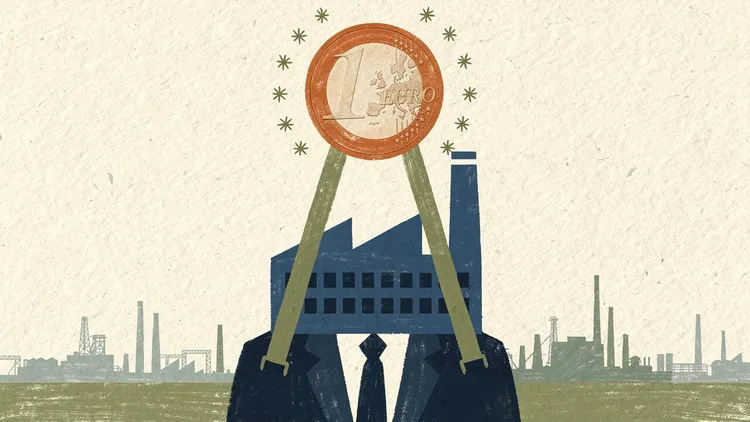
Europe’s confidence and economic performance have sunk to a century-long low not seen since the inter-war years. Its enviable social model during the Cold War helped to shape the world’s best societies out of the ashes of the Second World War. Challenges to Europe’s prosperity and stability first arrived with neoliberalism in the 1980s. The European Commission president Jacques Delors recognised the threat that globalising markets posed to the European social model. He sought to reconcile the contradiction between global labour-market competition and European welfare policy, and between French dirigiste economic planning and German ordoliberalism. Delors did so through his “Social Europe” programme, which became the core idea of the modern European Union. The vision was made flesh in the 1992 Maastricht Treaty, which set out to integrate Europe both politically and economically through a single currency zone and a single market.
Fast-forward three decades, and Social Europe has become the sick man — as the late Ottomans were once described in Europe — of the global economy. Once innovation leaders, Europeans are now laggards. The picture is mixed. Central and Eastern Europe (CEE) has largely been brought up to middle-income status, but risks plateauing there. Poland is an exception that might just enter the exclusive club of high-income countries with companies performing high-profit headquarter functions. None of the others looks poised to follow. Worse, some seem to embrace instability, if not outright autarky.
Meanwhile, west European states have been buffeted by the UK’s Brexit and have stagnated under the weight of an overvalued euro, which imposed an export-cost penalty on their manufactured goods. The damage was most pronounced in Italy, France, and Spain. Populism wreaked havoc in several core EU states, notably Italy, France, and the Netherlands. German industry, by contrast, was buoyed by an undervalued euro (from its point of view) and cheap Russian natural gas. Both disincentivised innovation, but allowed Germany to remain economically competitive for decades. The benefits of German success were then transferred to less developed Europe through structural funds, which were designed to modernise infrastructure in southern Europe and the CEE, enhancing their competitiveness while supporting cohesion.
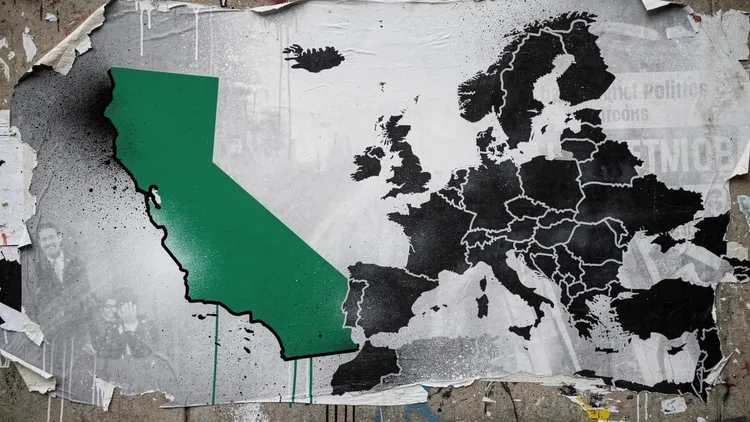
Where does that leave us today? The EU’s political and economic engines are rattling under developments in the United States, Ukraine, and Iran, all of which have exposed European vulnerabilities. German legacy carmakers are still building diesel vehicles designed for the last century. The famed Mittelstand has faltered under the weight of expensive natural gas, following the destruction of Nord Stream and the sanctions on Russian supplies. The United States filled the energy gap with Liquid Natural Gas (LNG), but at an even higher cost. Under Donald Trump, the Americans have turned the US into a global LNG power, with the EU now seen as its chief market for the expensive fuel. America’s pirouette to LNG, with EU states footing the bill, is not sustainable for European economies. It looks less like a lifeline than like a poisoned apple.
What is to be done?
The elements of a competitive, European-sourced alternative are already in place. What is largely required is the expansion of existing capacities. The constraints on a European revival are therefore more political than economic.
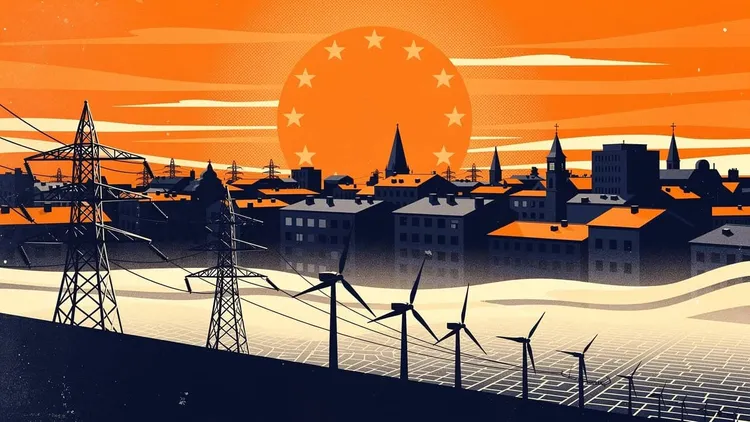
First, a Buckminster Fuller-style continental balancing through the transfer of surplus electricity between European states is already under way. A Baltic Sea transmission cable is in place, sending surplus winter-wind electricity from Scandinavia to Poland and, in summer, surplus solar and wind power from Poland back north. Europe’s green-energy policy holds out more powerful solutions still. Spain’s expansive solar generation already meets all the country’s power needs on certain days. Southern Europe, including the Balkans, is poised not only to supply its own electricity but to contribute to the north’s. Solar power generation and storage costs continue to fall. Southern Europe can develop sufficient excess capacity to help power northern Europe by connecting to its grids. Political obstacles, of course, exist. France possesses substantial nuclear power, which is more expensive than solar. But French political opposition to integrated European power grids drawing on southern solar could be overcome. The EU could preserve French nuclear power as a guarantee of baseload insurance for EU grids. Maintaining French nuclear infrastructure also helps to sustain France as the EU’s nuclear power for security reasons. Significant overlap, moreover, exists between fission and fusion science — important for developing the latter as a future power source.
Second, expanding solar power would also ensure independence from Russian energy while shedding the heavy cost of US-supplied LNG.
Third, as southern European solar power continues to fall in price and grow in volume, the structural funds flowing from northern to southern Europe could be reduced, relieving fiscal pressure on northern budgets.
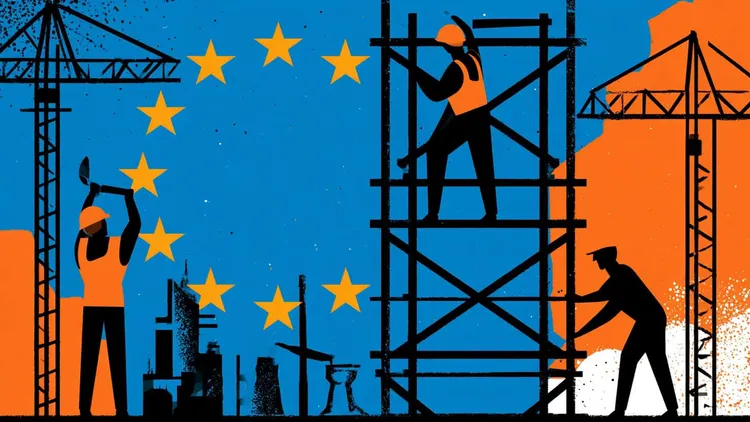
Fourth, casting southern Europe as the continent’s energy supplier would further integrate EU economies, delivering efficiencies and a degree of integration that goes beyond the usual rhetorical flourishes. Moving electricity across grids at distance is costly. Transmission efficiencies can be gained from specialised, high-quality transmission aluminium, and from aluminium-encased steel wire with near-perfect surfaces. The EU has several such specialised manufacturers that would benefit from contracts for the increased production of such cables. Raising the efficiency of electricity transmission would thus generate business for high-value-added EU cable makers. Moreover, the largest cost in producing aluminium is electricity. The EU possesses bauxite. Locating aluminium smelting close to the cheapest solar electricity could trim the cost of these EU transmission cables.
In short, Europe’s fate need not be that of the “sick man of the world”. Further integration through the connecting and digitalising of its power grids offers a concrete project that would reduce energy costs while decoupling the continent from the mercurial behaviour of, and dependence on, either Russia or the United States.



Help Keep Social Europe Free for Everyone
We believe quality ideas should be accessible to all — no paywalls, no barriers. Your support keeps Social Europe free and independent, funding the thought leadership, opinion, and analysis that sparks real change.
— €4.75/month
Help sustain free, independent publishing for our global community.
Become a supporter— €9.50/month
Go further: fuel more ideas and more reach.
Become an advocate— €19/month
Make the biggest impact — help us grow, innovate, and amplify change.
Become a champion— €142.50/month
For organisations and professionals who rely on Social Europe in their daily work.
Become a member