For several weeks, streets in Budapest, as elsewhere in Hungary, have been awash with government-funded placards representing an overt incitement to racial and religious hatred. Far from portraying those fleeing to Europe from Syria, Iraq, Afghanistan and other countries as genuine asylum seekers, escaping brutal and apparently intractable civil conflicts, the posters characterise them as ‘illegal immigrants’ who are undeserving, unassimilable and a mortal threat to Europe. The posters aim to transform mostly helpless and vulnerable civilians – who have been terrorised by Da’esh, by Syrian or Russian cluster bombs or by Taliban death threats – into blood-curdling ‘folk devils’ that Hungarians, along with other ‘right thinking’ Europeans, should resolutely shun.
‘Did you know?’ declares one of the ubiquitous posters, ‘[l]ast year more than one and a half million illegal migrants arrived in Europe.’ ‘Did you know?’ declares another, ‘[s]ince the start of the migrant crisis more than three hundred people have died in terror attacks in Europe.’ ‘Did you know?’ reads a third, ‘[s]ince the start of the migrant crisis there has been a sharp escalation in the harassment of women in Europe.’ The conflation of asylum seekers with ruthless terrorists or with rampaging sexual predators is cynical and alarmist. At the same time, the casual labelling of asylum seekers en masse as ‘illegal immigrants’ lacks any foundation in fact or in international law.
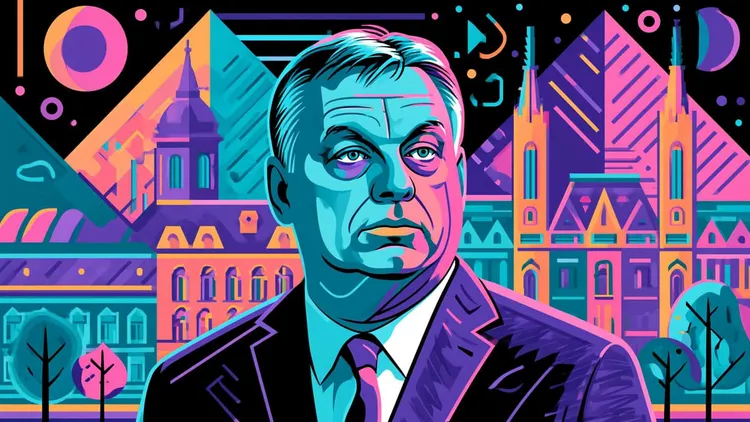
At the foot of every poster, in large block capitals, Hungarians are reminded that a referendum will be held on 2 October. This initiative follows the decision of the Orbán government late last year, along with its Slovak counterpart, to mount a legal challenge to an earlier EU scheme for the compulsory resettlement of limited numbers of migrants in member states.
The question that Hungary’s government will place before the electorate has been carefully drafted. It eschews notions of European solidarity, humanitarianism or fairness and equity. There is no hint of the extraordinary circumstances that have impelled unprecedented numbers of people to flee their home countries or of the fact that Germany has taken in a wholly disproportionate share of the asylum seekers arriving in Europe since 2015. There is no mention of the desirability, let alone necessity, of regional solutions under the auspices of the EU to manage the migrant crisis. Instead, the question to be put to Hungarian voters focuses solely on the narrow but emotive issue of national sovereignty: ‘[d]o you want the European Union to be entitled to prescribe the mandatory settlement of non-Hungarian citizens in Hungary without the consent of parliament?’
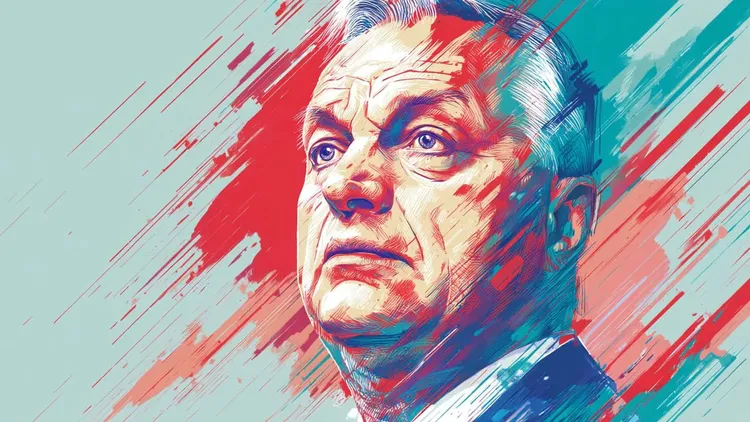
By appealing to Hungarians’ historically-conditioned fear of the loss or impairment of national sovereignty and by labelling the mostly Muslim asylum seekers as an existential threat to the security and cultural identity of Europe, the government will almost certainly succeed in persuading a majority of those taking part in the referendum to vote no. However, both the referendum and Orbán’s relentless demonisation of ‘migrants’ are merely part of a cynical political exercise that has never been solely or even primarily about the preservation of Hungary’s sovereignty or ethno-cultural identity.
For Orbán the refugee crisis that erupted in 2015 could not have been more opportune, creating a number of significant political opportunities that he has assiduously exploited. Domestically, by presenting himself as a strong and decisive political leader, capable of holding back the ‘threatening tide’ of mostly Middle Eastern and Asian asylum seekers, Orbán has bolstered flagging support for Hungary’s ruling Fidesz Party. At the same time, his radical anti-migrant measures, including the erection of fences along Hungary’s borders with Serbia and Croatia, have helped to prevent Hungary’s far-right Jobbik party from expanding its electoral base by exploiting latent fears about migrants. Finally, by inducing, sustaining and amplifying a ‘moral panic’ about the mostly Muslim asylum seekers, the Orbán government has partially succeeded in shifting public attention away from Hungary’s lacklustre economic performance and deteriorating public services and from a series of damaging allegations of corruption and nepotism that have threatened to engulf senior Fidesz figures and others close to the government.
Externally, Orbán has seized on the EU’s response to the migrant crisis – and on widespread dismay at Brexit – as grounds for seeking a fundamental restructuring of the EU. Earlier this month, Orbán joined with the chair of Poland’s ruling Law and Justice Party, Jaroslaw Kaczynski, in calling for a ‘cultural counter-revolution’ that would see the return of greater powers to the EU’s member states.
While the desirability of an ‘ever-closer union among the peoples of Europe’ may be open to question, the alternative political blueprint offered by Orbán and Kaczynski is scarcely enticing. Orbán’s principal contribution to political theory and practice has been his espousal of ’illiberal democracy’, a form of government that Jan-Werner Mueller has rightly denounced as neither liberal nor democratic. Since returning to office in 2015, Kaczynski’s Law and Justice Party has done much to emulate Hungary in establishing an ‘illiberal democracy’, whether by restricting judicial independence and authority or by extending government controls over the civil service and over public radio and television.
If Hungary’s referendum produces a decisive rejection of compulsory migrant quotas, as Orbán hopes, he will no doubt seek to strengthen his alliance with Kaczynski and to draw in the other members of the Visegrad 4, i.e. Slovakia and the Czech Republic in an effort to stymie the supranational ambitions of the EU. Nevertheless, we can take some comfort from the severely limited appeal of anachronistic figures such as Hungary’s Prime Minister, whether in the EU or in Europe as a whole. Orbán’s brand of 19th or early 20th century nationalism fetishizes the nation state and lauds ’Christian values’, although he has been careful not to elaborate those ’values’ in any detail.
Although Orbán remains popular amongst mostly provincial Hungarian voters – and while his ideas may strike a chord with a significant part of the electorate in some of the other Visegrad 4 states – it’s hard to imagine that he could become an influential political figure in northern Europe. The appeal of ’Christian values’ is limited in countries that have become overwhelmingly secular as well as multicultural. Similarly, harking back to a largely mythical Europe of ’nation states’ will have little resonance in countries such as France, the UK or the Netherlands where civic and political bonds are increasingly based on notions of ’constitutional patriotism’ rather than on theories of ethnic exclusivity.

Help Keep Social Europe Free for Everyone
We believe quality ideas should be accessible to all — no paywalls, no barriers. Your support keeps Social Europe free and independent, funding the thought leadership, opinion, and analysis that sparks real change.
— €4.75/month
Help sustain free, independent publishing for our global community.
Become a supporter— €9.50/month
Go further: fuel more ideas and more reach.
Become an advocate— €19/month
Make the biggest impact — help us grow, innovate, and amplify change.
Become a champion— €142.50/month
For organisations and professionals who rely on Social Europe in their daily work.
Become a member