KEY INSIGHTS
- Profit-driven inflation: Dominant firms in energy, food and housing exploited crisis-era instability to widen margins well beyond what rising costs could justify.
- A blunt instrument: Every 100-basis-point rate rise trims prices by at most 0.25 per cent while cutting output by 1 per cent of gross domestic product.
- Profit over investment: Payouts to shareholders rose up to 13 times faster than pay in 2023, even as corporate investment fell.
- A new settlement: The ETUC backs stronger collective bargaining, windfall taxes, strategic public ownership and price controls on essential goods and services.
- Essentials as infrastructure: Energy, housing, transport and food are the foundations of modern life, not luxuries priced at whatever consumers can be made to bear.
For workers already on the edge, the prospect of rising interest rates isn’t an economic policy, it’s a threat. When you’re already choosing between feeding your family and paying the bills, higher interest rates are a cruel irony, punishing the people who had the least to do with causing inflation in the first place.
For decades, we have been told that the markets know best. Leave prices alone, economists insisted, and supply and demand will sort everything out. But recent years have exposed a brutal reality: when crises hit, market-led systems do not distribute pain fairly. They concentrate it on working people while allowing those with economic power to profit handsomely.
The cost-of-living crisis was not simply the result of bad luck or temporary disruption. It revealed something deeper about modern economies. When supply chains break down, wars disrupt energy markets, or climate shocks affect food production, prices do not rise smoothly in response to scarcity. Instead, dominant corporations use moments of instability to expand profit margins. Essential goods become opportunities for extraction.
Economists such as Isabella Weber have shown how external shocks, combined with concentrated market power, can trigger economy-wide inflation. In sectors dominated by a handful of firms — energy, food distribution, shipping, housing, pharmaceuticals, and transport — companies can raise prices far beyond what rising costs alone would justify. Inflation becomes not only a monetary phenomenon but a struggle over who bears the burden of crisis, and who benefits from it.
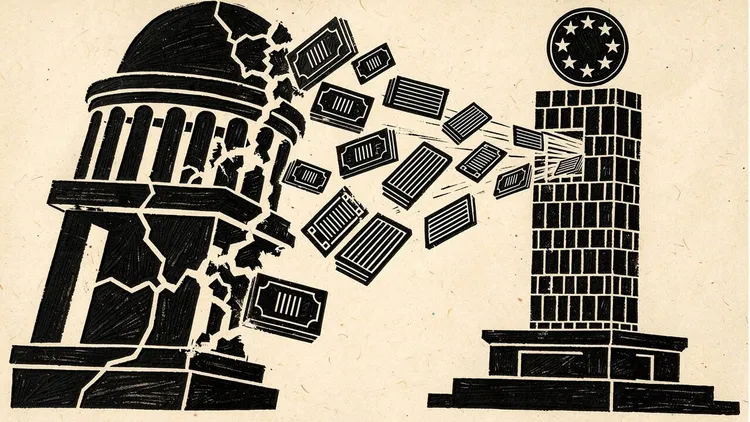
Yet the response from the European Central Bank (ECB) and other central banks has too often made matters worse. Faced with inflation driven largely by supply shocks and corporate pricing power, policymakers reached for the traditional remedy of higher interest rates. But raising rates does not produce more gas, grow more wheat, build more homes, or repair broken supply chains.
What it does is squeeze workers. Higher rates raise mortgage costs, rents, and debt repayments. Wages have still not caught up with the cost of living and are expected to fall behind inflation again this year. That makes workers far less likely to make significant purchases, leading businesses to slow or freeze hiring. Unemployment rises and wages stagnate. Vital investment is discouraged, too, by the disproportionate impact of higher rates. Research shows that for every 100-basis-point rise in interest rates, prices fall by at most 0.25 per cent while output drops by 1 per cent of gross domestic product.
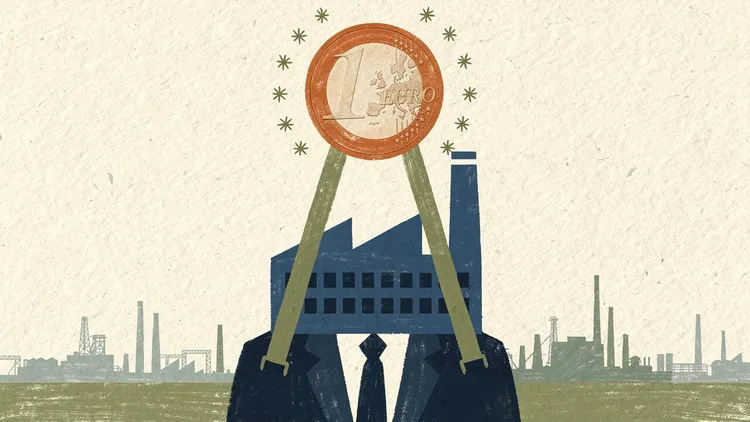
Workers are punished for an inflation they did not cause. Meanwhile, many large corporations continue to protect margins and reward shareholders. Dividends and share buybacks soared during the cost-of-living crisis, with payments to shareholders rising up to 13 times faster than pay in 2023. Business investment, by contrast, fell as corporations asset-stripped the economy. That didn’t stop them trying to blame workers’ rights for Europe’s competitiveness problems.
Monetary tightening becomes a blunt instrument that transfers the burden of adjustment onto households while leaving the underlying structures of market power and failure intact. The consequences ripple through society. As the cost of essentials rises, households cut spending elsewhere. Families skip meals, delay medical treatment, borrow to pay the mortgage, and postpone essential purchases. Demand weakens across the broader economy. Growth stalls. Small businesses suffer. Governments spend billions trying to cushion the blow through subsidies and welfare support, while the underlying pricing power of large corporations remains untouched and profits and dividends rise.
Heaping the burden on labour
For trade unions, this is not simply an economic debate. It is a democratic one. When workers secure wage increases to keep up with inflation, they are accused of fuelling a “wage-price spiral”. But when corporations raise prices and post record profits, this is treated as normal market behaviour. The burden of adjustment always falls on labour.
Europe cannot build social cohesion while allowing essentials to become vehicles for speculation and excess profit. The right to affordable energy, housing, transport, and food should be understood as part of the European social model itself.
This is why the European Trade Union Confederation (ETUC) is pushing for a new settlement: stronger collective bargaining, windfall taxes on excess profits, strategic public control and ownership, and price controls on essential goods and services. Instead of suppressing wages through higher interest rates, Europe should suppress profiteering and market abuse.
The European Union was founded on the promise that economic integration would improve living standards and drive social progress. If Europe cannot protect people from being priced out of the basics of life, that promise risks collapsing altogether — along with working people’s support for the project.
Price controls are not a relic
This is why price controls must return to mainstream economic debate and form part of the response. For many, the phrase conjures images of ration books, Soviet central planning, or empty supermarket shelves. But this caricature ignores both history and present reality. Price controls have repeatedly been used successfully in times of crisis, including in advanced capitalist economies. During and after the Second World War, price regulation was central to stabilising economies across Europe and North America. More recently, countries imposed caps on energy prices during the inflation surge that followed Russia’s invasion of Ukraine. Rent controls exist across much of Europe because housing cannot function purely as a speculative commodity without devastating social consequences.
It is also essential to introduce a temporary freeze on profit margins in the energy sector — capped at pre-crisis levels from February — to ensure that prices reflect real costs rather than opportunistic mark-ups, speculation, and companies exploiting the crisis through unjustified price increases.
The real question is not whether governments intervene in markets. They already do, constantly, through subsidies, tax breaks, intellectual property rules, public procurement contracts, and central bank actions. The question is who that intervention serves.
At present, governments socialise losses while privatising gains. When energy prices exploded, states stepped in to support households but largely allowed energy giants to keep posting record profits. When food prices surged, supermarket chains protected margins while workers faced impossible choices at the checkout. Public money absorbs the shock while private actors retain the upside. The profits of the five major global oil companies tripled between 2019 and 2022. The lessons have not been learned: energy giants have been making €80 million a day during the latest crisis.
A serious system of strategic price controls and a freeze on profit margins would reverse this logic. Essential goods and services: energy, housing, public transport, staple foods, medicines, childcare, and internet access — should not be treated like luxury products whose prices fluctuate according to the maximum consumers can bear. They are the infrastructure of modern life. When access to them becomes unstable or unaffordable, society itself destabilises.
Price controls and a freeze on profit margins are not a silver bullet. They must be combined with investment, public ownership in strategic sectors, anti-monopoly enforcement, and stronger collective bargaining. Controls without supply expansion can create shortages. But refusing to regulate prices at all has already produced a different kind of scarcity: millions unable to afford what exists abundantly around them.
Critics argue that controls distort market signals. Yet today’s markets are already deeply distorted by concentration, monopsony power, financial speculation, and unequal bargaining strength. A family choosing between heating and eating is not exercising consumer sovereignty in a free market.
What price controls ultimately recognise is that some parts of economic life are too important to leave to crisis profiteering.
The neoliberal assumption that markets automatically produce socially optimal outcomes has collided with reality. We live in an age of overlapping emergencies: war, climate disruption, pandemics, fragile supply chains, and growing extreme inequality. Under these conditions, economies organised purely around profit maximisation do not become efficient — they become brittle.
Europe is fast approaching an economic insecurity crisis, and it will need to choose. It can continue allowing crises to become opportunities for wealth extraction — followed by endless public bailouts, higher interest rates, social resentment, and millions more in poverty. Or it can accept that democratic societies have both the right and the responsibility to govern prices where human needs are at stake.
The debate should no longer be whether price controls are thinkable. The real question is why policymakers are waiting so long to consider them again.

Help Keep Social Europe Free for Everyone
We believe quality ideas should be accessible to all — no paywalls, no barriers. Your support keeps Social Europe free and independent, funding the thought leadership, opinion, and analysis that sparks real change.
— €4.75/month
Help sustain free, independent publishing for our global community.
Become a supporter— €9.50/month
Go further: fuel more ideas and more reach.
Become an advocate— €19/month
Make the biggest impact — help us grow, innovate, and amplify change.
Become a champion— €142.50/month
For organisations and professionals who rely on Social Europe in their daily work.
Become a member