KEY INSIGHTS
- A global consensus on unfairness: Across 17 major economies, seven in 10 respondents say inequality has gone too far, and two-thirds view the system as rigged for the rich and powerful.
- A collapse in confidence: Only 31 per cent believe their government will act in the long-term interest of most people, down from almost 40 per cent two years ago.
- Division as structural outcome: Two-thirds report their country is more divided than 10 years ago, tensions the author attributes directly to extreme inequality rather than to accident.
- A vacuum authoritarians will fill: Piecemeal reform from mainstream parties leaves citizens to seek radical change from whoever promises it, democratic safeguards or not.
- Grounds for hope: An International Panel on Inequality, California’s Proposition 40 billionaire tax, and new UN reports signal that equality is finally getting serious attention.
Back in 2009, when Richard Wilkinson and I published The Spirit Level, our aim was to demonstrate through hard data what communities across the world felt intuitively: that deep economic inequality tears apart our social fabric. It erodes trust, undermines health and wellbeing, and divides us from each other. Over a decade later, the diagnosis has not changed, but it seems the public’s patience with politicians and policymakers to act on this evidence is running out.
The latest findings from the third round of Earth for All surveys reveal a global public remarkably united in its anger over economic unfairness. And beneath this shared consensus lies a far more dangerous development: a collapse in public trust that governments possess either the will or the capacity to fix it.
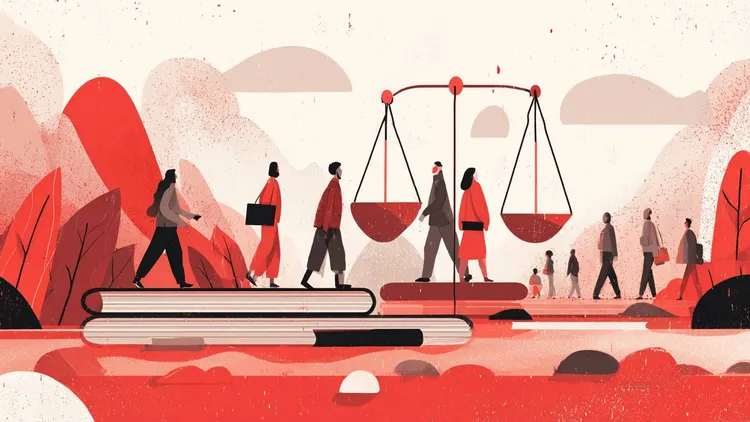
Across 17 of the world’s largest economies — accounting for nearly 60 per cent of global GDP and well over a third of the world’s population — the message from citizens is unequivocal. Seven in 10 respondents state that economic inequality in their country has gone too far. Two-thirds view the economic system as fundamentally rigged in favour of the rich and powerful, while 69 per cent explicitly demand major economic transformation. These are not marginal grievances; they amount to an overwhelming consensus that cuts across income brackets, political affiliations, and geography.
People understand that our prevailing economic paradigm, one that prioritises extractive wealth accumulation over collective wellbeing, is failing them. They see a system where extreme wealth translates into disproportionate political influence, leaving ordinary working people to absorb the brunt of repeated cost-of-living, housing, and social care crises.
When faith in democracy gives way
And in the light of this consensus, faith in democratic institutions to deliver meaningful change has plummeted. Only 31 per cent of respondents believe their government will make decisions that benefit the most people over the next 20 to 30 years, down from almost 40 per cent a mere two years ago.
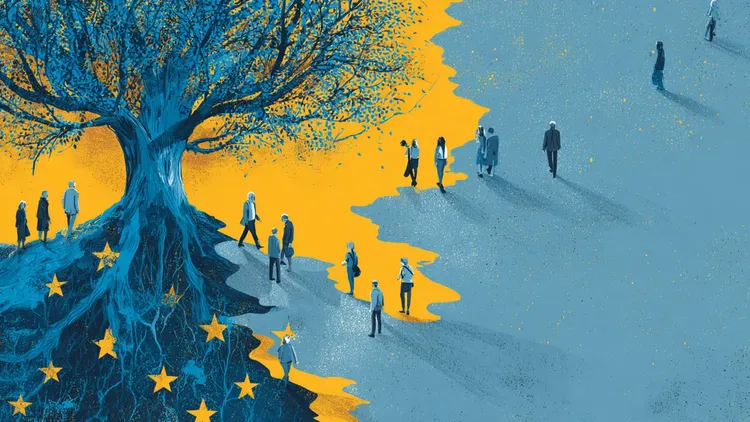
When citizens conclude that the democratic process is incapable of acting in the long-term interest of the wider public, the sense of a shared future gives way. That collapse is now visibly fraying the social fabric. Two-thirds of survey respondents report that their country is more divided today than it was 10 years ago. They point to serious, growing tensions between supporters of opposing political parties, between high- and low-income groups, between native-born citizens and immigrants, and between those alarmed by climate change and those who remain sceptical.
This social dysfunction is not an accidental byproduct of modern life; it is the direct structural outcome of extreme inequality. As insecurity deepens and social mobility stalls, people feel left behind, unheard, and hopeless about their future. In such an environment, the politics of division flourishes. Distrust in government creates fertile ground for a populist rhetoric that scapegoats immigrants, minorities, or distant elites rather than addressing the structural roots of economic inequality.
Perhaps the most alarming finding in this survey is what this trust deficit means for democracy itself. While support for democracy in principle remains solid — 68 per cent still agree it is the best form of governance — its practice is becoming dangerously contested. Four in 10 respondents now say their country would be better off with a “strong leader”, unconstrained by parliaments and elections. In several upper-middle-income countries, that figure rises to over half.
This represents a profound political warning. When mainstream political parties fail to offer credible, systemic economic reform, we are left with a dangerous vacuum. If political leaders offer only piecemeal tweaks at the margins while the public is hoping for fundamental change, citizens will inevitably look elsewhere. The vacuum will be filled by whoever is willing to promise radical action — regardless of whether they respect democratic safeguards or are truthful about their intentions.
We cannot afford to let authoritarianism capture the legitimate demand for economic justice. The imperative for progressive politics, across Europe and beyond, is to offer a genuine alternative: a new social contract that delivers radical economic turnaround through democratic, fair, and inclusive means.
Signs of a turn in the right direction
Luckily, it feels as if there is a real chance of some changes in a positive direction. An International Panel on Inequality is being established as an independent, scientific body to assess the state of knowledge on inequality, with founding support from South Africa, Spain, Norway, and Brazil, the UN Secretary-General, and over 700 leading inequality academics from across the world. At the UN General Assembly in New York, on 23 September, a High-Level Leaders event will invite wider support. If this comes off, a programme of research will get underway, acting rather like the Intergovernmental Panel on Climate Change (IPCC), to provide periodic assessments on the nature, drivers, and consequences of income and wealth inequality within and between countries.
In another exciting development, Proposition 40, a one-time wealth tax on billionaires, is on the ballot in California on 3 November 2026. Support is growing rapidly for this initiative, which would impose a tax of five per cent on the wealth of taxpayers and trusts with assets over $1 billion. The proceeds would go into a fund for health care, education, and food aid. Some California billionaires are spending millions of dollars to oppose the one-off tax — let’s hope they wind up paying twice! If Proposition 40 comes off, expect some of the other 25 US states with referenda to go for something similar in 2027.
This year has also seen the publication of the Roadmap for the Eradication of Extreme Poverty Beyond Growth by the UN Special Rapporteur, Olivier de Schutter, and the report of the High Level Expert Group on Beyond GDP, both of which have tackling inequality in their sights. It seems as if equality is getting the attention it needs.
These initiatives need to be backed by a new social contract, to restore faith in governance and give politicians the courage to move beyond the narrow dogma of GDP growth and place human wellbeing and ecological stewardship at the core of economic strategy. The public is not asking for minor adjustments to an economic engine that only serves a privileged few; they are asking for a new destination altogether. By listening to the public’s clear call for structural economic change and delivering it through transparent, egalitarian policy, governments can rebuild social cohesion, protect our living planet, and secure a democratic future that works for everyone.
Help Keep Social Europe Free for Everyone
We believe quality ideas should be accessible to all — no paywalls, no barriers. Your support keeps Social Europe free and independent, funding the thought leadership, opinion, and analysis that sparks real change.
— €4.75/month
Help sustain free, independent publishing for our global community.
Become a supporter— €9.50/month
Go further: fuel more ideas and more reach.
Become an advocate— €19/month
Make the biggest impact — help us grow, innovate, and amplify change.
Become a champion— €142.50/month
For organisations and professionals who rely on Social Europe in their daily work.
Become a member