KEY INSIGHTS
- A broken bargain: Liberalisation was delivered, but the promised compensation for the companies, workers, and regions that lost out never arrived.
- Power shifted to capital: Mobile capital can threaten to relocate, while workers, communities, and democratic institutions remain tied to particular places, weakening unions and constraining democratic choices.
- A false choice: Neither a return to unregulated globalisation nor a new economic nationalism serves workers; the alternative is an open but democratically governed international economy.
- Four concrete changes: Enforceable labour rights in all trade relations, policy space for a just industrial transformation, worker power over trade and restructuring, and democratic oversight of digital trade.
- Openness needs legitimacy: International economic cooperation will endure only if its rules protect labour rights, public services, and democratic choices as effectively as economic freedoms.
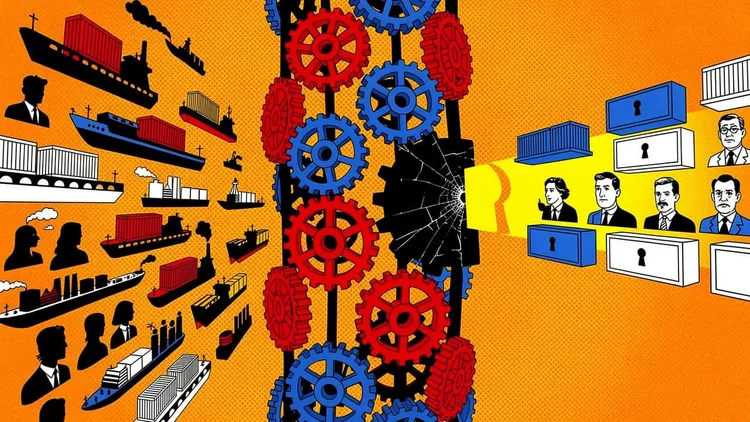
For several decades, trade policy was presented to European citizens as an essentially technical project. Its purpose was to remove barriers, open markets, and allow goods, services, and capital to move more freely across borders. The broader the markets and the deeper the economic integration, the greater the expected gains.
There was, of course, an awareness that these gains would not be distributed evenly. Some companies, workers, and regions would lose out. But the prevailing assumption was that the overall benefits would be large enough for governments to compensate the losers through national tax, welfare, and labour-market policies.
In practice, the liberalisation was delivered. The compensation was not.
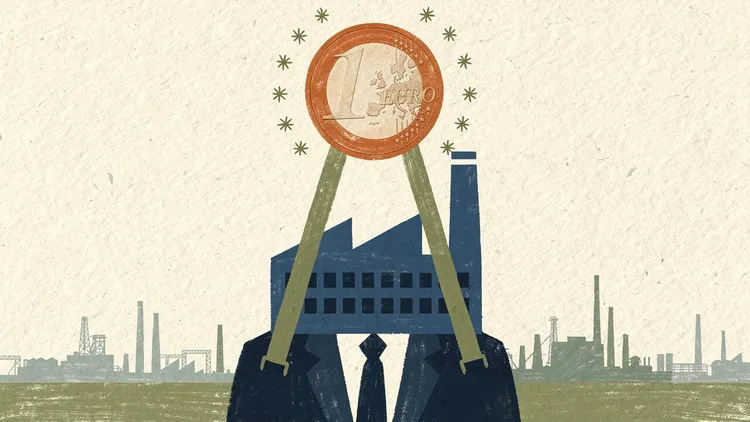
Many of the political challenges now facing our societies are emerging from the shadows of this period – and they are not only about greater inequality. Trade liberalisation, financial integration, and the expansion of global value chains have also changed the balance of power within our economies. Capital has become more mobile, while workers, communities, and democratic institutions have remained largely tied to particular places, with the nation-state as their main locus.
Companies can threaten to relocate production, investment, or profits. Workers cannot move their families and communities to new places, and reassert their social rights there, with the same ease.
This has weakened trade unions, constrained democratic choices, and made governments increasingly anxious about any policy that might reduce their countries’ attractiveness to international investors. What was presented as the neutral expansion of markets therefore had profoundly political consequences.
The key question is no longer whether trade creates aggregate economic benefits. It often does. Rather, it is: who is trade policy working for?
This question has been the focus of a series of expert seminars organised jointly by the European Trade Union Confederation (ETUC), the European Trade Union Institute (ETUI), and the Friedrich-Ebert-Stiftung (FES), which concludes this Thursday with a conference. Online participation is still possible.
The trade-policy paradigm that took shape in the early 1990s, after the Cold War, placed all but complete confidence in global markets. Production would be organised wherever it was most efficient. Governments would progressively remove obstacles to trade and investment. International institutions would lock in the rules, while domestic policy dealt with any resulting social disruption.
That model has now clashed with economic, social, and geopolitical reality.
The financial crisis demonstrated that liberalised markets could generate systemic instability. The climate crisis showed that market signals massively distort decisions on where to locate production and fail to transform our economies at the speed required. The pandemic exposed the fragility of globally optimised supply chains. Russia’s invasion of Ukraine demonstrated that economic interdependence, far from promoting the peaceful resolution of conflicts, could become dependence, creating geopolitical vulnerabilities that can be, and are, weaponised.
China’s industrial development showed how strategic state industrial policy could create enormous productive and technological capacity, but also contribute to huge global imbalances. The United States under Joe Biden adopted a comprehensive industrial policy, confirming that even the traditional champion of economic liberalism was no longer prepared to leave the future structure of its economy entirely to the market.
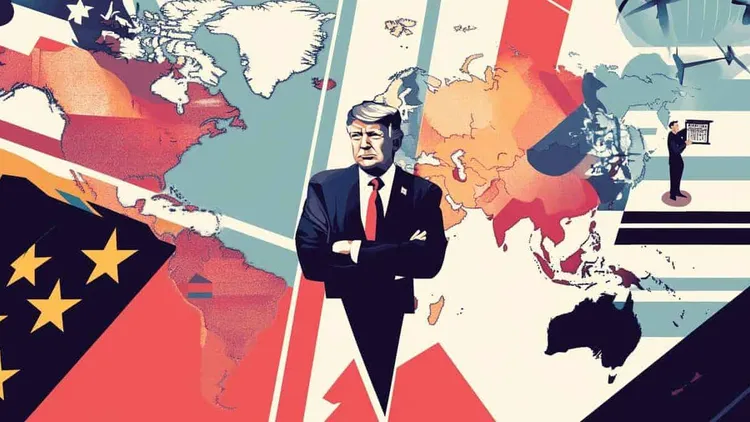
Under Donald Trump, the hegemon of the post-Cold War order essentially tore up the rulebook of the Washington Consensus. Capricious and coercive trade policies pushing tariffs to levels not seen for 100 years, the weaponisation of the dollar, open contempt for international institutions, threats to allies and enemies alike, and, last but not least, a war of choice that has blocked one of the world’s main maritime routes and placed a question mark over freedom of navigation – together, these have shattered the global economic and political order.
The Washington Consensus has crumbled. But it is not yet clear exactly what has replaced it. This new situation creates both opportunities and dangers.
The opportunity is to restore legitimate democratic choices over what our economies produce, how they produce it, and whose interests economic policy should serve. Industrial strategy, economic security, strategic autonomy, subsidies, and public procurement have returned to the centre of political debate.
The danger is that the neoliberal model of market-centred globalisation will be replaced by a new zero-sum competition between states. At best, this involves a subsidy race in which public money protects corporate interests while workers continue to bear the costs of restructuring and public-interest concerns are sidelined. At worst, the world descends into some kind of neo-imperialist scramble, in which trade and economic policies are weaponised in the narrow interest of competing great powers, under the constant threat of severe economic dislocation and armed conflict.
The supposed choice between a return to the old model and a new economic nationalism is a false one. Unregulated globalisation weakened workers’ power, but protectionism and geopolitical fragmentation will certainly not strengthen it. Economic nationalism can protect profits without protecting jobs. It can subsidise companies without creating social obligations. And it can divide workers across borders precisely when their common interests require greater cooperation.
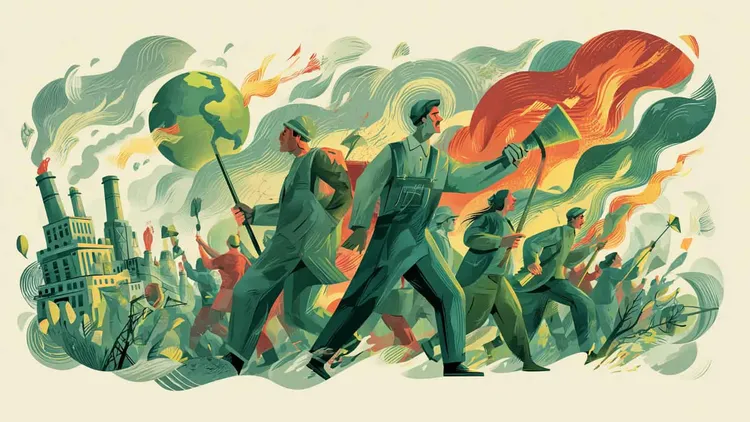
We need a third approach: an open but democratically governed international economy in which trade is treated as a means of achieving widely held social goals – shared prosperity, full employment, upward global convergence, and the transition to a net-zero economy.
Trade Must Be Re-Embedded in Democracy
Dani Rodrik – who will give a keynote at Thursday’s conference – has long warned that far-reaching economic globalisation can come into conflict with national democracy and political self-determination. When international economic rules reach too deeply into domestic affairs, citizens are formally free to vote but find that many of the most important economic decisions have already been placed beyond democratic reach. This is the core of Rodrik’s famous trilemma.
This problem directly affects workers and their unions. Decisions about investment, production, and restructuring are often taken far from the workplaces and communities that live with their consequences. Trade agreements can protect market access and investors while leaving labour commitments weakly enforced. Workers are told that change is unavoidable and that their task is to adapt to decisions made elsewhere. This is not only socially unjust. It is politically unsustainable.
The backlash against globalisation has frequently been captured by the nationalist right. Its promise to “take back control” speaks to a genuine experience of lost agency, even when its proposed solutions are false, exclusionary, or economically incoherent. If democratic politics cannot shape economic change, those promising to stop change altogether, or to revert to some imagined better past, will gain ground.
A worker-centred trade policy must therefore be about more than adding a labour chapter to an otherwise unchanged agreement. It must begin from a different understanding of the purpose of trade.
Trade should not just be about consumer choice and lower costs. It should contribute to decent work, rising living standards, sustainable development, and peaceful international cooperation. Trade rules must support these objectives rather than restrict the policies needed to achieve them. They must strengthen workers’ bargaining power rather than intensify competition between workers. And they must give democratic institutions the space to shape economic development.
What would that mean in practice? Four changes are particularly important.
First, make labour rights enforceable in all trade relations. Labour rights must cease to be treated as a decorative addition to trade policy.
The starting point should be respect for fundamental rights, including freedom of association, collective bargaining, and protection against discrimination, forced labour, and child labour. But commitments on paper are not enough. They must be enforceable in practice, with clear procedures, independent monitoring, and consequences when violations persist.
Sustainability provisions should not remain on a weaker track, separate from market-access rules. Labour clauses must be brought fully within the same dispute-settlement mechanisms that already enforce commercial obligations, rather than relying on parallel review processes that carry no binding consequences.
Trade unions must have the right to initiate complaints and to participate throughout investigations. Procedures must be rapid enough to matter to workers who are facing repression, dismissal, or the closure of their workplace. Remedies should address the harm suffered and create real incentives for governments and companies to comply.
The objective should not be to punish workers in countries where rights are violated by permitting the imposition of indiscriminate retaliatory trade sanctions. It should be to act against the governments and specific companies responsible.
European Union (EU) trade policy should therefore combine enforceable labour provisions with stronger corporate accountability across global value chains. Companies benefiting from access to the European market must be responsible for identifying, preventing, and remedying violations in their operations and supply chains. Trade policy, due-diligence rules, public procurement procedures, and access to public financial support should reinforce one another.
Second, reclaim policy space for a just industrial transformation. The green and digital transitions will not be delivered by markets alone. They require investment, planning, skills policies, public procurement and, in some cases, subsidies and local-content requirements.
Trade rules must leave governments sufficient space to pursue these objectives. Public authorities must be able to support strategic sectors or products, develop resilient supply chains, and attach social and environmental conditions to public spending. Public procurement should be used to promote quality jobs, collective bargaining, training, and lower emissions rather than being reduced to a competition for the lowest price.
Greater policy space cannot mean handing governments the freedom to subsidise at will, nor giving corporations a blank cheque.
European coordination is crucial. Without it, richer member states will have far greater capacity to subsidise national industries, deepening divisions within the EU. Internationally, an uncontrolled subsidy race would divert resources, undermine poorer countries, and accelerate geopolitical fragmentation.
Industrial support should be conditional. Companies receiving public money must provide credible commitments on investment, employment, training, and respect for collective agreements. Workers and their representatives must be involved before decisions are taken, not merely informed after restructuring has already been decided. Safeguards are needed against subsidised companies distributing excessive dividends, buying back shares, or relocating production once the support has been received.
Policy space must therefore be combined with international cooperation. Europe should work with its partners to create rules that distinguish legitimate social, environmental, and developmental policies from protectionism. Developing countries must also retain the space to build productive capacity, diversify their economies, and move up global value chains.
Where higher labour and environmental standards limit the ability of developing countries to compete on cheap labour or unregulated resource extraction, the EU should be prepared to help facilitate the transition – including through technology transfer and development support – rather than relying on market-access restrictions alone.
The objective is not European self-sufficiency. It is resilient and sustainable interdependence governed by public choices.
Third, give workers power over trade and restructuring. The central weakness of traditional trade policy is not only the content of its rules. It is also who gets to shape them.
Trade negotiations remain too remote from democratic debate and from the people whose jobs and communities will be affected. Consultations often take place only after the fundamental objectives and negotiating mandates have already been determined. Social dialogue is treated as a source of comments rather than as part of economic governance.
Workers need influence before, during, and after trade decisions.
Trade unions should be systematically involved in setting negotiating mandates, assessing the employment and distributional effects of agreements, and monitoring their implementation. Sustainability assessments should examine not only aggregate growth but also the impact on wages, bargaining power, employment quality, public services, regional cohesion, and gender equality.
The same principle must govern restructuring. When trade, technological change, or decarbonisation transforms an industry, workers must have enforceable rights to information, consultation, and collective bargaining. Adjustment cannot consist of offering individual workers short training courses after their jobs have disappeared.
We need a genuine European framework for just transition, supported by adequate common funding. It should anticipate change, support affected regions, guarantee access to training during paid working time, and create pathways from declining industries into new quality employment.
Above all, workers must be able to negotiate how productivity gains and the benefits of trade are distributed. No adjustment fund can substitute for strong trade unions, broad collective bargaining coverage, and effective worker participation in company decisions.
This should include the right to worker representation on company boards. If trade and industrial policy are to change how companies behave, workers need a voice in the boardroom as well as at the negotiating table – not only compensation after decisions have been taken elsewhere.
Fourth, extend labour rights and democratic oversight to digital trade. Trade is entering new fields. Digital trade – cross-border data flows, algorithmic management, and platform work – is emerging as one of the central battlegrounds of trade policy, yet it remains almost entirely outside its labour and democratic safeguards. A growing share of world trade is now digitally ordered or delivered, and the rules being negotiated on data flows, source code, and market access for online services will shape working conditions, tax bases, and public policy space for decades to come.
Trade rules should not lock in the deregulation of data and digital markets before societies have decided how to govern them. They must preserve governments’ right to regulate algorithmic management, protect personal data, tax digital giants fairly, and require platforms to comply with collective bargaining and labour law, anchored in international labour and human-rights standards.
Openness Requires Legitimacy
A worker-centred trade policy is sometimes portrayed as an argument against openness. It is the opposite. International economic exchange and cooperation can endure only if they retain democratic and social legitimacy.
People will not support an open economy indefinitely if openness is experienced as insecurity, powerlessness, and a permanent demand for workers to adjust. Nor will appeals to the rules-based order be persuasive if those rules protect economic freedoms more effectively than labour rights, public services, or democratic choices.
The task is therefore not to restore the old consensus. It is to build a different form of internationalism.
This means cooperation between democracies, but not the division of the world into rigid economic blocs. It means greater resilience, but not an impossible pursuit of complete autonomy. It means an active industrial policy, but not a subsidy race without social conditions. And it means trade agreements, but only where they support decent work, sustainable development, and the ability of societies to shape their own futures.
It also means correcting persistent trade imbalances through cooperative rebalancing rather than through tariffs alone, with the burden of adjustment shared between surplus and deficit economies rather than falling one-sidedly, through austerity and wage cuts, on deficit countries.
Trade unions have a central role to play in this project. It will be crucial to organise workers across borders and to understand both the benefits of cooperation and the damage caused when competition is allowed to erode social standards. The answer cannot be a nostalgic return to a world before economic integration. Nor can it be an acceptance of globalisation as an external force to which workers must endlessly adapt.
The choice is not between free trade and protectionism. It is between an economic order governed primarily by the mobility and interests of capital, and one shaped through democracy, solidarity, and collective power.
Trade will continue to change our societies. The real question is whether workers will merely experience that change – or shape its direction. In this ever-changing world, one thing remains certain: trade unions stand ready to contribute to the new paradigm that is about to take shape.


Help Keep Social Europe Free for Everyone
We believe quality ideas should be accessible to all — no paywalls, no barriers. Your support keeps Social Europe free and independent, funding the thought leadership, opinion, and analysis that sparks real change.
— €4.75/month
Help sustain free, independent publishing for our global community.
Become a supporter— €9.50/month
Go further: fuel more ideas and more reach.
Become an advocate— €19/month
Make the biggest impact — help us grow, innovate, and amplify change.
Become a champion— €142.50/month
For organisations and professionals who rely on Social Europe in their daily work.
Become a member