Social Europe

  • Themes
    • European Social Charter
    • A ‘manifesto’ for 2024
    • Global cities
    • War in Ukraine
  • Publications
    • Books
    • Dossiers
    • Research Essays
  • Podcast
  • Videos
  • Newsletter
  • Membership

The home as office—what’s gender got to do with it?

Kalina Arabadjieva and Paula Franklin 30th March 2022

The rise of home-based telework should finally dispel the notion that only work in the public sphere is, really, ‘work’.

home-based teleworking
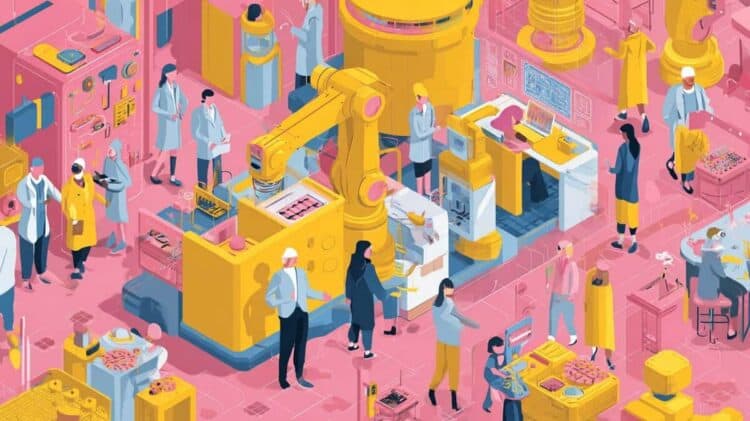
Home, sweet home?—teleworking carries psychosocial risks (Radu Razvan / shutterstock.com)

The division of social space into the private sphere of the home and the public domain is a legacy of the industrial revolution with many enduring ramifications for gender inequality. Central has been the division of labour, in which home is for the unpaid, invisible and undervalued work of women, while the public world is for work with remuneration, traditionally conducted by the male ‘breadwinner’.

For women, working from home has often been the only feasible way to combine unpaid work—such as childcare—with paid employment. Employers then ‘allow’ women to work from home, enduring worse terms and conditions, less autonomy and a poor working environment.

Before the pandemic, around 57 per cent of home-based ‘teleworkers’ were women. During it, 41 per cent of women (and 37 per cent of men) across the European Union started working from home. Women will likely seize new opportunities to work from home after the pandemic, too: the proportion of women in occupations amenable to telework is estimated to be higher than for men (45 and 30 per cent respectively).

Join 24,000+ informed readers and stay ahead with our insightful content. 

It's free.


Thank you!

Please check your inbox and click on the link in the confirmation email to complete your newsletter subscription.

.

Home-based teleworkers could however continue to suffer disadvantages arising from the perception that only work performed in the public sphere is work and from insufficient labour protection. The distinction between the ‘public’ and ‘private’ domains and paid and unpaid work has traditionally marked the boundaries of labour law and regulation. Unpaid domestic labour falls beyond the scope of labour protection and even paid work performed in the home has been subject to much less rigorous state intervention.

Telework challenges

The surge of home-based telework during the pandemic has highlighted many associated challenges. In addition to being less protected in the ‘private’ space, home-based teleworkers are at risk of being sidelined at their workplace, with reduced professional visibility and career prospects and less access to information and personal and professional support.


Become a Social Europe Member


Support independent publishing and progressive ideas by becoming a Social Europe member for less than 5 Euro per month. Your support makes all the difference!


Click here to become a member

And women are likely to be affected disproportionately. Telework can exacerbate work-life conflicts more severely for those workers with a higher ‘double burden’ of paid employment and unpaid care responsibilities, most of whom are women.

With its potential for isolation, lack of social support and online harassment and violence—again mostly targeted at women—telework is rife with psychosocial risks (PSR) with direct and cumulative impacts on the health of workers. As the sources of these risks, such as high workloads or remote surveillance, lie beyond the control of the individual concerned, preventive measures must entail collective action.

This includes changes in the physical, social and legal landscape. Development and enforcement of health and safety provisions, for example, is crucial. Yet the presumed binary divide between public and private space has made it difficult hitherto to argue for legislation on subjects that appear to be in the ‘private’ realm.

Even with the challenges remote work brings, people do want to do telework. If organised well, it offers possibilities for a better work-life balance, particularly for those (whatever their gender) with caring responsibilities.

As workplace and employer control increasingly spill into the home, societal assumptions that work performed in the physical space of the home is subordinate—or not ‘real work’—have clearly become untenable. Regulation is necessary to protect home-based workers’ wellbeing, their working conditions and, indeed, their privacy and ability to separate work from genuinely private life. This could have positive, transformative effects not only on how home-based (tele)workers are perceived at work and protected in law but on how unpaid domestic labour is regarded too.

Positive opportunities

Home-based telework can indeed challenge the gender norms and relations embedded in an outdated division of social space. But strong policies and measures are required to seize the positive opportunities it presents. A ‘right to disconnect’—which has attracted attention at the EU level—is only one essential action.

Legal obligations on employers are necessary to prevent risks to physical and mental health for home-based teleworkers, accompanied by increased resources for enforcement. Measures will be needed to guarantee worker autonomy, including over working space and time, to ensure that telework does not primarily benefit employers—and that home-based teleworkers are not disadvantaged in terms of conditions, career opportunities and support. Collective agreements play a key role in developing solutions adapted to specific sectors and workplaces.

‘Gender mainstreaming’ in the regulation of telework is essential, including in relevant framework agreements. A gender-transformative approach that values this mode of working should also go hand-in-hand with equal involvement in care by men, strong family-friendly policies and investment in childcare.

This piece was written as part of the ‘Future of Remote Work’ project at the European Trade Union Institute, with an edited volume due in early 2023


Kalina Arabadjieva
Kalina Arabadjieva

Kalina Arabadjieva is a researcher at the European Trade Union Institute, with a PhD in labour law. She is working on gender equality and the just transition.

Pics 6
Paula Franklin

Paula Franklin is a senior researcher on occupational safety and health and working conditions at the European Trade Union Institute.

You are here: Home / Economy / The home as office—what’s gender got to do with it?

Most Popular Posts

Two opened pages from Orwell's '1984', including examples of official 'Newspeak' such as 'WAR IS PEACE'. George Orwell and Europe’s new normalJan Zielonka
Man reading speech from podium carrying words Deutscher Bundestag Ukraine: Putin’s ‘reality’ … and the real worldFrank Hoffer
Young man falling in front of an apartment block Will the young save Europe from the rise of the far right?Albena Azmanova
2 2 1 scaled 1 Housing crisis: Europe cannot afford itGerald Koessl
UCLA What is the ‘free’ in ‘Palestine should be free’?Bo Rothstein

Most Recent Posts

Group of politicians in front of Nouveau Front Populaire sign French voters united to block the far right againOwen Worth
demonstration with large number of people in square in front of Finnish Senate in Helsinki The assault on labour rights in FinlandAntti Alaja and Joel Kaitila
Protesters with placards outside Supreme Court in Washington Kamala Harris: top choice to replace BidenRichard Hargy
Super-yachts moored in Monaco's Port Hercule Tax on billionaires—political vaccine against the far rightMagdalena Sepúlveda
small town in river valley amid forest Climate capabilities: realising the green transitionLisa Pelling

Other Social Europe Publications

Global cities cover pdf Global cities
strategic autonomy Strategic autonomy
Bildschirmfoto 2023 05 08 um 21.36.25 scaled 1 RE No. 13: Failed Market Approaches to Long-Term Care
front cover Towards a social-democratic century?
Cover e1655225066994 National recovery and resilience plans

Foundation for European Progressive Studies Advertisement

Let’s tax EU billionaires! Sign and share the petition

We need one million signatures to tax the billionaires in the EU! Sign and share the European Citizens’ Initiative ‘Taxing great wealth to finance the ecological and social transition’!

Why?

• The richest 1 per cent in Europe owns half of European wealth.

• Workers pay a higher tax rate than billionaires!

• Since 2020, the five richest billionaires have increased their wealth by 76 per cent while 99 per cent of EU citizens have become poorer.

• A wealth tax of ONLY 5 per cent on Europe's multimillionaires and billionaires could generate €286.5 billion each year!

Taxing billionaires would bolster the EU’s resources, enabling us to fight inequalities and support a just ecological transition, on top of creating a fairer tax system.

Supported by FEPS, Oxfam, the Belgian Parti Socialiste, Nordic trade unions and several other individuals, including Thomas Piketty and Marlene Engelhorn.


SIGN HERE AND SHARE

Hans Böckler Stiftung Advertisement

Survey on EU elections in 10 countries: participation opportunities at work and good working conditions positive for democratic climate

For this new study by the Hans Böckler Foundation's Institute of Economic and Social Research (WSI), around 15,000 employees and jobseekers in ten EU countries were surveyed. The study sends out three messages.

First, it shows that poor working conditions and the resulting potential for frustration and experiences of disadvantage and powerlessness are a breeding ground for the emergence of anti-democratic attitudes in all the countries studied, which can then be mobilised by right-wing parties. Secondly, good working conditions strengthen confidence in the EU, even in countries where anti-EU parties are in government or have been in government until recently. Thirdly, worries about transformation strengthen extreme right-wing parties. Progressive forces in the EU should therefore have an interest in shaping these transformation processes in a socially just way.

The world of work is relevant across Europe when it comes to understanding and combating the rise of the political far right. For example, fair pay, the feeling of not being at the mercy of the employer when it comes to the amount of work and working hours, as well as participation rights in the job, as promoted in particular by trade unions and co-determination institutions—such as works and staff councils in Germany—play an important role.


DOWNLOAD HERE

Friedrich Ebert Stiftung advertisement

Ninety per cent are in favour of a more just climate policy

How can we prevent climate policy from becoming an issue that fuels a new Kulturkampf and class conflicts? Where do social barriers lurk and how can different milieux be activated? Guided by these questions, FES Just Climate commissioned a population survey in 19 European and north American countries. Climate Crunch Questions analyses which social milieux are (especially) amenable to climate-policy measures and which are critical, hesitant or opposed—and how they could still be won over.


DOWNLOAD HERE

ETUI advertisement

Artificial intelligence, labour and society

The rapid expansion of artificial intelligence is unparalleled, establishing it as a ubiquitous element in workplaces and our daily lives. The era when AI was exclusively associated with robots and intricate algorithms for the technically proficient is over. This marks a significant paradigm shift, with profound implications and changes regarding the world we live in. This book proposes an analysis of this transformation, and does so by bringing together the reflections of more than 20 high-level academics and research activists from across the world.


AVAILABLE HERE

Eurofound advertisement

Becoming adults: Young people in a post-pandemic world

Eurofound's new report, Becoming adults: Young people in a post-pandemic world, explores young people’s wishes and plans for the future—and the wellbeing outcomes related to these plans—in the context of the current labour market and housing situation and progress on the implementation of the European Union’s reinforced Youth Guarantee. It finds that, while there are positive signs for young people in terms of employment, many young people in Europe find themselves locked out of the housing market and unable to establish the independence required to have families of their own.


DOWNLOAD HERE

About Social Europe

Our Mission

Article Submission

Advertisements

Legal Disclosure

Privacy Policy

Copyright

Social Europe Archives

Search Social Europe

Themes Archive

Politics Archive

Economy Archive

Society Archive

Ecology Archive

Follow us

RSS Feed

Follow us on YouTube

Social Europe ISSN 2628-7641