
Skip to content

Social Europe

  • eBooks
  • Newsletter
  • Membership
  • Advertisements

Avatar photoChristophe Sente

Christophe Sente is a fellow of Cevipol (Centre d’Étude de la Vie politique) at the Université Libre de Bruxelles. His areas of interest include the history of ideas, the evolution of party systems and the transformations of democracy.

What Jürgen Habermas Misses About American Democracy

Christophe Sente

Europe's leading public intellectual offers a flawed, Eurocentric reading of US politics that obscures more than it reveals.
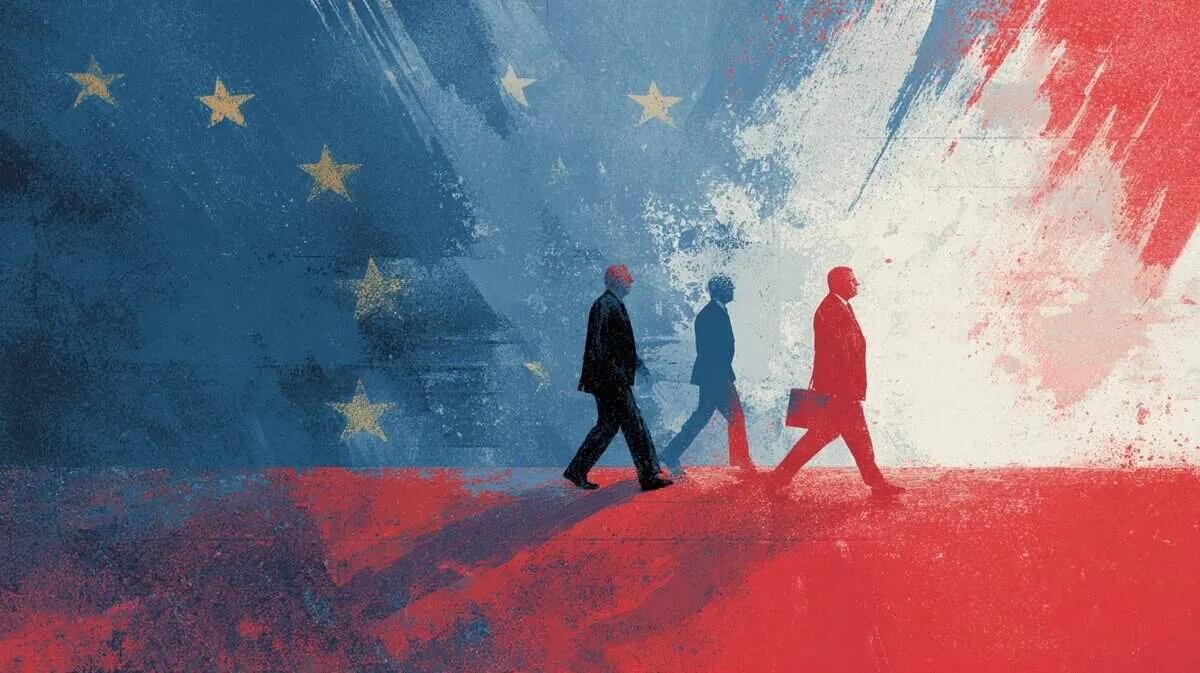
A Transatlantic Reckoning: Why Europe Needs a New Pact Beyond Defence Spending

Christophe Sente

The European Union faces an existential choice: succumb to economic nationalism or forge a new transatlantic order.

France, Europe and another election

Christophe Sente

French voters may have been recalled for a snap domestic election—but the underlying trends have been decades in the making.

Democracy and the future of work

Christophe Sente

Anxiety about the state of democracy amid political polarisation should direct us to an unexpected answer—economic citizenship.

Where is the French left going?

Christophe Sente and Christopher Mackin

Beyond the new electoral formation, a potential avenue is open to democratise work.

The drama of the French presidential election

Christophe Sente and Timothée Duverger

Social democracy is flatlining in a France which otherwise betrays common European features.

Ecosocialism: more than another Third Way

Christophe Sente and Timothée Duverger

The old left was too slow to see beyond materialist consumption. But an ecosocialism can underpin coalitions with the green parties which filled the gap.

ETUI Advertisement

A more strategic Europe? Risks and opportunities for the world of work

Europe’s ambition to achieve strategic autonomy is at risk of being undermined from within, according to the annual flagship report by the ETUI and the ETUC. Despite signs of macroeconomic resilience, weakening investment, stalled decarbonisation and growing labour market fragilities are eroding the very foundations on which Europe’s power depends. Once again, the Benchmarking Working Europe 2026 report stands out as an invaluable resource, providing a comprehensive set of indicators illustrated through more than 60 graphs and tables, with analysis from ETUI researchers.

READ HERE
Eurofound Advertisement

Is financial resilience and trust in Europe faltering?

In this episode of Eurofound Talks, host Mary McCaughey and senior researcher Eszter Sandor unpack the results of the 2025 Living and Working in the EU e-survey. While headline inflation has stabilised at 2.1%, the data reveals a continent gripped by chronic precariousness, with 57% of respondents now at risk of depression. Mary and Eszter explore how this economic insecurity is impacting institutional trust and democratic engagement.

LISTEN HERE
FEPS Advertisement

The Spring issue of The Progressive Post is out!

In geopolitics, 2026 is challenging our certainties: from the abduction of the Venezuelan president, over the open US threats to 'take' Greenland, to the US-Israeli war on Iran. This issue tries to determine what comes next, debating power politics in the 21st century. We also examine the European Commission's first Anti-Poverty Strategy as well as the EU's need for proactive adaptation measures, exploring the legislation, resources and mechanisms to climate-proof our future.

READ THE MAGAZINE
Hans Böckler Stiftung Advertisement

WSI Minimum Wage Report 2026

Minimum wage policy across Europe has shifted significantly, with many EU countries raising wages above average and anchoring them to adequate living standards. This trend is consolidating as countries increasingly adopt the reference values recommended in the European Minimum Wage Directive — recently upheld by the European Court of Justice.

DOWNLOAD THE REPORT
S&D Group in the European Parliament Advertisement

WSI Minimum Wage Report 2026

Minimum wage policy across Europe has shifted significantly, with many EU countries raising wages above average and anchoring them to adequate living standards. This trend is consolidating as countries increasingly adopt the reference values recommended in the European Minimum Wage Directive — recently upheld by the European Court of Justice.

DOWNLOAD THE PAPER

Our Mission

People

Article Submission

Advertisements

Membership

Politics Archive

Economy Archive

Society Archive

RSS Feed

Legal Disclosure

Privacy Policy

Copyright

Social Europe ISSN 2628-7641

Copyright Social Europe Publishing & Consulting GmbH 2026
  • eBooks
  • Newsletter
  • Membership
  • Advertisements