KEY INSIGHTS
- Energy remains the missing piece: Steel, aluminium, chemicals, and glass still face energy costs that undermine competitiveness, and employers deciding whether to invest or close cannot wait 10 years for solutions.
- A contradiction at the heart of policy: Brussels wants more products made in Europe while high energy costs, and a reliance on Chinese clean-tech imports, make Europe a less attractive place to manufacture them.
- Public money, public obligations: Companies receiving subsidies should be required to invest, train workers, maintain employment, and respect collective bargaining rather than pay out to shareholders and announce closures.
- No race to the bottom: Draghi found no route to competitiveness through cutting wages or rights; Europe’s problems are weak investment, high energy costs, infrastructure bottlenecks, and corporate short-termism, not labour protections.
- The Accelerator Act must emerge stronger: Robust Made in Europe provisions and social conditionalities are what make industrial policy politically sustainable rather than a transfer of public resources into private hands.
When Ursula von der Leyen takes the stage for her State of the Union address, she will do so at the halfway point of her second mandate. For Europe’s industrial workers, the time for diagnosis is over. The question is no longer whether Europe needs an active industrial policy. That argument has been won.
The question now is whether the Commission can turn ambition into delivery.
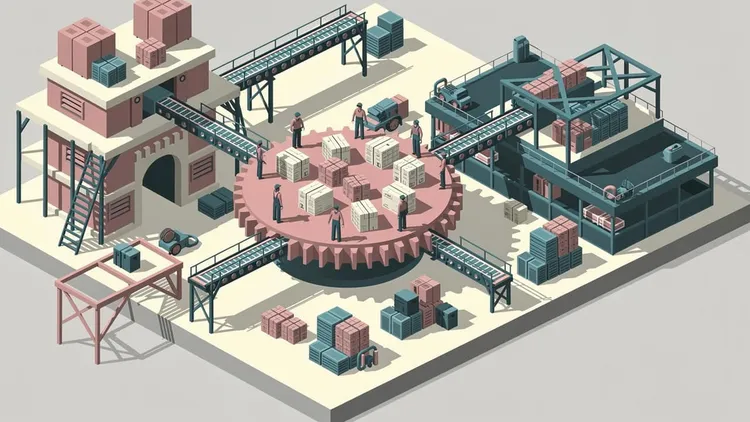
Over the past two years, Brussels has finally begun to recognise what trade unions and industrial workers have long understood: Europe cannot achieve the green and digital transitions by acting as a passive market. It needs investment, strategic direction, and public intervention to build the industries of the future.
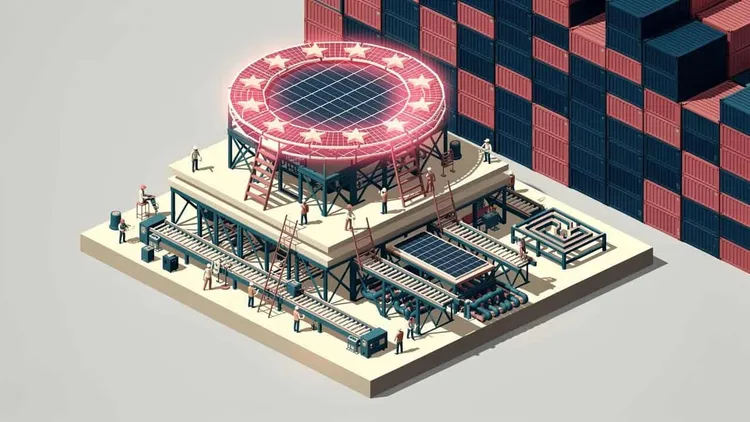
The proposed Industrial Accelerator Act is evidence of that shift. Measures to create lead markets for low-carbon and European-made products are a welcome acknowledgement that Europe cannot spend billions supporting industrial transformation only to see the resulting demand met by imports. Likewise, proposals to strengthen social criteria in public procurement point in the right direction.
But recognition is not enough. Industrial workers need results.
Europe can create demand for Made in Europe products. It can set targets and launch initiatives. Yet none of this will matter if it remains too expensive to manufacture in Europe.
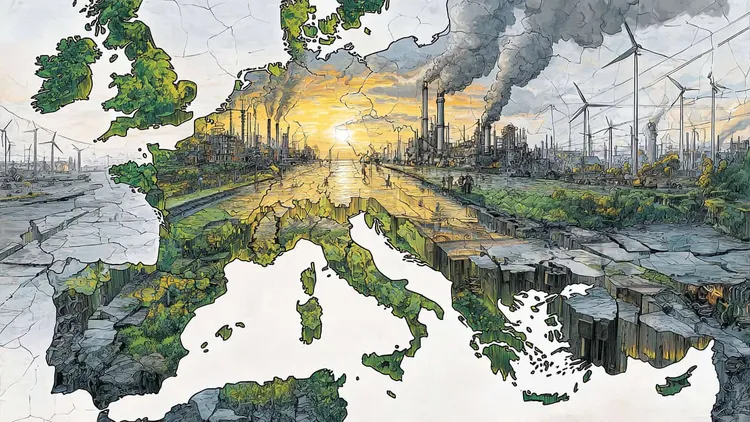
For energy-intensive industries, the crisis has not disappeared simply because it no longer dominates the headlines. Steel, aluminium, chemicals, glass, and other foundation industries continue to face energy costs that undermine competitiveness, discourage investment, and threaten jobs.
The Commission understands the problem. It has produced reports, strategies, and competitiveness plans. Member states have even loosened fiscal constraints to allow greater energy investment. What workers need now is not another diagnosis. They need delivery.
Europe certainly needs long-term investment in abundant, affordable, and decarbonised energy. But an industrial employer deciding today whether to invest, relocate, or close production cannot wait for solutions that may arrive in 10 years’ time. Every closure weakens Europe’s industrial ecosystem. Once production capacity disappears, it is extremely difficult to rebuild. Skills are lost. Supply chains fragment. Communities suffer.
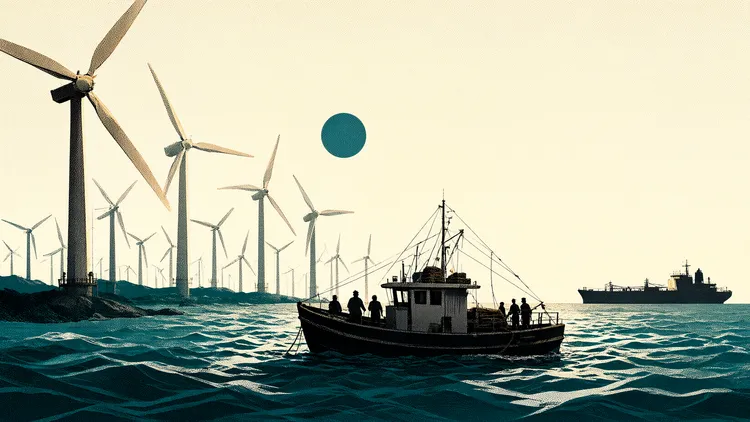
This creates a growing contradiction at the heart of European policy. Brussels wants more products to be made in Europe, while energy costs continue to make Europe a less attractive place to manufacture them. The quickest route to abundant renewable energy today runs through imported equipment from China, but that would further undermine the European economy and pull the plug on demand for European industries. It would simply swap an import dependence on fossil fuels for an import dependence on clean tech. Resolving that contradiction should be one of the central tests of von der Leyen’s second mandate. We need speed, but not haste.
The real measure of success is what happens to workers
Industrial policy cannot be judged solely by investment announcements, production figures, or headline competitiveness rankings. The real test is whether industrial transformation creates secure, quality jobs.
Across European manufacturing, workers are living through a period of profound uncertainty. Restructuring is spreading across supply chains. Automotive workers have already endured repeated rounds of closures, downsizing, and production cuts. The pressure is growing across many sectors.
Too often, these developments are presented as the inevitable consequences of difficult market conditions. Yet corporate choices matter too.
Many companies asking for public support have simultaneously distributed vast sums to shareholders while sitting on significant cash reserves. Public authorities are increasingly expected to absorb investment risks through subsidies, guarantees, and incentives. It is entirely reasonable to expect companies, in return, to invest their own resources in productive capacity, innovation, training, and employment.
Public money should come with public obligations. Companies receiving substantial support should be required to invest, train workers, maintain employment, and respect collective bargaining. They should not be free to accept taxpayer support one day and announce closures or lay-offs the next.
Industrial transformation will inevitably change technologies, products, and production processes. The challenge is not to prevent change. It is to ensure that workers have a route from the industries of today into the quality jobs of tomorrow.
That means anticipating restructuring before redundancies are announced. It means investing in skills before jobs disappear. It means involving trade unions in decisions about industrial change rather than treating workers as an afterthought. If Europe wants a just transition, it must build one deliberately. How von der Leyen integrates this into the forthcoming Quality Jobs Act will be a test of whether Europe delivers for workers on industrial shop floors in practice.
The Commission also needs to draw some clear political red lines. Mario Draghi was clear in his report that there is no route to competitiveness through cutting wages or workers’ rights. However, some are advocating exactly this dead-end strategy. A worrying strand of the competitiveness debate suggests that Europe’s industrial problems can be solved by making people work longer or by weakening labour protections.
This gets the diagnosis wrong.
European industry is not struggling because workers have too many rights. It is not falling behind because working hours are too short. Europe’s industrial challenges stem from weak investment, high energy costs, infrastructure bottlenecks, and short-term corporate behaviour that prioritises shareholder payouts over productive investment.
Those are the problems on which policymakers should focus.
The same principle applies to the growing obsession with “simplification”. Better regulation is a legitimate objective. But simplification cannot become a euphemism for deregulation. European legislation often establishes minimum standards precisely because member states have different industrial relations systems and social models. Stronger national protections should not suddenly be treated as obstacles to competitiveness.
Europe will not outcompete China or the United States by entering a race to the bottom on wages, rights, or working conditions. Its strength lies elsewhere: in skills, innovation, productivity, industrial know-how, and the ability to combine economic transformation with social stability.
Undermining those strengths would be an act of self-harm.
Made in Europe must mean quality jobs in Europe
The coming months will also determine whether the Industrial Accelerator Act becomes the game-changer Europe needs. The proposal must emerge from the legislative process stronger, not weaker. The three rapporteurs in the European Parliament have understood this well.
Made in Europe provisions need to be robust enough to build genuine European value chains. Public funding should support European production, European supply chains, and European jobs. Equally important are strong social conditionalities. Taxpayers have every right to expect something in return for public support. Companies receiving assistance should demonstrate that they are investing in Europe, creating quality jobs, providing training, and respecting collective bargaining.
These conditions are not barriers to investment. They are what make industrial policy politically sustainable. Without them, industrial policy risks becoming little more than a transfer of public resources into private hands.
Europe has already taken an important step by rediscovering industrial policy. That alone marks a significant shift from the orthodoxy that dominated for much of the last decade. But halfway through her mandate, Ursula von der Leyen no longer has the luxury of speaking only about strategy.
Industrial workers need delivery.
They need affordable energy. They need investment. They need confidence that public support will generate public value. They need a transition that creates decent jobs rather than deeper insecurity.
The green and digital transitions will continue. Technologies will evolve. Entire industries will change. The real political question is whether workers can see a future for themselves in that transformation. That is the challenge facing the Commission.
The future of European industry matters. But the true measure of Europe’s industrial strategy is not the number of policy announcements it generates in Brussels. It is whether the millions of workers who power Europe’s industry believe they still have a place in its future.

Help Keep Social Europe Free for Everyone
We believe quality ideas should be accessible to all — no paywalls, no barriers. Your support keeps Social Europe free and independent, funding the thought leadership, opinion, and analysis that sparks real change.
— €4.75/month
Help sustain free, independent publishing for our global community.
Become a supporter— €9.50/month
Go further: fuel more ideas and more reach.
Become an advocate— €19/month
Make the biggest impact — help us grow, innovate, and amplify change.
Become a champion— €142.50/month
For organisations and professionals who rely on Social Europe in their daily work.
Become a member