KEY INSIGHTS
- A foreseeable workplace risk: EU health and safety law already obliges employers to manage foreseeable risks, and a partner who stalks or harasses a worker is exactly that.
- Instruments without connection: The 2024 directive places no obligations on employers, and only 15 of the 27 member states have ratified ILO Convention No. 190.
- National models already work: Ireland, Italy, and Spain show that paid leave, job protection, and relocation rights keep survivors in work.
- Three steps for Brussels: Name domestic violence in the Quality Jobs Act, ratify Convention No. 190 everywhere, and transpose the directive beyond the minimum.
After consulting trade unions and employers, the European Commission is now preparing its proposal for a Quality Jobs Act. The Commission’s second-phase consultation lists psychosocial hazards at work, including sexual harassment, under safety and health at work. Yet one risk has so far received little attention in the debate: domestic violence. Why should it form part of the EU’s approach to occupational safety and health, and why now?
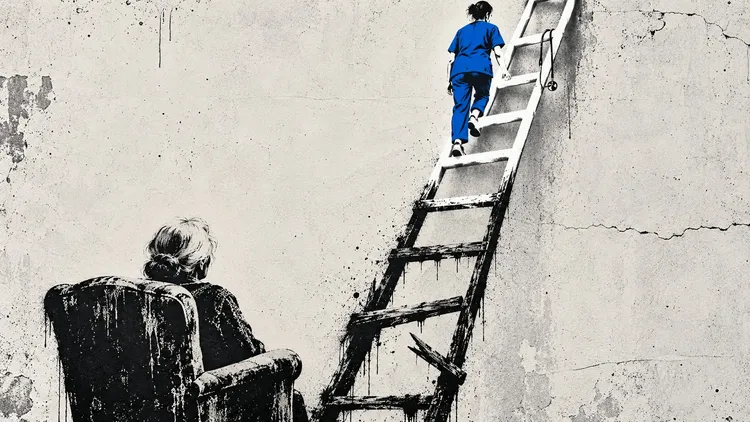
Picture a woman whose former partner waits in the car park at the end of her shift, or floods her work phone with abusive messages. None of it stays “at home”. All of it affects her safety, her health, and her job, and often her colleagues too.
The timing is crucial. In 2024, the EU took an important step by adopting its first directive on combating violence against women and domestic violence, which member states must transpose by June 2027. Its implementation, together with the forthcoming Quality Jobs Act, offers a chance to address the workplace dimension of domestic violence far more explicitly.
This is not a marginal problem. According to the EU survey on gender-based violence by Eurostat, FRA and EIGE, 31.8 per cent of women in the EU have experienced physical, sexual or psychological violence from a partner at some point in their lives. In Hungary and Slovakia, the figure is over half.
This is a lifetime figure, not a count of women facing abuse at work today. But it shows how many working lives domestic violence can reach, and for women living with it now, its effects rarely stop at the workplace door. EIGE puts the annual cost of intimate partner violence against women in the EU at €151 billion.
As I explain in my recent policy brief for the European Trade Union Institute (ETUI), Domestic violence: a workplace safety, health and equality issue, employers are not responsible for the abuse itself. But EU health and safety law already requires them to identify and manage foreseeable risks, and a perpetrator who stalks a worker, harasses her by phone or online, or turns up at her workplace is exactly such a risk. Economic abuse raises the stakes because an independent income is one of the strongest routes out of an abusive relationship, which is precisely why abusers sabotage women’s jobs and disrupt their careers.
Nobody Has Joined the Dots
So why is the workplace dimension still missing from EU policy? Not for lack of instruments, but because none of them yet joins the dots.
The 2024 directive was a historic step. But it does not explicitly connect domestic violence to employment, workplace safety, or social dialogue, and it places no obligations on employers.
The Quality Jobs Act, still in preparation, is the obvious place to close this gap, by ensuring that domestic violence is explicitly considered alongside other psychosocial risks at work.
International Labour Organization (ILO) Convention No. 190, the first international treaty to recognise that domestic violence spills over into the world of work, could bridge the gap. In March 2024, the EU Council invited member states to ratify it. Only 15 of the 27 member states have done so. Hungary and Slovakia, with some of the highest rates of domestic violence in the EU, are not among them.
Meanwhile, some countries and workplaces are demonstrating what is possible. Irish law gives survivors five days’ safe paid leave, and unions in banking, postal, and telecoms services have negotiated 10 days’ leave. Italy provides up to three months’ paid leave. In Spain, the law guarantees job protection and the right to relocate, and some collective agreements help cover housing and security costs when survivors have to move. These measures keep women in work, making the job a bridge to safety and independence rather than one more thing an abuser can take away.
Employers and unions need not wait for Brussels. Every workplace can act now by including domestic violence in risk assessments; having a named, trained, and confidential contact in human resources (HR) or the union; training managers to spot the signs and refer to specialist services; and agreeing a safety plan with each survivor, from screening her calls to changing her shifts, work location, or email address. Offer salary advances or help with emergency housing, and make sure no one is disciplined for absences caused by abuse. Most of it costs little. All of it can save jobs and lives.
Three Steps Would Close the Gap
But protection should not depend on which country a woman lives in, or on whether her union has won an agreement. Three steps would close the gap.
First, the Quality Jobs Act should name domestic violence as a psychosocial risk that employers must include in their risk assessments.
Second, every member state should ratify ILO Convention No. 190 and implement its accompanying Recommendation No. 206, and introduce the right for survivors to receive support, including paid leave and protection from dismissal.
Third, governments transposing the directive on violence against women should go beyond the minimum and legislate for workplace rights, with trade unions and employers at the table. In the longer term, the EU needs a dedicated directive on violence and harassment in the world of work, aligned with ILO Convention No. 190.
Domestic violence is not only a private matter. It is a question of workplace safety, health, and equality. The EU already has the building blocks. It now needs to put them together.

Help Keep Social Europe Free for Everyone
We believe quality ideas should be accessible to all — no paywalls, no barriers. Your support keeps Social Europe free and independent, funding the thought leadership, opinion, and analysis that sparks real change.
— €4.75/month
Help sustain free, independent publishing for our global community.
Become a supporter— €9.50/month
Go further: fuel more ideas and more reach.
Become an advocate— €19/month
Make the biggest impact — help us grow, innovate, and amplify change.
Become a champion— €142.50/month
For organisations and professionals who rely on Social Europe in their daily work.
Become a member