KEY INSIGHTS
- Attention as strategic asset: Neuroscience reveals attention is a finite biological resource now industrially exploited, with reflexive emotional responses systematically privileged over deliberate reasoning.
- A geopolitical battleground: The US, China, and Europe have developed competing models of attention control — platform dominance, sovereign ecosystems, and regulation respectively — making cognitive capture a dimension of global power.
- AI as accelerant: Generative artificial intelligence dramatically lowers the cost of producing psychologically targeted content at scale, further destabilising trust and compressing the space for reflective thought.
- Three possible futures: The coming decade will determine whether societies slide into informational fragmentation, achieve partial regulatory stabilisation, or learn to govern attention as collective infrastructure essential to democracy.
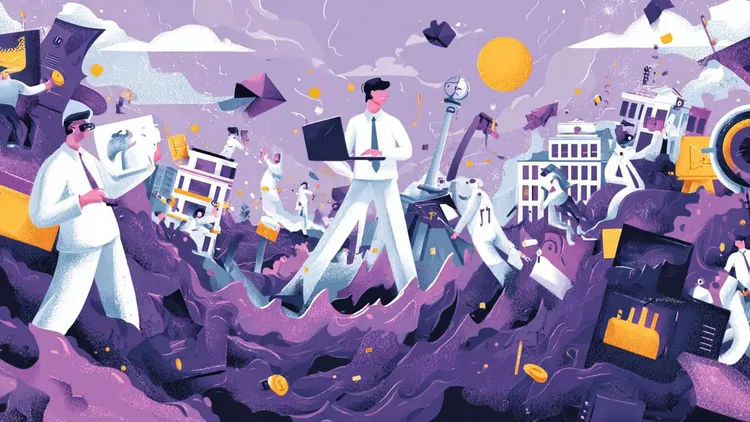
In the 21st century, power no longer lies only in territory, capital, or technology. It lies in something far more elusive and finite: human attention. The jury verdict in a US civil suit which found Meta and YouTube liable for deliberately addicting young users, leading to numerous mental health problems, is probably just an early skirmish in what promises to be a long war.
Attention is not merely a psychological convenience; it is a biological function. Neuroscience defines it as the process by which the brain selects, prioritizes, and sustains focus on a fraction of the information available to it. At every moment, we are immersed in a storm of signals, yet only a few reach conscious awareness.
This filtering is governed by two systems: a fast, reflexive, “bottom-up” attention driven by novelty, fear, and emotion; and a slower, deliberate, “top-down” attention that enables reasoning and strategic thought. The imbalance between these two systems is now the fault line of modern civilization.
For millennia, societies have sought to capture attention. Orators mastered rhetoric to move crowds. Religious institutions created rituals and edifices designed to command awe. Political regimes deployed spectacle – from Roman games to revolutionary propaganda – to shape collective focus.
The printing press, radio, and television expanded the scale of influence, but they did not fundamentally alter the nature of attention itself. What has changed today is the precision and intensity with which attention can be engineered.
The digital age has transformed attention into a commodity. As early as 1971, the American psychologist Herbert Simon warned that “a wealth of information creates a poverty of attention.” That paradox now defines our world. Every platform, brand, and political actor competes for a limited cognitive resource, using increasingly sophisticated tools to capture and retain it.
Modern neuroscience has provided the playbook. The amygdala responds instantly to threat, ensuring that emotionally charged content spreads faster than neutral information. Dopamine-driven reward circuits encourage compulsive checking, the mechanism behind notifications and infinite scrolling. Meanwhile, the prefrontal cortex – the seat of judgment and critical thinking – requires sustained, uninterrupted attention, a condition that digital environments systematically erode.
The result is a structural asymmetry. It is far easier to hijack attention than to sustain it.
Social media platforms have industrialized this asymmetry. Designed to maximize engagement, they privilege bottom-up attention – what shocks, entertains, or outrages – over reflective thought. As Tristan Harris, the co-founder of the Center for Humane Technology, has argued, thousands of engineers now diligently apply their skills to exploiting cognitive vulnerabilities, creating systems that compete directly with human self-control.
But the battle for attention is no longer confined to commerce. It has become geopolitical. For the first time in history, political and economic actors rely on the same global communication infrastructure. Governments, corporations, activist groups, and intelligence agencies all compete within the same digital arenas, using the same tools and targeting the same audiences.
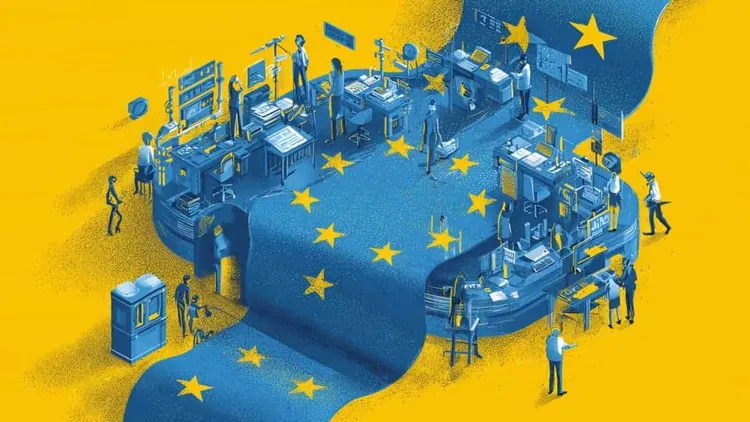
Different regions have developed distinct models of attention control. The US relies on globally dominant private platforms, whose algorithms shape information flows worldwide. China has built a sovereign digital ecosystem, tightly controlling domestic attention while projecting influence abroad through platforms like TikTok. Europe, lacking major platforms, exerts influence primarily through regulation – seeking to constrain the excesses of the attention economy rather than dominate it.
In this new landscape, influence is less about persuasion than about redirection. One of the most powerful strategies is “agenda shifting”: not winning an argument, but changing the subject. By flooding attention with new controversies, actors can bury inconvenient truths or fragment public discourse. This tactic has been used by state and non-state actors alike, from coordinated disinformation campaigns to viral conspiracy movements.
Artificial intelligence is now accelerating these dynamics dramatically by reducing the cost of producing persuasive, emotionally engaging content. Generative AI can create text, images, and videos at scale and tailored to individual psychological profiles, enabling a form of cognitive targeting that is faster, cheaper, and more precise than anything previously possible. It also blurs the line between authentic and synthetic information, further destabilizing trust.
Paradoxically, technologies designed to reduce cognitive load are increasing it. Instead of freeing up time for reflection, they compress decision cycles and multiply interruptions. The consequence is a gradual shift from deliberate, top-down attention toward reactive, bottom-up processing – a transformation with profound implications for democracy, markets, and strategic decision-making.
Over the next decade, three futures are conceivable. In the first, fragmentation intensifies, personalized information bubbles become total, and shared reality dissolves. In the second, regulation imposes partial constraints, stabilizing the system without altering its core incentives. In the third, and most ambitious, scenario, attention becomes a consciously managed resource. Institutions redesign their information environments, and AI is repurposed not to capture attention, but to protect and enhance it.
The stakes are enormous. Attention determines what societies perceive, what they ignore, and ultimately what they decide. It shapes elections, economic activity, and conflicts. It governs the ability to detect weak signals, to anticipate crises, and to act rationally under uncertainty.
In this sense, attention is not just an individual faculty. It is a collective infrastructure – a form of cognitive capital that can be strengthened or degraded. The question is no longer whether attention will be contested – it already is – but whether we will continue to treat it as an exploitable resource or begin to govern it as a strategic asset essential to the survival of open societies.

Help Keep Social Europe Free for Everyone
We believe quality ideas should be accessible to all — no paywalls, no barriers. Your support keeps Social Europe free and independent, funding the thought leadership, opinion, and analysis that sparks real change.
— €4.75/month
Help sustain free, independent publishing for our global community.
Become a supporter— €9.50/month
Go further: fuel more ideas and more reach.
Become an advocate— €19/month
Make the biggest impact — help us grow, innovate, and amplify change.
Become a champion— €142.50/month
For organisations and professionals who rely on Social Europe in their daily work.
Become a member