KEY INSIGHTS
- Workers are missing from the debate: Discussion of the Circular Economy Act has centred on competitiveness and secondary raw materials, ignoring the people who design, repair, collect, sort and recover.
- Quality jobs must be a core objective: The Act should be judged on employment, wages, collective bargaining and skills, not only on material and recycling targets.
- Safety must be designed in: Products should be built to be safely maintained, dismantled and treated, and simplification must never become deregulation.
- Public money must carry conditions: Funding, procurement and tax incentives should be tied to labour rights, collective agreements, safety standards and tax obligations across the value chain.
- No exporting of dangerous work: Waste should not leave the EU for countries where equivalent labour and environmental standards cannot be guaranteed and enforced.
Europe needs a more circular economy. We must reduce resource consumption, prevent waste and develop our capacity to reuse, repair and recycle. Greater circularity can improve access to essential materials, reduce strategic dependencies and strengthen Europe’s industrial resilience, while contributing to its environmental objectives.
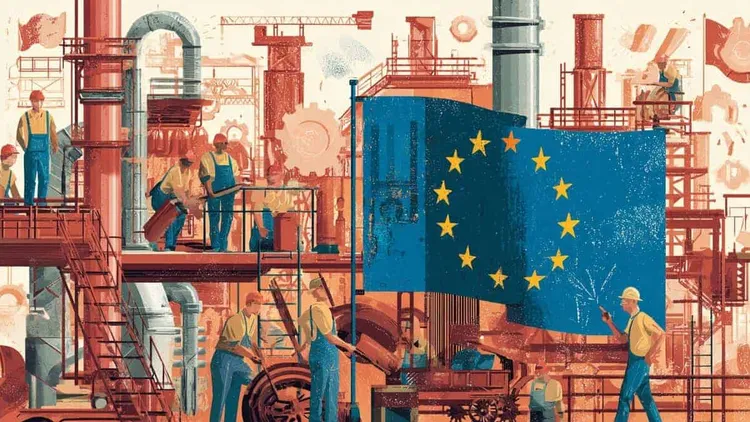
But the circular economy does not happen by itself. It depends on the workers who design and manufacture products, maintain and repair equipment, collect and sort waste, recover materials and deliver essential public services.
Yet workers have largely gone unnoticed in the current discussions on the Circular Economy Act. The debate has focused mainly on competitiveness, access to materials and markets for secondary raw materials.
These objectives cannot be achieved without addressing employment, working conditions, occupational safety and health, public services and social dialogue. A circular economy cannot be built on unsafe work, precarious employment, underfunded public services or the export of waste and occupational risks to other countries.
As representatives of workers across Europe’s industrial sectors, public services, utilities, waste management and circular value chains, we believe that workers and their trade unions must be placed at the heart of the Circular Economy Act.
Circularity must create quality, safe jobs
Workers deliver circularity across the entire value chain, from product design and industrial production to maintenance, repair, waste collection, sorting and recycling. Their knowledge and experience are essential to developing processes that are both effective and safe. The Circular Economy Act must explicitly recognise this contribution and make quality employment one of its core objectives.
The Act provides an opportunity to create new, skilled green jobs. But the transition must not create new markets based on low pay, insecure contracts, bogus self-employment or poor working conditions. New circular activities must provide secure employment, fair wages, social protection, access to training, respect for trade union rights and meaningful social dialogue.
The success of the Act should therefore be assessed not only through material and recycling targets, but also through indicators covering employment, wages, working conditions, collective bargaining, equality and skills.
Safety, too, must be designed in from the start. Workers in waste collection, sorting, recycling, repair and materials recovery can be exposed to hazardous substances, fires, biological agents, dangerous machinery and heavy physical work. Batteries, electronic waste and new materials can create additional risks that are still insufficiently understood.
Occupational safety and health must therefore be integrated throughout the product life cycle. Products should be designed not only to be durable, repairable and recyclable, but also to be safely maintained, dismantled and treated. Workers and their representatives must have full access to information on hazardous substances and materials.
Simplification must not become an excuse for deregulation. Labour, occupational safety, environmental and public health standards must not be weakened in the name of reducing administrative burdens. What protects workers also protects the environment and the public. Strong rules must be backed by effective inspection and enforcement.
Extended producer responsibility must also ensure that producers bear a fair share of the environmental, social, health and safety costs associated with their products. It should incentivise durable, repairable and recyclable products, while taking proper account of the risks they may create for workers.
Public money must come with conditions
All public funding, procurement, guarantees, tax incentives and other support for circular economy activities should include binding environmental, social and fiscal conditions.
Companies receiving public support must respect labour and trade union rights, applicable collective agreements, occupational safety standards and tax obligations across the entire value chain. They must provide quality jobs, invest in workforce development and engage in meaningful social dialogue. Support should be suspended or recovered when these conditions are not respected.
Public authorities also need adequate resources to implement the Act. National, regional and local administrations require sufficient staffing, expertise and funding to organise quality public services, inspect workplaces, enforce standards and develop repair, reuse and recycling infrastructure. New responsibilities must be matched by new resources. Austerity, understaffing and cuts to public services would undermine the implementation of the Circular Economy Act.
Greater circularity will transform industrial processes, services, occupations and skills. These changes must be anticipated and managed through social dialogue and collective bargaining. Workers and their trade unions must be involved before decisions are taken. Companies and public authorities should assess employment and skills impacts, develop negotiated transition plans and undertake workforce planning at company, sectoral and regional levels.
All workers must have an effective right to quality training, provided during working time and without loss of income. Training must be accompanied by employment protection, income security and support for the workers, sectors and regions affected by restructuring.
Circular economy policies must also tackle excessive subcontracting chains, undeclared work and bogus self-employment. Lead companies must remain responsible for wages, social contributions and occupational safety throughout their subcontracting chains. Subcontracted workers must receive equal treatment and full access to labour rights, social protection and trade union representation.
Nor must the EU achieve circularity on paper by exporting waste, pollution and occupational risks to other parts of the world. Waste should not be exported to countries where labour rights, working conditions, occupational safety and environmental standards equivalent to those required in the EU cannot be guaranteed and effectively enforced. Exporting companies must remain responsible for the treatment of waste throughout the value chain.
At the same time, Europe must invest in its own high-quality repair, reuse, recycling and materials recovery capacity. This investment should strengthen industrial employment, public services and regional development.
Trade unions and workers’ representatives must be involved in the implementation and monitoring of the Circular Economy Act at European, national, sectoral, regional, local and company levels. The European Commission should establish a permanent mechanism for meaningful social partner involvement in the governance of the Act.
The choices made now will determine whether Europe’s circular economy becomes a source of quality employment and industrial resilience, or another market characterised by precarious work, unsafe conditions and fragmented value chains.
The European institutions must ensure that the Circular Economy Act recognises workers’ essential role and knowledge, makes quality jobs and collective bargaining core objectives, guarantees the highest occupational safety standards and attaches binding social, environmental and fiscal conditions to public support.
The Act must provide adequate investment in public services and administrative capacity. It must ensure a just transition through anticipation, workforce planning and an effective right to training. It must also prevent the export of waste to countries without equivalent labour and environmental protections.
Europe cannot secure secondary raw materials without supporting the workers, public services and industrial capacity that make their recovery possible. A genuinely circular economy must be environmentally sustainable, economically resilient and socially just.
There is no circular economy without workers.


Help Keep Social Europe Free for Everyone
We believe quality ideas should be accessible to all — no paywalls, no barriers. Your support keeps Social Europe free and independent, funding the thought leadership, opinion, and analysis that sparks real change.
— €4.75/month
Help sustain free, independent publishing for our global community.
Become a supporter— €9.50/month
Go further: fuel more ideas and more reach.
Become an advocate— €19/month
Make the biggest impact — help us grow, innovate, and amplify change.
Become a champion— €142.50/month
For organisations and professionals who rely on Social Europe in their daily work.
Become a member