
KEY INSIGHTS
- GDP hides Europe’s gains: Once income is adjusted for life expectancy and inequality, the EU overtook the US by 2022, the Joint Research Centre finds.
- Measurement steers policy: Von der Leyen’s own maxim, “only what gets measured, gets done”, means a competitiveness agenda built on GDP alone will keep pushing Europe towards ineffective, even counterproductive, policies.
- Productivity shifts too: UK output per hour grew 7.2 per cent between 2005 and 2018 by standard measures, but 9.9 per cent once unpaid work and emissions cuts are counted.
- The tools now exist: The UN expert group’s dashboard of 31 indicators and the EU’s own beyond-GDP mandate give policymakers a ready framework.
- The public is ahead: 81 per cent of respondents in six EU countries want indicators beyond GDP to guide national policy.
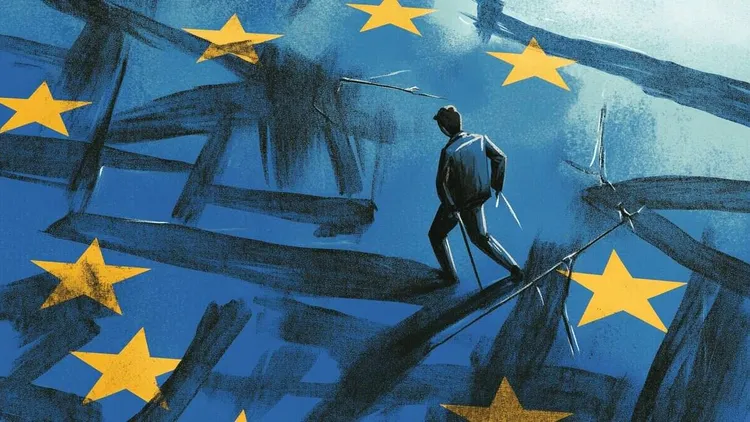
Many people believe Europe is falling behind. The perception rests mainly on traditional economic figures: GDP per capita in the United States (US) grew by 25 per cent between 2010 and 2023, against 17 per cent for the EU. Yet a broader index of wellbeing published this year by the Joint Research Centre (JRC), the European Commission’s science and knowledge service, tells a different story. The study, which one of us co-authored, shows that the EU’s improvement in wellbeing over the same period was nearly eight times larger than that of the US. Life expectancy, traffic safety and income inequality all point the same way. Measuring the right things clarifies both how Europe is actually doing and how it might govern to its advantage.
Competitiveness has become the organising idea of the current Commission’s mandate, built on the Draghi and Letta reports and given institutional form through the Competitiveness Compass. In her State of the Union address on 16 September, Ursula von der Leyen warned that a fight for industrial capacities is shaping global competition, and pressed for faster progress on simplification. A year earlier, she had said Europe had to be “faster, smarter and more European” on digital and clean technology, and put the underlying premise plainly: “only what gets measured, gets done”.
But the question is how measures are designed and chosen, and for which objectives, so that we know whether we are heading in the right direction. Concretely, what makes up European competitiveness? If social welfare, decarbonisation efforts, and high-quality skilled jobs are key sources of long-term competitiveness in Europe, then an agenda shaped primarily by deregulation policies that strip back workers’ protection or undermine environmental guidelines is a U-turn. Europe needs metrics that capture, and guide policies towards, the kind of competitiveness it seeks to build.
The same JRC study finds that once GDP is adjusted for life expectancy and its distribution, the EU appears to have overtaken the US by 2022. Between 2010 and 2023, the EU’s wellbeing index improved by 9.5 percentage points against 1.2 for the US. That improvement held through the pandemic, the energy price shock, and Russia’s invasion of Ukraine. Economic resources still matter, and the same study finds that the EU holds fewer resources for future investment, in capital stock and skills, than the US does, which points to where continued investment still needs to go.
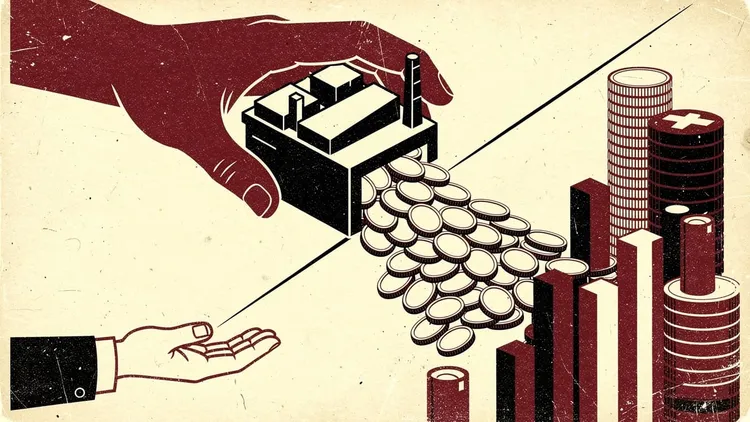
GDP only sums the monetary value of finished goods and services in an economy, leaving out social and ecological costs and ignoring benefits that never register as market transactions. Assessed instead on wellbeing, sustainability, and inclusiveness, Europe’s record looks considerably stronger.
Productivity figures shift in a similar way once unpaid work at home and emissions cuts are counted, as data from the UK’s Office for National Statistics show. By standard measures, UK output per hour worked grew by 7.2 per cent between 2005 and 2018. Counting unpaid work at home raises that to 8.7 per cent. Also counting the shrinking damage to the climate as UK emissions came down raises it to 9.9 per cent. These cases show how different metrics can tell different, and more promising, stories about where economic, social, and ecological developments are heading, and where they should head next.
Beyond-GDP metrics have stayed at the margins for years because there have been plenty of proposals but little agreement. The UN’s High-Level Expert Group (HLEG) on Beyond GDP has now proposed a globally applicable and comparable framework: 31 indicators across four key dimensions of progress, covering current wellbeing, equity and inclusion, sustainability and resilience, and the foundational principles of peace, human rights, and respect for the planet. The framework was built largely on measurement work already under way across countries and institutions.
This effort is not new for Europe. The 2023 Strategic Foresight Report and the 8th Environment Action Programme gave the EU a mandate to develop a beyond-GDP approach, and JRC-coordinated work has since produced a steady stream of proposals, though none of it has yet been written into binding EU policy.
Public opinion is already ahead of that institutional process. A survey in six European countries by MERGE, a Horizon Europe-funded project both of us are involved in, found that 81 per cent of respondents support using indicators beyond GDP to guide national policy, naming health, jobs, education, and housing as what matters most to them. What is missing is governance and institutional will, and the months ahead may offer the opening to muster it.
Following the commitment made in the 2024 Pact for the Future, the UN General Assembly is expected to produce a resolution soon, clarifying the next steps for measuring progress beyond GDP. Spain is co-facilitating the UN’s intergovernmental process on Beyond GDP, the forum where member states are negotiating how to implement the HLEG report’s recommendations.
Tools to measure Europe’s real prosperity, its future prospects, and what it needs to secure them now exist at both UN and EU level, and they are gaining political traction. With them, Europe can see how to restore its economic engine so that it serves the wellbeing of people and the planet, both today and in the future.
Help Keep Social Europe Free for Everyone
We believe quality ideas should be accessible to all — no paywalls, no barriers. Your support keeps Social Europe free and independent, funding the thought leadership, opinion, and analysis that sparks real change.
— €4.75/month
Help sustain free, independent publishing for our global community.
Become a supporter— €9.50/month
Go further: fuel more ideas and more reach.
Become an advocate— €19/month
Make the biggest impact — help us grow, innovate, and amplify change.
Become a champion— €142.50/month
For organisations and professionals who rely on Social Europe in their daily work.
Become a member