Social Europe

politics, economy and employment & labour

  • Projects
    • Corporate Taxation in a Globalised Era
    • US Election 2020
    • The Transformation of Work
    • The Coronavirus Crisis and the Welfare State
    • Just Transition
    • Artificial intelligence, work and society
    • What is inequality?
    • Europe 2025
    • The Crisis Of Globalisation
  • Audiovisual
    • Audio Podcast
    • Video Podcasts
    • Social Europe Talk Videos
  • Publications
    • Books
    • Dossiers
    • Occasional Papers
    • Research Essays
    • Brexit Paper Series
  • Shop
  • Membership
  • Ads
  • Newsletter

About Frank Hoffer

Frank Hoffer is non-executive director of the Global Labour University Online Academy.

Belarus, Lukashenka, Lukashenko

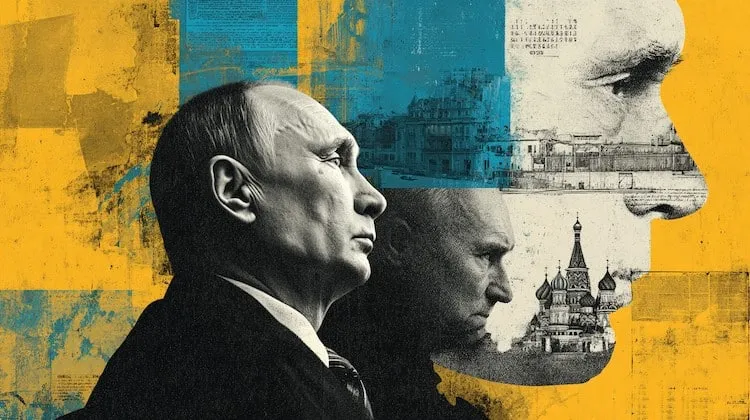
No Realpolitik please: Europe must support the Belarusian people

by Frank Hoffer on 29th September 2020

Proactive engagement to help overcome the stalemate and firm signalling that any autocratic crackdown will trigger strong and effective measures are needed.

Belarus, Lukashenka, Lukashenko

Beyond ‘green growth’

by Frank Hoffer on 22nd January 2020

A serious discussion of ‘just transition’ must break with a social model based on individual utility maximisation—before it breaks the biosphere.

Frank Hoffer

I Am Not A Fan Of Angela Merkel But…

by Frank Hoffer on 29th October 2015

I do admire and fully support her policies and her strong humanitarian commitment in this refugee crisis. Opening up the country for a million people instead of building fences to keep them out has made her the woman of hope for many refugees. Firmly putting humanitarian help as the imperative against Islamophobic and xenophobic hate […]

Frank Hoffer

What Next After Tsipras Dashed Schäuble’s Hopes For Grexit?

by Frank Hoffer on 27th July 2015

A Greek government forced to bow to the impossible, a referendum brushed aside, the Franco-German partnership damaged, European compromise diplomacy replaced by ultimatums, the euro in limbo, large parts of Europe swept by anti-German fear and resentment and another €83bn sunk into a doomed “rescue package”. Not quite how successful policies are supposed to play […]

Frank Hoffer

All We Are Saying Is Give Greece A Chance!

by Frank Hoffer on 1st July 2015

Greek unit labour costs are down to the level of 2006, pensions have been slashed, the budget deficit largely eliminated, public sector employment has been reduced by 25%, determination to improve tax collection and deal with tax evasion is stronger than ever before, labour markets have been liberalised, bureaucratic barriers for entrepreneurship have been lowered. […]

Frank Hoffer

A New Start For Greece, An Opportunity For Germany

by Frank Hoffer on 2nd February 2015

If misperceptions solidify, they become a reality. This seems to be the biggest political risk of the euro crisis. As a German living abroad I am amazed about the gulf between perceptions of the European crisis in Germany and in southern Europe. If you follow the German debate, you get the impression that the irresponsible […]

Frank Hoffer

Why We Need Movement Of Free People

by Frank Hoffer on 15th July 2014

When Franklin Roosevelt outlined his essential four freedoms in 1941 he was convinced democracy could only be defended and advanced beyond the remaining 11 democracies by replacing classical liberalism with a comprehensive concept based on freedom of expression, freedom of worship, freedom of want and freedom from fear. Real freedom cannot exist if one of these […]

Frank Hoffer

Inequality And Post-neoliberal Globalisation

by Frank Hoffer on 29th May 2014

Only a crisis – actual or perceived – produces real change. When that crisis occurs, the actions that are taken depend on the ideas that are lying around. That, I believe, is our basic function: to develop alternatives to existing policies, to keep them alive and available until the politically impossible becomes the politically inevitable. […]

Frank Hoffer

The Real Problems Of Migration And Work And How To Solve Them

by Frank Hoffer on 29th April 2014

Sitting in nice wine bars or cosy restaurants in superbly gentrified inner city areas, the chattering liberal middle class expresses its disgust about the xenophobic under-classes turning against migrants and voting for right-wing populist parties. Being a member of the chattering class myself I fully share these feelings. The populist migrant bashing makes me furious. […]

Social Europe Publishing book

The Brexit endgame is upon us: deal or no deal, the transition period will end on January 1st. With a pandemic raging, for those countries most affected by Brexit the end of the transition could not come at a worse time. Yet, might the UK's withdrawal be a blessing in disguise? With its biggest veto player gone, might the European Pillar of Social Rights take centre stage? This book brings together leading experts in European politics and policy to examine social citizenship rights across the European continent in the wake of Brexit. Will member states see an enhanced social Europe or a race to the bottom?

'This book correctly emphasises the need to place the future of social rights in Europe front and centre in the post-Brexit debate, to move on from the economistic bias that has obscured our vision of a progressive social Europe.' Michael D Higgins, president of Ireland


MORE INFO

Hans Böckler Stiftung Advertisement

The macroeconomic effects of the EU recovery and resilience facility

This policy brief analyses the macroeconomic effects of the EU's Recovery and Resilience Facility (RRF). We present the basics of the RRF and then use the macroeconometric multi-country model NiGEM to analyse the facility's macroeconomic effects. The simulations show, first, that if the funds are in fact used to finance additional public investment (as intended), public capital stocks throughout the EU will increase markedly during the time of the RRF. Secondly, in some especially hard-hit southern European countries, the RRF would offset a significant share of the output lost during the pandemic. Thirdly, as gains in GDP due to the RRF will be much stronger in (poorer) southern and eastern European countries, the RRF has the potential to reduce economic divergence. Finally, and in direct consequence of the increased GDP, the RRF will lead to lower public debt ratios—between 2.0 and 4.4 percentage points below baseline for southern European countries in 2023.


FREE DOWNLOAD

ETUI advertisement

Benchmarking Working Europe 2020

A virus is haunting Europe. This year’s 20th anniversary issue of our flagship publication Benchmarking Working Europe brings to a growing audience of trade unionists, industrial relations specialists and policy-makers a warning: besides SARS-CoV-2, ‘austerity’ is the other nefarious agent from which workers, and Europe as a whole, need to be protected in the months and years ahead. Just as the scientific community appears on the verge of producing one or more effective and affordable vaccines that could generate widespread immunity against SARS-CoV-2, however, policy-makers, at both national and European levels, are now approaching this challenging juncture in a way that departs from the austerity-driven responses deployed a decade ago, in the aftermath of the previous crisis. It is particularly apt for the 20th anniversary issue of Benchmarking, a publication that has allowed the ETUI and the ETUC to contribute to key European debates, to set out our case for a socially responsive and ecologically sustainable road out of the Covid-19 crisis.


FREE DOWNLOAD

Eurofound advertisement

Industrial relations: developments 2015-2019

Eurofound has monitored and analysed developments in industrial relations systems at EU level and in EU member states for over 40 years. This new flagship report provides an overview of developments in industrial relations and social dialogue in the years immediately prior to the Covid-19 outbreak. Findings are placed in the context of the key developments in EU policy affecting employment, working conditions and social policy, and linked to the work done by social partners—as well as public authorities—at European and national levels.


CLICK FOR MORE INFO

Foundation for European Progressive Studies Advertisement

Read FEPS Covid Response Papers

In this moment, more than ever, policy-making requires support and ideas to design further responses that can meet the scale of the problem. FEPS contributes to this reflection with policy ideas, analysis of the different proposals and open reflections with the new FEPS Covid Response Papers series and the FEPS Covid Response Webinars. The latest FEPS Covid Response Paper by the Nobel laureate Joseph Stiglitz, 'Recovering from the pandemic: an appraisal of lessons learned', provides an overview of the failures and successes in dealing with Covid-19 and its economic aftermath. Among the authors: Lodewijk Asscher, László Andor, Estrella Durá, Daniela Gabor, Amandine Crespy, Alberto Botta, Francesco Corti, and many more.


CLICK HERE

About Social Europe

Our Mission

Article Submission

Legal Disclosure

Privacy Policy

Copyright

Social Europe ISSN 2628-7641

Find Social Europe Content

Search Social Europe

Project Archive

Politics Archive

Economy Archive

Society Archive

Ecology Archive

.EU Web Awards