Social Europe

politics, economy and employment & labour

  • Projects
    • Corporate Taxation in a Globalised Era
    • US Election 2020
    • The Transformation of Work
    • The Coronavirus Crisis and the Welfare State
    • Just Transition
    • Artificial intelligence, work and society
    • What is inequality?
    • Europe 2025
    • The Crisis Of Globalisation
  • Audiovisual
    • Audio Podcast
    • Video Podcasts
    • Social Europe Talk Videos
  • Publications
    • Books
    • Dossiers
    • Occasional Papers
    • Research Essays
    • Brexit Paper Series
  • Shop
  • Membership
  • Ads
  • Newsletter

Social Europe articles on politics

Social Europe is an award-winning digital media publisher that publishes content examining issues in politics, economy and employment & labour. This archive brings together Social Europe articles on political issues.

Viktor Orbán, Hungary and Poland

Europe must stand up to Hungary and Poland

by George Soros on 19th November 2020

The European Union cannot afford to compromise on the rule-of-law provisions it applies to the funds it allocates to member states.

Hungary, Poland, populists

‘Work, family, fatherland’: populist social policies in central and eastern Europe

by Mitchell Orenstein and Bojan Bugaric on 19th November 2020

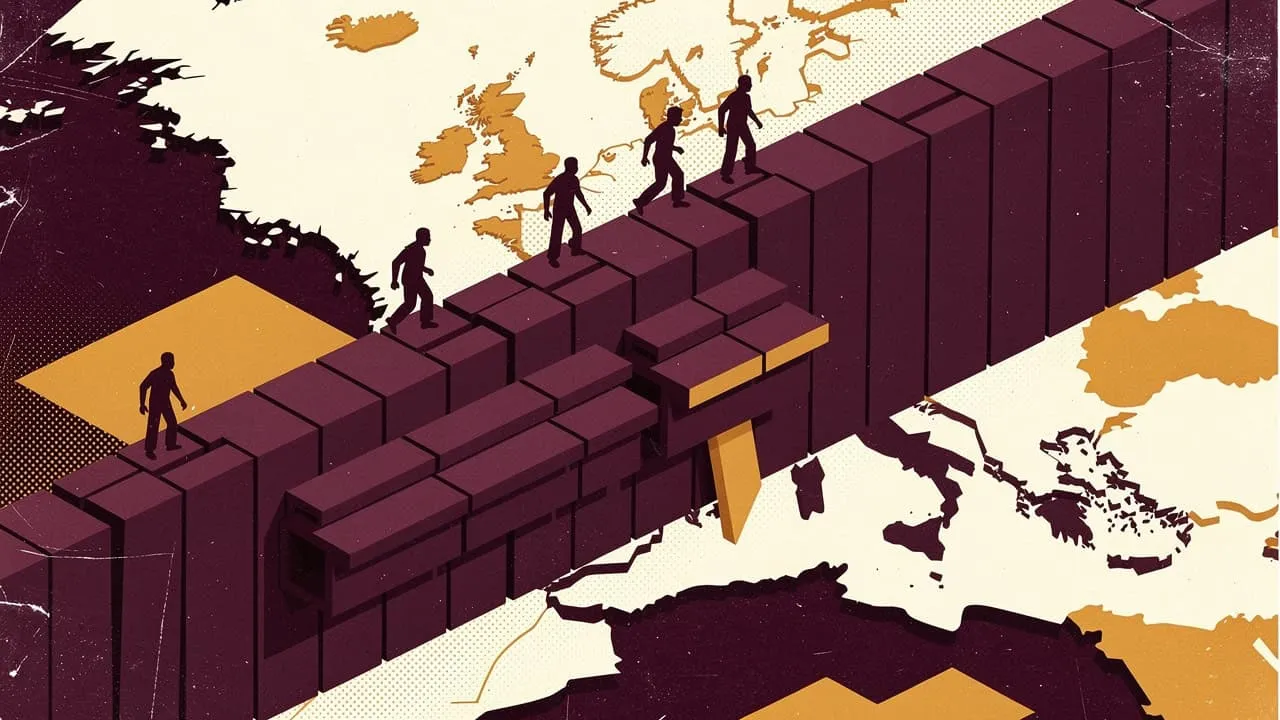
The new east-west divide in Europe is not just about authoritarian regimes defying the rule of law. It is also down to smartly crafted economic appeals.

right-wing nationalism

The rise of right-wing nationalism: from Poland to Polanyi

by Karin Pettersson on 16th November 2020

Karin Pettersson argues that far from history ‘ending’ in 1989 it has returned, with a vengeance, due to the very deregulation its trumpeters embraced.

Trump, Republicans

The lost cause of the Trumpocracy

by Elizabeth Drew on 13th November 2020

Like the southerners who never could get over their loss in the American civil war, Trump has nothing left but his own mythology.

Next Generation EU, European Semester

Can Next Generation EU guarantee fair, inclusive recovery?

by Francesco Corti, Christian Morabito, Lorenza Antonucci and Michel Vandenbroeck on 12th November 2020

Adequate indicators are needed to identify country-specific needs and ensure tailor-made intervention which takes inequalities seriously.

minimum-wage directive

Minimum-wage directive: yes, but …

by Torsten Müller and Thorsten Schulten on 10th November 2020

The draft minimum-wage directive is a crucial first step but more needs to follow on the way to a social Europe.

socially useful work, Lucas plan

The right to socially useful work

by Kate Holman on 6th November 2020

Amid the 1970s economic crisis in Britain, Lucas Aerospace workers, threatened with redundancy, developed a plan for socially useful work. It’s an idea whose time has come.

job guarantee

Work for all

by Jan Zygmuntowski on 3rd November 2020

An EU-wide job guarantee would be a counter-cyclical measure to tackle the health, employment and ecological crises together.

European welfare state

Is the coronavirus going to reshape the European welfare state?

by Stefanie Börner on 3rd November 2020

In the wake of the pandemic, the classical variety of national welfare models must be transformed into a multi-level social citizenship.

citizenship education

A watershed moment for citizenship education in Europe

by Niccolò Milanese on 2nd November 2020

The pandemic has reinforced the need for citizenship education, so individuals are equipped to cope with its global challenges—and all the others.

transatlantic

A new start for transatlantic social democracy?

by Knut Dethlefsen on 2nd November 2020

A Biden administration could join forces with progressive Europe to rebut polarising populism on both sides of the pond.

democratic standards, PiS

Poland’s abortion protests—democratic standards at stake

by Maria Skóra on 30th October 2020

The passion behind the demonstrations signifies a battle for basic democratic standards in a world of creeping authoritarian temptations.

  • « Previous Page
  • 1
  • 2
  • 3
  • 4
  • …
  • 143
  • Next Page »

ETUI advertisement

Benchmarking Working Europe 2020

A virus is haunting Europe. This year’s 20th anniversary issue of our flagship publication Benchmarking Working Europe brings to a growing audience of trade unionists, industrial relations specialists and policy-makers a warning: besides SARS-CoV-2, ‘austerity’ is the other nefarious agent from which workers, and Europe as a whole, need to be protected in the months and years ahead. Just as the scientific community appears on the verge of producing one or more effective and affordable vaccines that could generate widespread immunity against SARS-CoV-2, however, policy-makers, at both national and European levels, are now approaching this challenging juncture in a way that departs from the austerity-driven responses deployed a decade ago, in the aftermath of the previous crisis. It is particularly apt for the 20th anniversary issue of Benchmarking, a publication that has allowed the ETUI and the ETUC to contribute to key European debates, to set out our case for a socially responsive and ecologically sustainable road out of the Covid-19 crisis.


FREE DOWNLOAD

Eurofound advertisement

Industrial relations: developments 2015-2019

Eurofound has monitored and analysed developments in industrial relations systems at EU level and in EU member states for over 40 years. This new flagship report provides an overview of developments in industrial relations and social dialogue in the years immediately prior to the Covid-19 outbreak. Findings are placed in the context of the key developments in EU policy affecting employment, working conditions and social policy, and linked to the work done by social partners—as well as public authorities—at European and national levels.


CLICK FOR MORE INFO

Foundation for European Progressive Studies Advertisement

Read FEPS Covid Response Papers

In this moment, more than ever, policy-making requires support and ideas to design further responses that can meet the scale of the problem. FEPS contributes to this reflection with policy ideas, analysis of the different proposals and open reflections with the new FEPS Covid Response Papers series and the FEPS Covid Response Webinars. The latest FEPS Covid Response Paper by the Nobel laureate Joseph Stiglitz, 'Recovering from the pandemic: an appraisal of lessons learned', provides an overview of the failures and successes in dealing with Covid-19 and its economic aftermath. Among the authors: Lodewijk Asscher, László Andor, Estrella Durá, Daniela Gabor, Amandine Crespy, Alberto Botta, Francesco Corti, and many more.


CLICK HERE

Social Europe Publishing book

The Brexit endgame is upon us: deal or no deal, the transition period will end on January 1st. With a pandemic raging, for those countries most affected by Brexit the end of the transition could not come at a worse time. Yet, might the UK's withdrawal be a blessing in disguise? With its biggest veto player gone, might the European Pillar of Social Rights take centre stage? This book brings together leading experts in European politics and policy to examine social citizenship rights across the European continent in the wake of Brexit. Will member states see an enhanced social Europe or a race to the bottom?

'This book correctly emphasises the need to place the future of social rights in Europe front and centre in the post-Brexit debate, to move on from the economistic bias that has obscured our vision of a progressive social Europe.' Michael D Higgins, president of Ireland


MORE INFO

Hans Böckler Stiftung Advertisement

The macroeconomic effects of the EU recovery and resilience facility

This policy brief analyses the macroeconomic effects of the EU's Recovery and Resilience Facility (RRF). We present the basics of the RRF and then use the macroeconometric multi-country model NiGEM to analyse the facility's macroeconomic effects. The simulations show, first, that if the funds are in fact used to finance additional public investment (as intended), public capital stocks throughout the EU will increase markedly during the time of the RRF. Secondly, in some especially hard-hit southern European countries, the RRF would offset a significant share of the output lost during the pandemic. Thirdly, as gains in GDP due to the RRF will be much stronger in (poorer) southern and eastern European countries, the RRF has the potential to reduce economic divergence. Finally, and in direct consequence of the increased GDP, the RRF will lead to lower public debt ratios—between 2.0 and 4.4 percentage points below baseline for southern European countries in 2023.


FREE DOWNLOAD

About Social Europe

Our Mission

Article Submission

Legal Disclosure

Privacy Policy

Copyright

Social Europe ISSN 2628-7641

Find Social Europe Content

Search Social Europe

Project Archive

Politics Archive

Economy Archive

Society Archive

Ecology Archive

.EU Web Awards