KEY INSIGHTS
- Judicial capture: PiS has packed the Constitutional Tribunal since 2015, undermining its independence and capacity to constrain political power.
- Presidential overreach: The Sejm elects Tribunal judges, while the president’s role in administering their oaths is strictly ceremonial.
- Physical obstruction: Tribunal leaders and right-wing allies have physically blocked duly elected judges from taking their seats, escalating the institutional confrontation.
- Russia’s advantage: Poland’s internal conflict benefits the Kremlin, which has backed Nawrocki and PiS alongside European far-right figures.
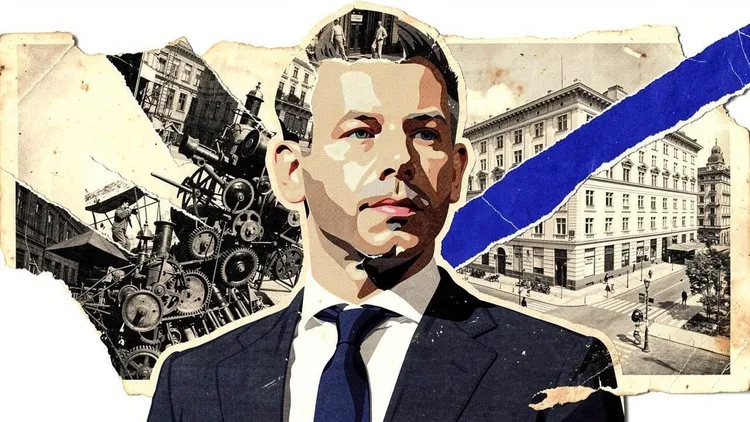
In a shocking moment that went viral, Polish President Karol Nawrocki and his cronies were recently filmed breaking into the Constitutional Tribunal in the dead of night and brutally shoving aside the judges they encountered, including an elderly woman. What or who were they coming for?
In Poland, as in other countries, the constitutional court is the institution that distinguishes a proper democracy from a dictatorship. For aspiring authoritarians, subordinating it to political control is everything. If the court ceases to matter, parliamentary majorities can act without constraint; and if it is co-opted, it can sabotage a duly elected representative government.
That is why the populist Law and Justice (PiS) party immediately got to work filling the Constitutional Tribunal with its own people when it came to power in 2015. Then-President Andrzej Duda refused to swear in three justices who had been duly elected by the previous parliament and then filled the vacant seats with PiS candidates instead. The government then refused to publish some of the Tribunal’s rulings, and in 2016, Julia Przyłębska—a figure virtually unknown in legal circles, but well-known within PiS—became its president.
International institutions—including the Venice Commission and the EU Court of Justice—duly protested these machinations, and in 2021 the European Court of Human Rights ruled that the Polish high court was no longer a “tribunal established by law.” Yet over the following years, PiS continued to pack the Tribunal, and in 2024, Bogdan Święczkowski, formerly the deputy prosecutor-general in the PiS government, became its president. The number of judgments issued dropped from about 70 per year to just over a dozen.
After coming to power in 2023, Polish Prime Minister Donald Tusk’s centrist coalition tried to find a compromise by reaching an agreement first with Duda and then with Nawrocki. But the impasse remained, and when the Sejm (parliament) elected new judges to replace the PiS-installed ones whose terms have expired, Nawrocki refused to swear all of them in.
This was a brazen usurpation of powers that the presidency does not possess. Electing the Constitutional Tribunal’s members is the Sejm’s prerogative, no one else’s. The president’s role is strictly ceremonial: presiding over the oath of office. International legal institutions (including the European Court of Human Rights and the Venice Commission) have made clear that this is a formality. Since the president’s participation is not required, the new class of duly elected judges took their oaths before the Sejm.
But Święczkowski then refused to allow them on the bench. He and other right-wing figures, including the pro-Russian anti-Semite Grzegorz Braun and the founder of the Confederation, Janusz Korwin-Mikke (who visited Moscow on September 17, the anniversary of the Soviet Union’s invasion of Poland in 1939), physically obstructed them.
And so, on Friday, October 30, Anna Korwin-Piotrowska, the judge with the longest tenure on the bench, issued orders suspending Święczkowski and the Constitutional Tribunal’s vice president, Bartłomiej Sochański, for one month. Invoking Article 130 of the Law on the Organization of Common Courts, she ruled that blocking a judges’ assembly, appointing panels improperly, and refusing to allow judges elected by the Sejm to adjudicate constitute clear violations of the law.
Following Korwin-Piotrowska’s ruling, Święczkowski was barred from the grounds of the Constitutional Tribunal. But he mobilized right-wing protesters who had already assembled outside. Together, they tried to cut through the fence until sparks began to fly (another PiS lawmaker brought a crowbar). Upon being stopped by the police, Święczkowski announced that he would return with the president.
It is important to know that the president, Nawrocki, is a former boxer and hooligan who remains on friendly terms with the criminal underworld. According to sources interviewed by journalists at Onet, he allegedly worked as a bouncer and a pimp (testimony that has since been affirmed under oath, following a lawsuit against the publication).
For the Polish president and his goons, the hooliganism in and around the Constitutional Tribunal was simply politics by other means. They stormed the courthouse, searching for keys to locked rooms and telling the judges that they didn’t know their own country’s constitution. It was a grotesque but tragically familiar spectacle—another chapter in the Polish-Polish war.
What are foreign readers supposed to make of it? Perhaps Winston Churchill was right when he said, “There are few virtues that the Poles do not possess—and there are few mistakes they have ever avoided.” Put another way, our virtues are real, but they are so unevenly distributed that mistakes are more the rule than the exception.
More “mistakes” are already on the horizon, because whenever a Polish-Polish war breaks out, Russia benefits. The Kremlin has not hesitated to voice its support for Nawrocki and the PiS chairman, Jarosław Kaczyński, who recently suggested that Poland should leave the European Union. According to Dmitry Medvedev, the deputy chairman of the Russian Security Council, “the liberals of Tusk, Brussels’ protégé,” are “oppressing the conservatives of PiS.”
Similarly, former Hungarian Prime Minister Viktor Orbán, a longtime Kremlin lackey within Europe, remarked that “I never thought Donald Tusk would sink so low,” before wishing Nawrocki success in his efforts. Orbán understands exactly what Nawrocki has in mind. In July, Hungary’s new parliamentary majority ousted the puppet president that Orbán had installed on his own country’s constitutional court. Not one to miss out, George Simion of Romania’s far-right Alliance for the Union of Romanians, another friend of Russian President Vladimir Putin, is calling Tusk a dictator.
All that’s missing for Polish history to come full circle is an effort by the Catholic right to call on the Russian military for help. For Poland’s anti-democrats, everything is permitted in the defense of “Christian” values against Western “decadence.”

Help Keep Social Europe Free for Everyone
We believe quality ideas should be accessible to all — no paywalls, no barriers. Your support keeps Social Europe free and independent, funding the thought leadership, opinion, and analysis that sparks real change.
— €4.75/month
Help sustain free, independent publishing for our global community.
Become a supporter— €9.50/month
Go further: fuel more ideas and more reach.
Become an advocate— €19/month
Make the biggest impact — help us grow, innovate, and amplify change.
Become a champion— €142.50/month
For organisations and professionals who rely on Social Europe in their daily work.
Become a member