Social Europe

politics, economy and employment & labour

  • Projects
    • Corporate Taxation in a Globalised Era
    • US Election 2020
    • The Transformation of Work
    • The Coronavirus Crisis and the Welfare State
    • Just Transition
    • Artificial intelligence, work and society
    • What is inequality?
    • Europe 2025
    • The Crisis Of Globalisation
  • Audiovisual
    • Audio Podcast
    • Video Podcasts
    • Social Europe Talk Videos
  • Publications
    • Books
    • Dossiers
    • Occasional Papers
    • Research Essays
    • Brexit Paper Series
  • Shop
  • Membership
  • Ads
  • Newsletter

Social Europe articles on politics

Social Europe is an award-winning digital media publisher that publishes content examining issues in politics, economy and employment & labour. This archive brings together Social Europe articles on political issues.

civil society, ngos

Uncivil cut: the EU budget and civil society

by Alberto Alemanno and Szymon Ananicz on 16th July 2020

European civil society has mitigated the impact of Covid-19, yet the European Commission proposes reducing support for it.

European Green Deal

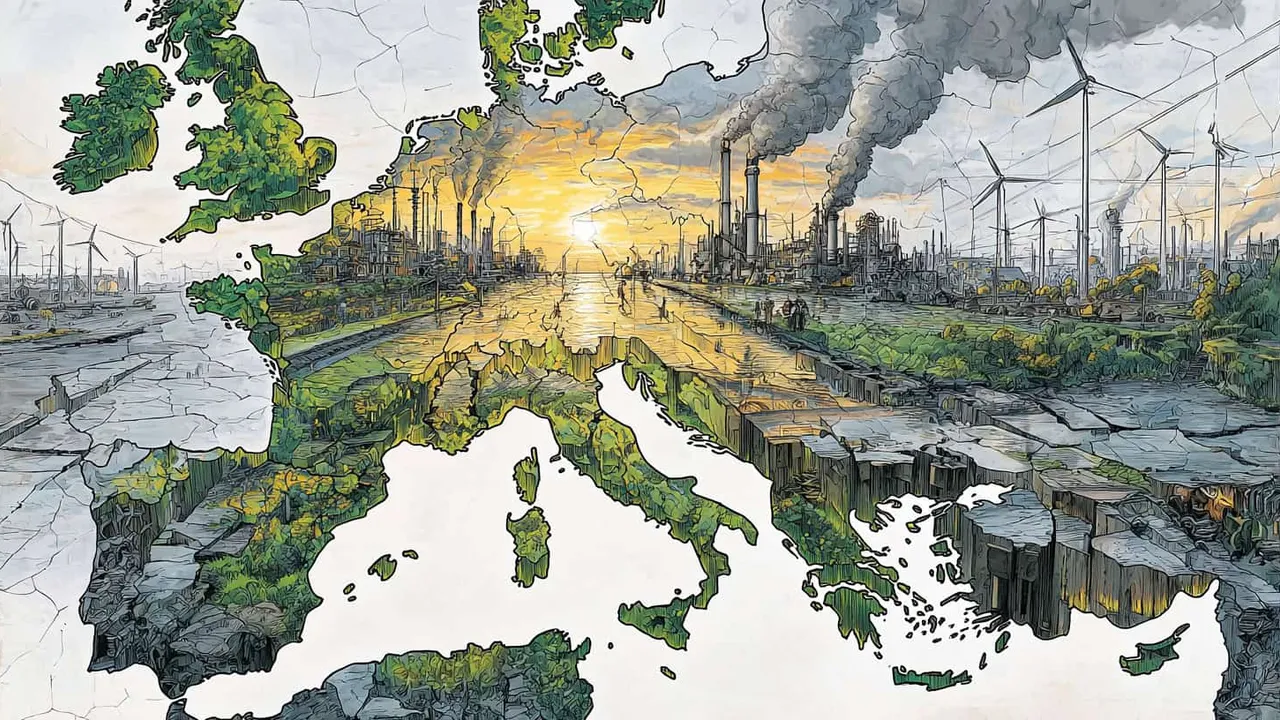
The Green Deal may not be green enough

by Vanessa Buth on 15th July 2020

The European Green Deal is unlikely to be sufficient to reach the Paris agreement climate goals.

Hamilton

A ‘Hamiltonian moment’ for Europe

by John Weeks on 14th July 2020

Invoking Alexander Hamilton in the context of the sensitisation achieved by Black Lives Matter could not be more inappropriate.

Roosevelt, Perkins, New Deal

The woman Roosevelt relied on to put America back to work

by Denis MacShane on 14th July 2020

Roosevelt is invoked more than ever amid talk of a ‘new deal’ for today’s crisis. Rather fewer, however, recall the woman at the heart of his programme.

women green transition

How women can power the green transition

by Irene Giner-Reichl on 13th July 2020

The shift to sustainable energy gives societies a chance to tackle systemic gender discrimination.

globalisation of labour,deglobalisation

Bidding for political immortality

by Branko Milanovic on 13th July 2020

Branko Milanovic contends that historic decisions by authoritarian leaders today will leave a legacy nigh impossible to reverse in the future.

human-centric AI

AI: those are citizens marching, not robots

by Miapetra Kumpula-Natri on 9th July 2020

Artificial intelligence, usually thought of as substituting human endeavour, should be conceived as a way of enhancing it for all.

algorithmic justice, algorithms at work

For a law of ‘algorithmic justice at work’

by José Varela on 9th July 2020

Workers must be protected from adverse decisions where responsibility is displaced to apparently anonymous algorithms.

biodiversity

A fossil fuel-free future is close at hand … if the EU wills it

by Patrick ten Brink and Jonathan Bonadio on 8th July 2020

An NGO-led, science-based scenario shows the European Union can become climate-neutral by 2040. All that is missing is the political will.

care workers, nursing homes

Collective bargaining—a legal right unrecognised in Ireland

by Oliver Roethig on 8th July 2020

The EU recovery plan must link company bailouts to enforcement of collective-bargaining rights.

eurozone recovery, recovery package, Financial Stability Review, BEAST

Carbon pricing and the exit from fossil fuels

by Adam Tooze on 6th July 2020

Adam Tooze argues the European Green Deal and young Europeans’ activism are fostering a virtuous circle favouring more rapid decarbonisation.

Covid-19 vaccine, pharamaceutical companies, patents

Challenging patents key to make Covid-19 vaccine work for all

by Kateřina Konečná on 2nd July 2020

Finding a vaccine against the coronavirus is a biochemical challenge. Ensuring universal access to it, however, is a political choice.

  • « Previous Page
  • 1
  • …
  • 6
  • 7
  • 8
  • 9
  • 10
  • …
  • 143
  • Next Page »

Hans Böckler Stiftung Advertisement

The macroeconomic effects of the EU recovery and resilience facility

This policy brief analyses the macroeconomic effects of the EU's Recovery and Resilience Facility (RRF). We present the basics of the RRF and then use the macroeconometric multi-country model NiGEM to analyse the facility's macroeconomic effects. The simulations show, first, that if the funds are in fact used to finance additional public investment (as intended), public capital stocks throughout the EU will increase markedly during the time of the RRF. Secondly, in some especially hard-hit southern European countries, the RRF would offset a significant share of the output lost during the pandemic. Thirdly, as gains in GDP due to the RRF will be much stronger in (poorer) southern and eastern European countries, the RRF has the potential to reduce economic divergence. Finally, and in direct consequence of the increased GDP, the RRF will lead to lower public debt ratios—between 2.0 and 4.4 percentage points below baseline for southern European countries in 2023.


FREE DOWNLOAD

ETUI advertisement

Benchmarking Working Europe 2020

A virus is haunting Europe. This year’s 20th anniversary issue of our flagship publication Benchmarking Working Europe brings to a growing audience of trade unionists, industrial relations specialists and policy-makers a warning: besides SARS-CoV-2, ‘austerity’ is the other nefarious agent from which workers, and Europe as a whole, need to be protected in the months and years ahead. Just as the scientific community appears on the verge of producing one or more effective and affordable vaccines that could generate widespread immunity against SARS-CoV-2, however, policy-makers, at both national and European levels, are now approaching this challenging juncture in a way that departs from the austerity-driven responses deployed a decade ago, in the aftermath of the previous crisis. It is particularly apt for the 20th anniversary issue of Benchmarking, a publication that has allowed the ETUI and the ETUC to contribute to key European debates, to set out our case for a socially responsive and ecologically sustainable road out of the Covid-19 crisis.


FREE DOWNLOAD

Eurofound advertisement

Industrial relations: developments 2015-2019

Eurofound has monitored and analysed developments in industrial relations systems at EU level and in EU member states for over 40 years. This new flagship report provides an overview of developments in industrial relations and social dialogue in the years immediately prior to the Covid-19 outbreak. Findings are placed in the context of the key developments in EU policy affecting employment, working conditions and social policy, and linked to the work done by social partners—as well as public authorities—at European and national levels.


CLICK FOR MORE INFO

Foundation for European Progressive Studies Advertisement

Read FEPS Covid Response Papers

In this moment, more than ever, policy-making requires support and ideas to design further responses that can meet the scale of the problem. FEPS contributes to this reflection with policy ideas, analysis of the different proposals and open reflections with the new FEPS Covid Response Papers series and the FEPS Covid Response Webinars. The latest FEPS Covid Response Paper by the Nobel laureate Joseph Stiglitz, 'Recovering from the pandemic: an appraisal of lessons learned', provides an overview of the failures and successes in dealing with Covid-19 and its economic aftermath. Among the authors: Lodewijk Asscher, László Andor, Estrella Durá, Daniela Gabor, Amandine Crespy, Alberto Botta, Francesco Corti, and many more.


CLICK HERE

Social Europe Publishing book

The Brexit endgame is upon us: deal or no deal, the transition period will end on January 1st. With a pandemic raging, for those countries most affected by Brexit the end of the transition could not come at a worse time. Yet, might the UK's withdrawal be a blessing in disguise? With its biggest veto player gone, might the European Pillar of Social Rights take centre stage? This book brings together leading experts in European politics and policy to examine social citizenship rights across the European continent in the wake of Brexit. Will member states see an enhanced social Europe or a race to the bottom?

'This book correctly emphasises the need to place the future of social rights in Europe front and centre in the post-Brexit debate, to move on from the economistic bias that has obscured our vision of a progressive social Europe.' Michael D Higgins, president of Ireland


MORE INFO

About Social Europe

Our Mission

Article Submission

Legal Disclosure

Privacy Policy

Copyright

Social Europe ISSN 2628-7641

Find Social Europe Content

Search Social Europe

Project Archive

Politics Archive

Economy Archive

Society Archive

Ecology Archive

.EU Web Awards